
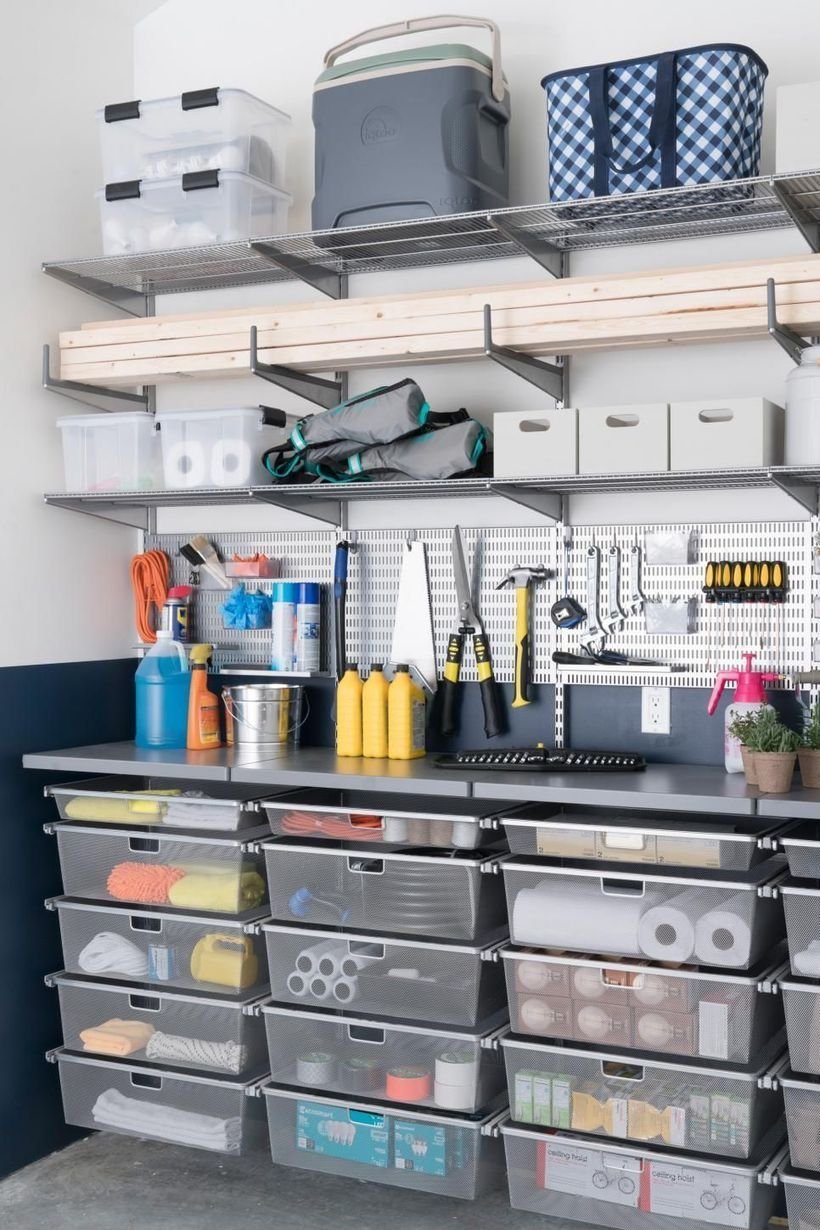
What Is the Best Way to Organize a Cluttered Garage?
Every garage follows the same life cycle: clean when you move in, “temporary” storage by month three, archaeological dig by year two. If you’re asking what is the best way to organize a cluttered garage, the answer isn’t buying more bins — it’s a ruthless purge followed by a zone system. Organizing without decluttering first is just rearranging the mess.
What Is The Best Way To Organize A Cluttered Garage?
Pull everything out. Yes, everything — onto the driveway, into the yard. This is non-negotiable; you can’t organize what you can’t see. Then sort into four piles:
- Keep and use regularly (tools, sports gear in season, car supplies)
- Keep but store (holiday decorations, seasonal items, keepsakes)
- Donate/sell (the exercise bike, duplicate tools, “might need someday” items untouched for 2+ years)
- Trash/recycle (broken items, dried paint, ancient chemicals — check local hazardous waste disposal for paints and chemicals)
Be brutal. The garage is where good intentions go to take up 200 square feet. If you haven’t touched it in two years, you don’t need it. This step alone typically removes 30–50% of the volume — and it’s free.
Step 2: Zone the Space
The professional organizer’s secret: assign zones like a tiny warehouse. Every item gets a zone, every zone has a location:
- Tool zone: pegboard or wall-mounted tool storage near the workbench. Frequently used hand tools at arm height.
- Car zone: keep the parking area clear — cleaning supplies, jumper cables, and car care near the vehicles.
- Sports/outdoor zone: bikes on wall hooks or ceiling hoists, balls in bins, camping gear together.
- Garden zone: near the garage door for easy yard access — rakes, shovels, soil, pots.
- Long-term storage zone: the least accessible area (high shelves, back corners) for holiday decor and keepsakes.
- Workshop zone (if applicable): workbench with task lighting, power tools stored safely.
Zones prevent the #1 garage failure mode: putting things “wherever there’s space” until the system collapses.
Step 3: Go Vertical
Garage floor space is precious; wall and ceiling space is free. When you organize a cluttered garage, think in three dimensions:
- Wall-mounted shelving and cabinets ($50–$200 per section) — get everything off the floor that doesn’t need to be there.
- Pegboard for tools ($20–$40 per panel) — visible, accessible, satisfying.
- Ceiling-mounted racks ($80–$150) for long-term storage bins — uses dead space above the cars.
- Bike hooks and hoists ($10–$30 each) — bikes eat floor space; walls and ceilings don’t.
- Magnetic strips for small metal tools, clear bins (labeled!) for everything else.
Label everything. A label maker ($25) is the highest-ROI organizing purchase in existence. Unlabeled bins become mystery boxes within months.
The Systems That Keep It Organized
Organizing is a project; staying organized is a system:
- One-in-one-out rule: new tool in, old tool out. New sports gear in, something gets donated.
- Return-to-home rule: every item has a labeled home; it goes back after use. This is the whole game.
- Seasonal swap: twice a year, rotate seasonal gear (winter/summer sports, holiday decor) between accessible and deep storage.
- Annual purge: one Saturday a year, re-do a light version of the purge. Catches the creep before it compounds.
Budget Breakdown
- $0–$50: purge + rearrange with what you own. Surprisingly effective.
- $100–$300: add shelving, pegboard, hooks, bins, and a label maker. The sweet spot for most garages.
- $500–$1,500: wall cabinet systems, ceiling racks, workbench, epoxy floor coating (the ultimate garage glow-up).
You don’t need the $5,000 custom garage system from the ads. The $200 version, maintained with the one-in-one-out rule, works just as well. The history of the residential garage is fun context — these spaces were never designed for what we’ve turned them into, which is why intentional zoning matters.
Storage Products Actually Worth Buying
Skip the gimmicks; these earn their keep: heavy-duty wall-mounted shelving (Gladiator, NewAge, or basic industrial shelving — $50–$150 per unit, holds hundreds of pounds), clear stackable bins with lids (visibility prevents the “buy a third one because I forgot I had two” problem), pegboard with metal hooks for hand tools ($30–$50 per 4×4 section), ceiling-mounted racks for long-term bins ($80–$150 — the single best use of dead airspace), bike hoists or wall mounts ($15–$30 each — bikes are the #1 floor-space thief), and a label maker ($25 — the unglamorous hero of every organized garage). Total for a well-equipped 2-car garage: $300–$600. Buy once, organize forever. Avoid: cheap plastic shelving that bows under weight, tiny parts organizers for big items, and anything requiring perfect decanting — systems you won’t maintain are worse than no system.
The Kid Gear Problem (and Solution)
Kids’ gear — bikes, scooters, sports equipment, outdoor toys — is the entropy engine of every family garage. The solution is kid-height zoning: dedicate the lowest, most accessible wall section to kids’ stuff with open bins (no lids — lids are where kid organization goes to die), hooks at kid height for helmets and bags, and a big open “sports bin” rather than sorted categories (sorting systems fail with kids; one big bin succeeds). Label with pictures for pre-readers. The rule for kids: make the right spot the easiest spot — if putting the scooter away takes one motion and leaving it in the driveway takes zero, you’ll still lose, so make the spot right where they’d drop it. Design for the behavior you have, not the behavior you wish you had.
The 15-Minute Reset
Even perfect systems drift. The maintenance habit: a 15-minute weekly reset — put away what’s out of place, break down one box, wipe one shelf. Set a timer; stop when it rings. This tiny habit prevents the slow creep that turns organized garages back into archaeological digs. Pair it with the annual purge and the one-in-one-out rule, and the garage stays organized indefinitely — not through heroic effort, but through fifteen boring minutes a week.
While you’re at it, the garage is also one of the biggest sources of heat loss — our guide to winterizing your home to lower heating bills shows how sealing it up pays off all winter.
The Takeaway
What is the best way to organize a cluttered garage? Purge ruthlessly first (removes 30–50% for free), zone the space by function, go vertical with walls and ceilings, label everything, and maintain with one-in-one-out. $100–$300 in shelving and bins handles most garages.
It’s a weekend project with daily payoffs — every time you find the tool in ten seconds instead of twenty minutes. Whole house need organizing? Our beginner tool kit guide ensures the tools have a home once the garage does.