
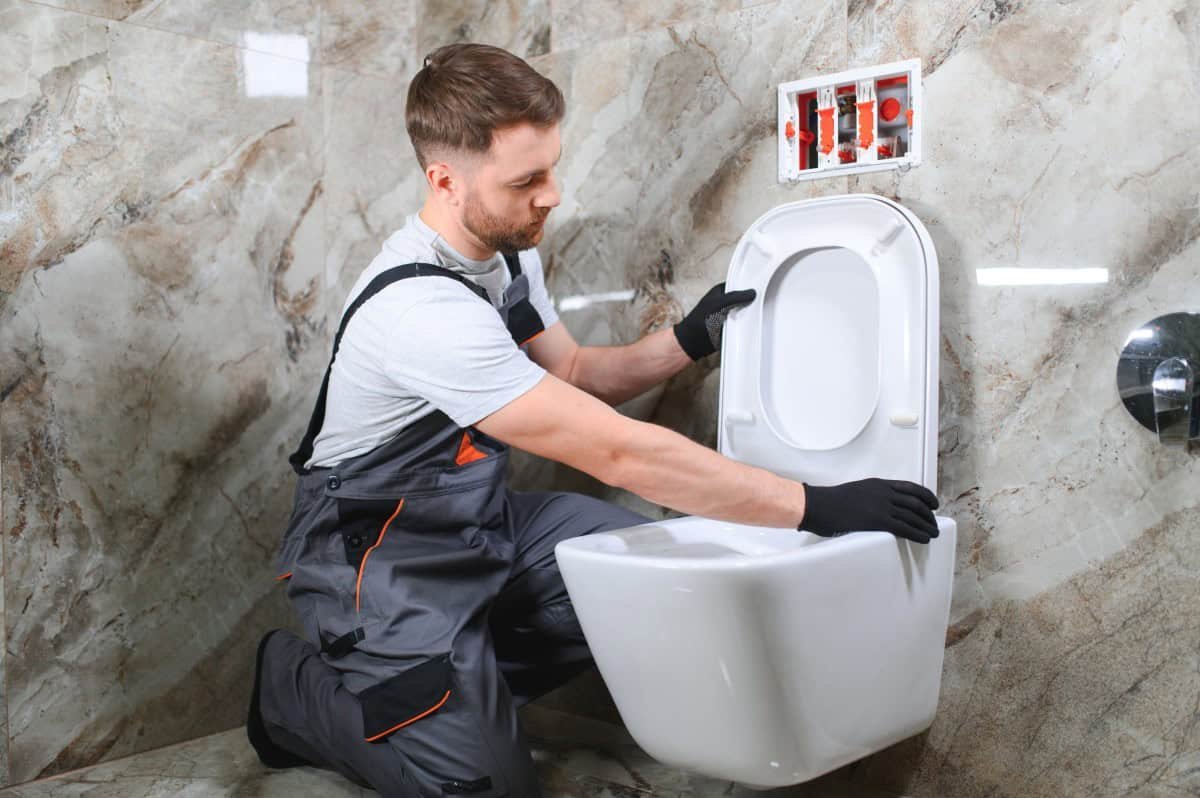
How Much Does It Cost to Install a New Toilet?
A toilet is the hardest-working fixture in your house and the one you think about least — until it cracks, runs constantly, or just looks like it survived the Cold War. When people ask how much does it cost to install a new toilet, the answer is pleasantly reasonable: this is one of the most affordable fixture upgrades in home improvement, and it’s very DIY-friendly.
The Short Answer
$200–$600 total for most toilet installations. That breaks down to $100–$400 for the toilet itself plus $150–$300 for professional installation (or $0 labor + $15–$30 in supplies if you DIY). High-end models and complicated installs can push $800+, but the typical homeowner lands squarely in the $250–$450 range.
How Much Does It Cost To Install A New Toilet?
- Budget ($100–$180): basic two-piece, round bowl. Functional, no frills. Fine for rentals or rarely-used bathrooms.
- Mid-range ($180–$350): the sweet spot. Elongated bowl (more comfortable), better flushing technology, nicer finish, sometimes comfort height. This is what most homeowners should buy.
- Premium ($350–$600+): one-piece designs (easier to clean), skirted bases, dual-flush, soft-close seats, superior glaze. Worth it for a primary bathroom you’ll use for years.
- Smart/bidet toilets ($600–$2,000+): heated seats, bidet functions, auto-flush. Luxury territory — fantastic if it’s your thing, overkill otherwise.
Look for the WaterSense label — these use 1.28 gallons per flush or less versus the old 1.6 standard, and the EPA WaterSense program certifies they actually flush well. Modern low-flow toilets work dramatically better than the early-90s models that gave water-saving a bad name.
Professional Installation Costs
A plumber typically charges $150–$300 to install a customer-supplied toilet, assuming:
- The existing flange (the fitting the toilet bolts to) is in good condition
- The shutoff valve works
- No subfloor damage around the toilet
Costs climb when: the flange needs replacing ($100–$200 extra), the shutoff valve is frozen or leaking ($75–$150), there’s water damage to the subfloor ($200–$500+), or the new toilet’s rough-in measurement doesn’t match (standard is 12″, but older homes may be 10″ or 14″ — measure before buying).
DIY Installation: Very Doable
Installing a toilet is one of the best beginner plumbing projects — no soldering, no wall-opening, just methodical steps. Here’s the process:
- Shut off water and drain. Turn off the supply valve, flush, sponge out remaining tank and bowl water. Disconnect the supply line.
- Remove the old toilet. Unbolt the floor bolts, rock gently to break the wax seal, lift straight up (get help — toilets are 60–100 lbs of awkward). Stuff a rag in the drain pipe to block sewer gas.
- Inspect and prep. Scrape off the old wax ring completely. Check the flange — it should sit flush with or slightly above the finished floor. Replace if cracked.
- Install the new wax ring (or a wax-free silicone seal — more forgiving for beginners, reusable if you need to reposition). Set it on the flange.
- Set the new toilet. Lift and lower straight down onto the bolts — no twisting or sliding, which ruins the seal. Sit on it briefly to compress the wax ring evenly.
- Bolt down gently. Tighten nuts alternately, a little at a time. Overtightening cracks porcelain — snug is enough. This is the #1 DIY toilet mistake.
- Reconnect water, test thoroughly. Check the base for leaks, flush multiple times, check the supply connection.
- Caulk around the base — but leave the back uncaulked so leaks reveal themselves instead of hiding under the toilet.
Total DIY time: 1–3 hours for a first-timer. Supplies beyond the toilet: wax ring ($5–$10), new supply line ($8–$15, replace it — old ones fail), and possibly new floor bolts ($5).
Choosing the Right Toilet
- Measure your rough-in (wall to flange bolt center) before shopping. 12″ is standard; 10″ and 14″ exist and limit your options.
- Elongated vs. round: elongated is more comfortable and the modern standard; round fits tight spaces.
- Comfort height (17–19″) vs. standard (15″) — taller is easier on knees, and worth it for most adults.
- Check flush performance ratings — Maximum Performance (MaP) testing scores are published online. Don’t buy a toilet with a weak MaP score no matter how pretty it is.
Toilet Shopping Checklist
Bring this to the store: your rough-in measurement (wall to flange bolt centers — 12″ standard, but verify), the space constraints (round vs. elongated — elongated needs ~2″ more front clearance), your water supply line position, and whether you want comfort height. Check the MaP (Maximum Performance) flush rating online before buying — anything scoring under 600 grams is a clog waiting to happen; 800+ is excellent. And sit on the floor model. Seriously. Toilet comfort is personal, showrooms expect it, and five minutes of sitting beats five years of regretting.
What Pros Wish Homeowners Knew
Three things plumbers tell me they wish every customer knew: replace the supply line with every toilet install (old braided lines fail — it’s an $8 part that prevents floods); don’t use the toilet as a ladder (porcelain tanks crack under body weight, and a cracked tank is a sudden flood); and wax rings are one-shot — if you set the toilet crooked and lift it to reposition, use a fresh ring. A compressed-then-reused wax ring is the #1 cause of slow base leaks that rot subfloors silently for months.
One-Piece vs. Two-Piece: Does It Matter?
One-piece toilets (tank and bowl fused) cost more ($300–$600+) but have no crevice between tank and bowl — meaning fewer places for grime and easier cleaning. Two-piece ($100–$350) is the standard: cheaper, easier to transport and install (two lighter pieces), with more model choices. Performance is comparable at similar price points — the choice is mostly about cleaning convenience vs. budget. For a primary bathroom you’ll clean weekly for years, the one-piece premium pays off in reduced scrubbing.
The Takeaway
How much does it cost to install a new toilet? $200–$600 all-in for most situations — $100–$400 for a good mid-range toilet plus $150–$300 pro install, or under $50 in supplies if you DIY. It’s an afternoon project with an outsized impact on how a bathroom feels.
Measure your rough-in, buy a WaterSense elongated model, don’t overtighten the bolts, and leave the back of the base uncaulked. Few upgrades deliver this much daily-life improvement for this little money. Bathroom refresh continuing? Our bathroom remodel cost guide and running toilet fix (try the fix before replacing!) are worth reading.
[…] Cracked tank or bowl — replace the toilet; cracks don’t repair reliably. See our toilet installation cost guide. […]