
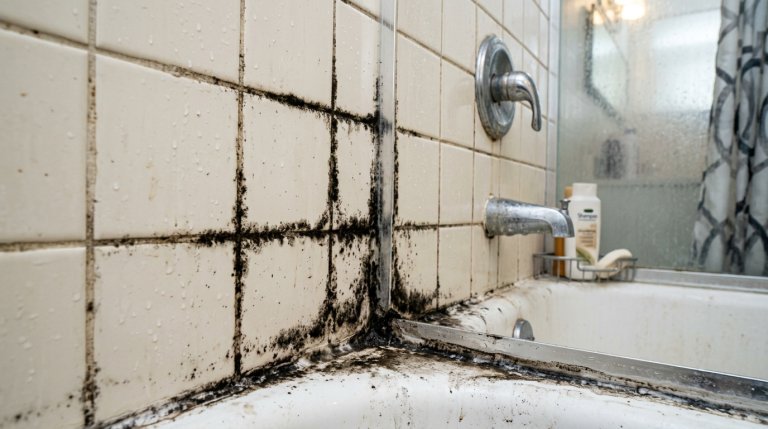
How Do I Get Rid of Mold in the Bathroom Permanently?
That black creeping along the grout lines, the musty smell that cleaning never quite kills — bathroom mold is the houseguest that won’t leave. If you’re asking how do I get rid of mold in the bathroom permanently, here’s the uncomfortable truth most cleaning guides skip: you can’t kill mold permanently without fixing the moisture. Kill the mold but ignore the moisture, and it’ll be back in weeks. Fix the moisture, and the mold has no future.
Why Bathrooms Grow Mold (and Kitchens Don’t, As Much)
Mold needs three things: moisture, food (soap scum, dust, drywall paper — bathrooms are buffets), and time. A bathroom provides all three daily: hot showers pump gallons of moisture into the air, ventilation is often inadequate, and porous grout and drywall stay damp for hours. Understanding this is the key to getting rid of bathroom mold permanently — you’re fighting an environment, not just a stain.
Step 1: Kill What’s There
For surface mold on tile, grout, and caulk:
- Protect yourself: gloves, eye protection, and a mask (N95 if you have it). Open a window. Mold spores irritate lungs — don’t breathe the cloud you create scrubbing.
- Scrub with detergent and water first. Plain old scrubbing with dish soap removes most surface mold. This is unglamorous and effective.
- Disinfect what’s left. Options that actually work:
- Concrobium or similar mold-control sprays — designed for this, no bleach fumes, leaves an antimicrobial residue. My top pick.
- Hydrogen peroxide (3%) in a spray bottle — effective, breaks down to water and oxygen, no toxic fumes.
- White vinegar (undiluted) — kills ~82% of mold species. Weaker than peroxide but fine for light cases.
- Bleach — the controversial one. It whitens mold on non-porous surfaces (tile) but doesn’t kill roots in porous materials (grout, drywall, caulk). The EPA’s mold guidance notes bleach’s limitations — it’s a surface whitener, not a root killer. Use it for appearance on tile if you want, but don’t rely on it for porous surfaces.
- Dry everything completely. Mold you kill but leave wet just… comes back.
Step 2: Fix the Moisture (The Permanent Part)
This is where “permanently” actually happens:
- Run the exhaust fan during every shower and 20–30 minutes after. If your fan is weak, loud, or vented into the attic (shockingly common), fix or replace it. A proper bath fan vented outside is the single most important mold prevention device in a bathroom. Size it right: roughly 1 CFM per square foot of bathroom.
- Squeegee shower walls after use. Thirty seconds removes most of the water that would otherwise sit there for hours feeding mold.
- Fix leaks immediately. Dripping faucets, sweating pipes, toilet base leaks — any chronic moisture source is a mold farm. Our leaky faucet guide covers the most common one.
- Regrout or recaulk failing joints. Cracked grout and peeling caulk let water behind surfaces where you can’t clean. See our bathtub caulking guide for the lasting method.
- Wash shower curtains and bath mats regularly. They’re mold’s favorite textiles. Curtain liners are cheap — replace rather than battle.
- Keep the bathroom door open after showers when privacy allows, to let moisture dissipate.
When It’s Bigger Than Surface Mold
Call a professional if:
- Mold covers more than ~10 square feet (the EPA’s threshold for DIY vs. pro)
- It’s inside walls (musty smell with no visible source, mold on the back of drywall, soft/spongy drywall)
- It’s in the HVAC system or spreading beyond the bathroom
- Anyone in the home has asthma, allergies, or immune issues aggravated by the mold
- You suspect a hidden leak — mold inside a wall means water inside a wall, and that’s a plumbing problem wearing a mold costume
For mold behind tiles or inside drywall, the affected material usually needs removal and replacement, not cleaning. You can’t scrub the back of drywall.
How Do I Get Rid Of Mold In The Bathroom Permanently?
If you battle chronic bathroom mold, these upgrades solve it structurally:
- Proper exhaust fan, vented outside, on a humidity sensor or timer. The #1 upgrade. ($150–$300 installed.)
- Mold-resistant drywall (green/purple board) and mold-resistant paint if you’re renovating.
- Epoxy grout instead of cement grout — essentially non-porous, mold can’t root in it.
- Frameless or properly sloped shower enclosures that don’t trap water in tracks and corners.
Mold and Health: When to Actually Worry
Let’s calibrate the fear. Common bathroom surface mold (the dark staining on grout and caulk) is unsightly and can irritate allergies, but it’s not the toxic nightmare social media suggests — the infamous “toxic black mold” needs prolonged water saturation inside walls, not shower humidity. That said, take mold seriously if: anyone in the home has asthma or mold allergies (symptoms worsening at home is the signal), there’s a musty smell with no visible source (hidden mold), or mold keeps returning despite moisture control (indicating a hidden leak). The CDC’s mold guidance is the authoritative, non-alarmist reference. For most bathroom mold, the health advice is simple: clean it, fix the moisture, ventilate — and don’t lose sleep over it.
The Renter Version
Renters: bathroom mold from inadequate ventilation is generally the landlord’s responsibility — especially missing or broken exhaust fans, plumbing leaks, and structural moisture issues. Document everything (photos, written requests, dates), request repairs in writing, and know your local tenant rights — many jurisdictions allow rent withholding or repair-and-deduct for unresolved habitability issues. What is your job: running the fan, squeegeeing, reporting leaks promptly, and not creating moisture problems. Do your part, document theirs.
The Takeaway
How do you get rid of mold in the bathroom permanently? Kill what’s there (scrub + peroxide or Concrobium, not just bleach), then eliminate the moisture: exhaust fan running properly and vented outside, squeegee after showers, fix every leak, maintain grout and caulk. No moisture, no mold — permanently.
Mold is a symptom; moisture is the disease. Treat the disease and the symptom never returns. Bathroom deep-clean continuing? Our grout cleaning guide handles the detail work.