
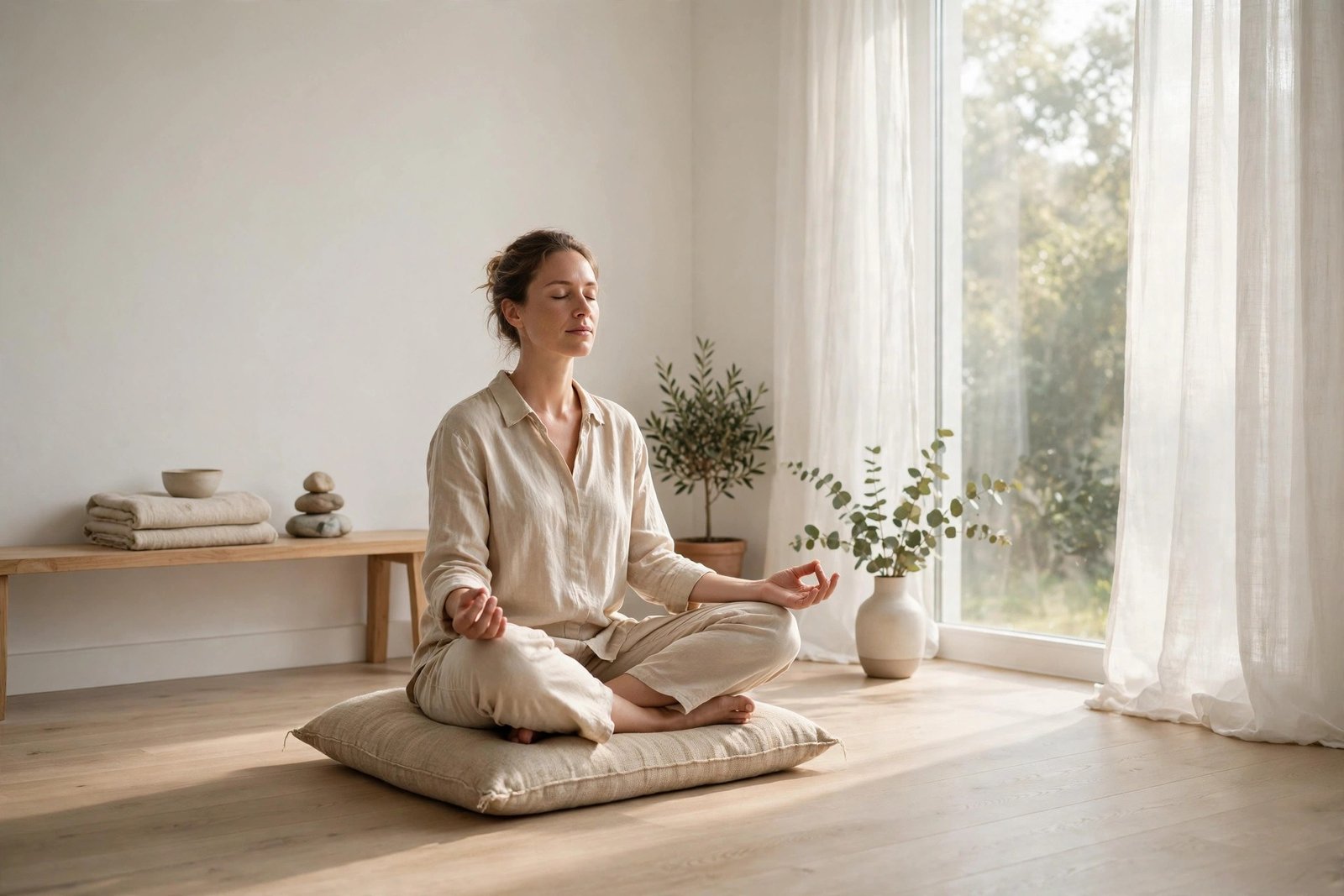
Meditation is the rare habit with both ancient pedigree and modern scientific backing — reduced stress, better focus, improved emotional regulation, even structural brain changes. Yet most people who try it quit within weeks, convinced their mind is “too busy” or that they are “doing it wrong.” The problem is never the meditator; it is the method.
This guide shows you how to develop a meditation habit that lasts: starting embarrassingly small, anchoring practice to existing routines, choosing between apps and unguided practice, handling the busy mind, and progressing sanely from two minutes to a lifelong practice.
Why Meditation Habits Die (And How Yours Will Not)
The failure pattern is universal: download an app, attempt 20-minute sessions, spend them fighting thoughts, conclude meditation “does not work for me,” quit. The causes: starting too long (20 minutes is advanced, not beginner), wrong expectations (meditation is not thought-emptiness but thought-noticing), no anchor (practicing “whenever” means never), and all-or-nothing streaks (one missed day feels like failure).
The research-backed fix: start with 2–5 minutes daily, expect a busy mind (that is the practice — noticing and returning), attach sessions to an existing habit, and treat consistency as the only metric. The National Center for Complementary and Integrative Health reviews the evidence: benefits accrue from regular brief practice, not heroic sessions. Ten consistent minutes beats one heroic hour weekly.
Start With Two Minutes: The Only Beginning That Works
Two minutes sounds absurd. That is the point — it is so small your resistance cannot justify skipping it. Week 1–2: two minutes daily, same time, same spot. Sit comfortably (a chair is fine — the lotus position is optional equipment, not a requirement), set a gentle timer, and follow your breath. When you notice you are thinking — which will happen constantly — gently return attention to the breath. That noticing-and-returning is meditation; the thought is not failure but the rep.
Week 3–4: expand to five minutes, but only if the two-minute habit feels automatic. Month 2: ten minutes. Month 3+: fifteen to twenty, or stay at ten forever — ten daily minutes sustained for years outperforms twenty minutes abandoned in March. Never increase duration and skip days simultaneously; protect the streak above all. If your mind races uncontrollably at first, specific techniques help — here is how to start meditating when your mind will not quiet down, with methods designed for busy brains.
Anchoring: the habit glue
Attach meditation to a non-negotiable daily event: after morning coffee, before the shower, right after lunch, before bed. The existing habit becomes the cue — “coffee, then sit” requires no decision, and decisions are where habits die. Stack it visibly: leave the cushion where you will see it, keep the app on your home screen. Environmental cues do the remembering so willpower does not have to.
Apps vs. Unguided: What to Actually Use
Guided apps (Headspace, Waking Up, Insight Timer) excel for beginners: structure, variety, and a voice to follow when your mind scatters. The downside is dependence — some meditators find they cannot practice without guidance. Unguided practice (timer + breath) builds self-reliance faster and is free forever, but beginners often flounder without structure.
The pragmatic path: use guided sessions for the first month to learn the landscape, then transition to mostly unguided with guided sessions for variety or difficult periods. Techniques to explore: breath awareness (the foundation), body scan (excellent for physical tension), loving-kindness (surprisingly powerful for difficult emotions), and walking meditation (for people who cannot sit still — movement is the anchor). Try each for two weeks; keep what resonates. There is no superior technique, only the one you will practice.
The busy-mind toolkit
For racing minds specifically: labeling (silently note “thinking” when lost in thought — the label creates distance), counting breaths (count to ten, restart when lost — gives the analytical mind a job), shorter sessions (three focused minutes beat fifteen distracted ones), and realistic framing (a “bad” session where you returned to the breath 100 times trained attention 100 times — that is success, not failure).
Progressing: From Habit to Practice
Once daily practice is automatic (usually 2–3 months), deepen deliberately. Extend gradually: add five minutes monthly, never doubling abruptly. Add a second sit on high-stress days rather than lengthening the main one. Try a retreat day: a single Saturday of extended practice (even self-guided at home) deepens understanding more than weeks of short sits.
Study a little: one good book (try “Mindfulness in Plain English” — free online) clarifies more than a hundred app sessions. Find community: a weekly sitting group (many are free, in-person or online) sustains motivation through dry periods every meditator hits. And integrate informally: the real goal is not the cushion but the carryover — pausing before reacting, noticing tension midday, returning to the present during routine tasks. The sitting practice trains the muscle; daily life is where you use it. Complementary stress tools multiply the benefits — techniques to reduce stress while working from home pair naturally with a sitting practice.
When Meditation Is Hard: Troubleshooting
“I cannot stop thinking”: nobody can — the goal is noticing, not emptying. Physical discomfort: adjust posture freely; pain is not part of the practice (use a chair, cushions, whatever works). Sleepiness: meditate earlier, splash water on your face, or try eyes-open practice — drowsy meditation still counts but alert practice trains more.
Emotional turbulence: meditation sometimes surfaces difficult feelings — this is normal processing, not malfunction. If it overwhelms, shorten sessions, switch to loving-kindness or walking meditation, and consider support. Plateaus: months where nothing seems to happen are normal and often precede deepening — keep sitting. And if meditation consistently worsens anxiety or surfaces trauma responses, pause and consult a professional — the National Institute of Mental Health offers guidance on when mindfulness difficulties warrant clinical support. Meditation is a tool, not a religion; use it in service of your well-being.
Conclusion
A lasting meditation habit is built, not found: start with two minutes, anchor it to an existing routine, expect and welcome the busy mind, progress gradually, and treat consistency as the only metric that matters. The meditators with decade-long practices are not the most talented but the most regular — they simply never stopped showing up for a few minutes daily. Start today, start tiny, and let the smallest habit compound into the biggest change.
Frequently Asked Questions
How long should beginners meditate?
Two to five minutes daily. This sounds trivial but it is the evidence-backed starting point — tiny sessions build the consistency muscle without triggering resistance. Expand gradually over months, never sacrificing the daily streak for longer sessions.
Is it normal for my mind to race during meditation?
Completely normal — a busy mind is the default human condition, not a meditation failure. The practice is noticing the racing and gently returning attention, repeated hundreds of times. Each return strengthens attentional control; the “bad” session full of returns is actually excellent training.
Are meditation apps worth paying for?
For the first month or two, often yes — guided structure helps beginners enormously. Long-term, many meditators transition to free unguided practice (timer + breath) supplemented by free resources. Pay for the learning phase, not forever, unless you genuinely love a particular teacher’s guidance.
What is the best time of day to meditate?
Morning is ideal for most — the mind is calmer, and practice sets the day’s tone. But consistency beats timing: a daily evening session you actually do outperforms a theoretical morning session you skip. Anchor it to an existing habit at whatever time works.
Can meditation replace therapy or medication?
No — meditation is a wellness practice, not a treatment. It complements professional care for anxiety, depression, and trauma but does not replace it. If you are dealing with clinical conditions, work with healthcare providers and discuss meditation as a complementary tool.