
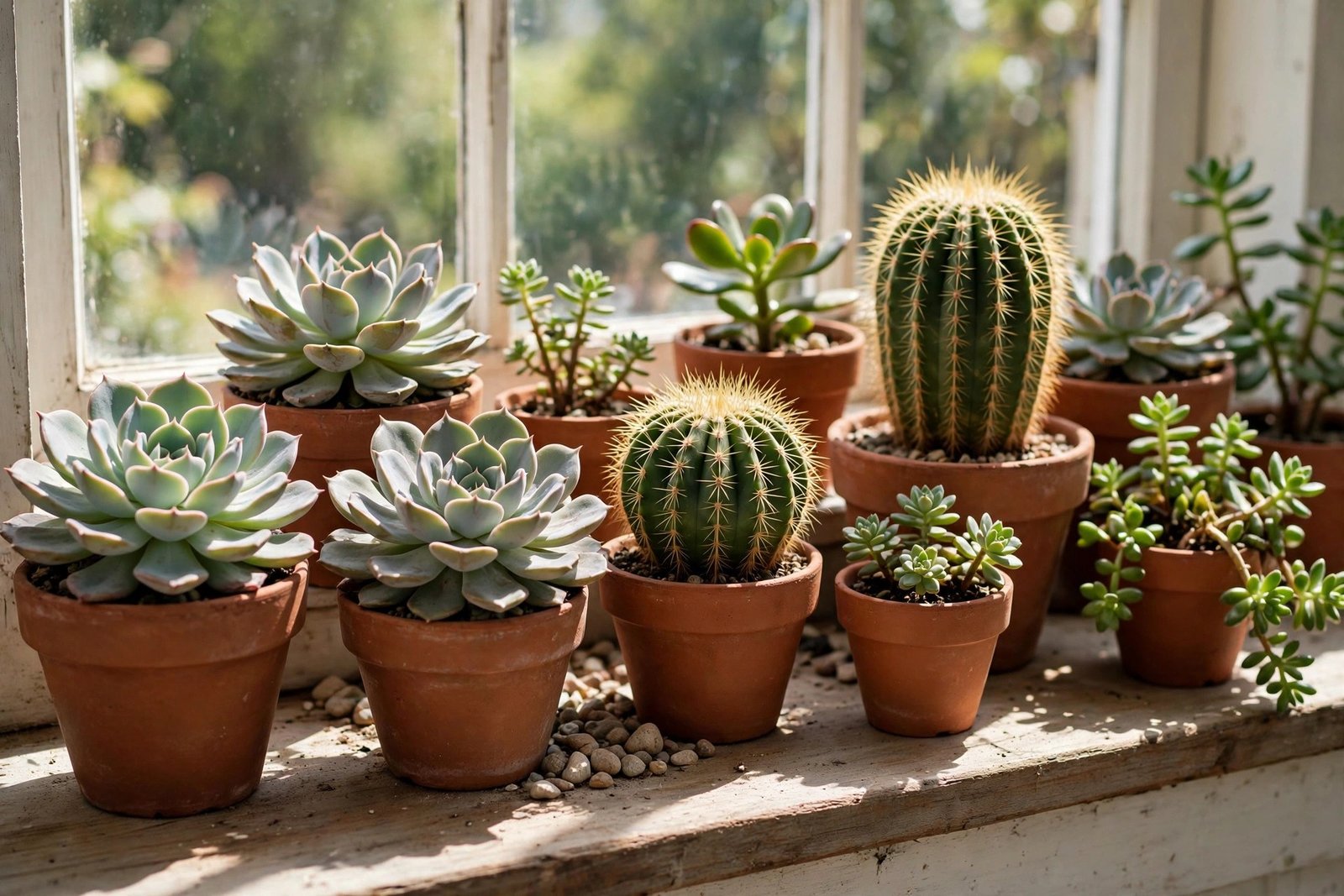
Succulents and cacti get lumped together as “plants you never water,” which is how most of them die — either drowned by well-meaning owners or desiccated by neglect. The truth is subtler: all cacti are succulents, but not all succulents are cacti, and their watering needs differ in ways that matter.
This guide explains when to water succulents versus cacti: how to read thirst signals, seasonal schedules for each, the soil and pot setups that forgive mistakes, and the errors that kill desert plants.
Succulents vs. Cacti: What Is the Difference?
Botanically, “succulent” describes any plant storing water in fleshy tissue — a huge category spanning echeveria, jade plants, aloe, haworthia, and agave. “Cactus” is a specific plant family (Cactaceae), all of which are succulents, distinguished by areoles (the little cushion-like structures spines grow from). Practically, cacti are the extreme desert specialists — slower-growing, more rot-prone, and more tolerant of total drought.
Why it matters for watering: leafy succulents (echeveria, jade) actively grow for more of the year and signal thirst visibly through softening leaves; true cacti grow in brief bursts, show thirst subtly, and punish overwatering faster. Treating a barrel cactus like an echeveria is a common slow-motion killing. The Cactus and Succulent Society of America offers species-specific guidance that goes deeper than any general rule.
Reading Thirst: The Signs That Matter
Forget schedules first; learn the signals. Leafy succulents tell you clearly: bottom leaves soften, wrinkle, and feel less plump — that is thirst, and it is time to water. Firm, plump leaves mean “leave me alone.” Cacti are subtler: slight rib narrowing, a duller skin tone, or gentle give when squeezed (carefully, with tongs or gloves). A cactus that looks exactly the same as last month probably needs nothing.
The universal test works for both: stick a finger (or a wooden chopstick) two inches into the soil. Bone dry all the way down? Water. Any moisture at all? Wait. This test beats every calendar because it responds to your actual conditions — pot size, soil, light, and season all change drying speed. When in doubt, wait another three days; both plant types tolerate drought far better than flood.
The soak-and-dry method
When you do water, do it properly: drench until water flows freely from the drainage holes, let it drain completely, then do not water again until the soil is fully dry. This mimics desert rain — rare but thorough — and encourages deep, resilient roots. Light sprinkles that wet only the surface are the worst approach: they encourage shallow roots and rot the crown. Soak and dry, every time, for both succulents and cacti.
Seasonal Schedules: Growth vs. Dormancy
Both groups follow a growth-dormancy rhythm, but on different clocks. Summer-growing succulents (echeveria, jade, aloe, agave): water every 7–14 days in active growth, letting soil dry between. Winter-growing succulents (haworthia, lithops, many mesembs): flip the schedule — water sparingly in summer, more in fall through spring. Know which type you own; watering a lithops in July can kill it.
Desert cacti: water every 2–4 weeks in the growing season (spring through early fall), then essentially stop in winter — many cacti want 2–3 months of near-total dryness to rest and set buds. Jungle cacti (Christmas cactus, orchid cactus) break all cactus rules: they like regular moisture and humidity, closer to tropical houseplants. The seasonal rhythm matters more than any fixed schedule — and it is the same attentiveness that helps you keep houseplants alive if you travel a lot: understanding each plant’s rhythm beats any app reminder.
Soil, Pots, and the Forgiveness Factor
The right setup forgives watering mistakes; the wrong one amplifies them. Soil: fast-draining gritty mix — roughly 50% mineral grit (pumice, perlite, coarse sand) to 50% potting soil for leafy succulents; up to 70–80% mineral for cacti. Bagged “cactus mix” alone is often too peaty — cut it with extra pumice. Pots: terracotta breathes and dries fastest (most forgiving for overwaterers); always with drainage holes, never without.
Pot size: only 1–2 inches wider than the plant — oversized pots hold wet soil against small root systems, the classic rot setup. Top-dress with gravel: it keeps leaves off damp soil, discourages fungus gnats, and looks sharp. The University of California’s agriculture extension publishes container media recipes tuned for arid plants. And if you are landscaping with these plants outdoors, they fit naturally into low-maintenance landscaping ideas for beginners — the same plants, the same principles, bigger scale.
The Killers: Mistakes That Rot Desert Plants
Overwatering kills more succulents and cacti than all other causes combined — mushy translucent leaves or a soft cactus base mean rot, and by the time you see it, it is often too late. Prevention (gritty soil, drainage, restraint) beats cure. No drainage holes is a death sentence; drill them or repot. Misting does nothing useful and promotes rot on fuzzy-leaved types.
Winter watering of dormant cacti rots roots that are not drinking. Repotting into huge pots (“room to grow”) creates the wet-soil trap. And treating all succulents identically — the lithops drowned on an echeveria schedule is a rite of passage nobody needs. Learn each plant’s origin: where it evolved tells you how it wants to live.
When in doubt, propagate
One consolation of succulent keeping: most leafy succulents propagate effortlessly from leaves or cuttings. If a plant is struggling, take healthy leaves as insurance before it declines — a tray of leaf propagations is both backup and expansion. Echeveria leaves root in weeks; jade and haworthia offsets separate easily. Even a plant you underwatered into crispiness often leaves viable propagation material. Desert plants are survivors by design — give them the chance to prove it.
Conclusion
Watering succulents versus cacti comes down to reading the plant, not the calendar: leafy succulents signal thirst with softening leaves and want soak-and-dry through their growing season; true cacti want less frequent water, a real winter rest, and even sharper drainage. Give both gritty soil, drainage holes, and the discipline to wait — and they will repay you with decades of sculptural, nearly indestructible life.
Frequently Asked Questions
How often should I water succulents indoors?
Typically every 1–3 weeks in the growing season, letting soil dry completely between waterings; monthly or less in winter. Always check soil moisture first — indoor conditions vary too much for fixed schedules.
Do cacti need less water than other succulents?
Generally yes — desert cacti tolerate longer drought and want a true dry winter rest, while leafy succulents like echeveria and jade grow more continuously and signal thirst more obviously. Jungle cacti are the exception, preferring regular moisture.
What are signs of overwatering in succulents?
Mushy, translucent, or yellowing leaves that drop easily; black or mushy stem bases; and soil that stays wet for days. Overwatering damage is often irreversible once rot reaches the stem — prevention through gritty soil and restraint is everything.
Should I water succulents in winter?
Sparingly or not at all, depending on the plant. Desert cacti: essentially no water for 2–3 winter months. Winter-growing succulents (haworthia, lithops): light watering through winter is their growing season. Know your plant’s origin cycle.
Can succulents survive without drainage holes?
Technically sometimes, practically it is gambling — one overwatering without drainage is fatal. Always use pots with drainage holes; it is the single highest-impact choice in succulent care.