
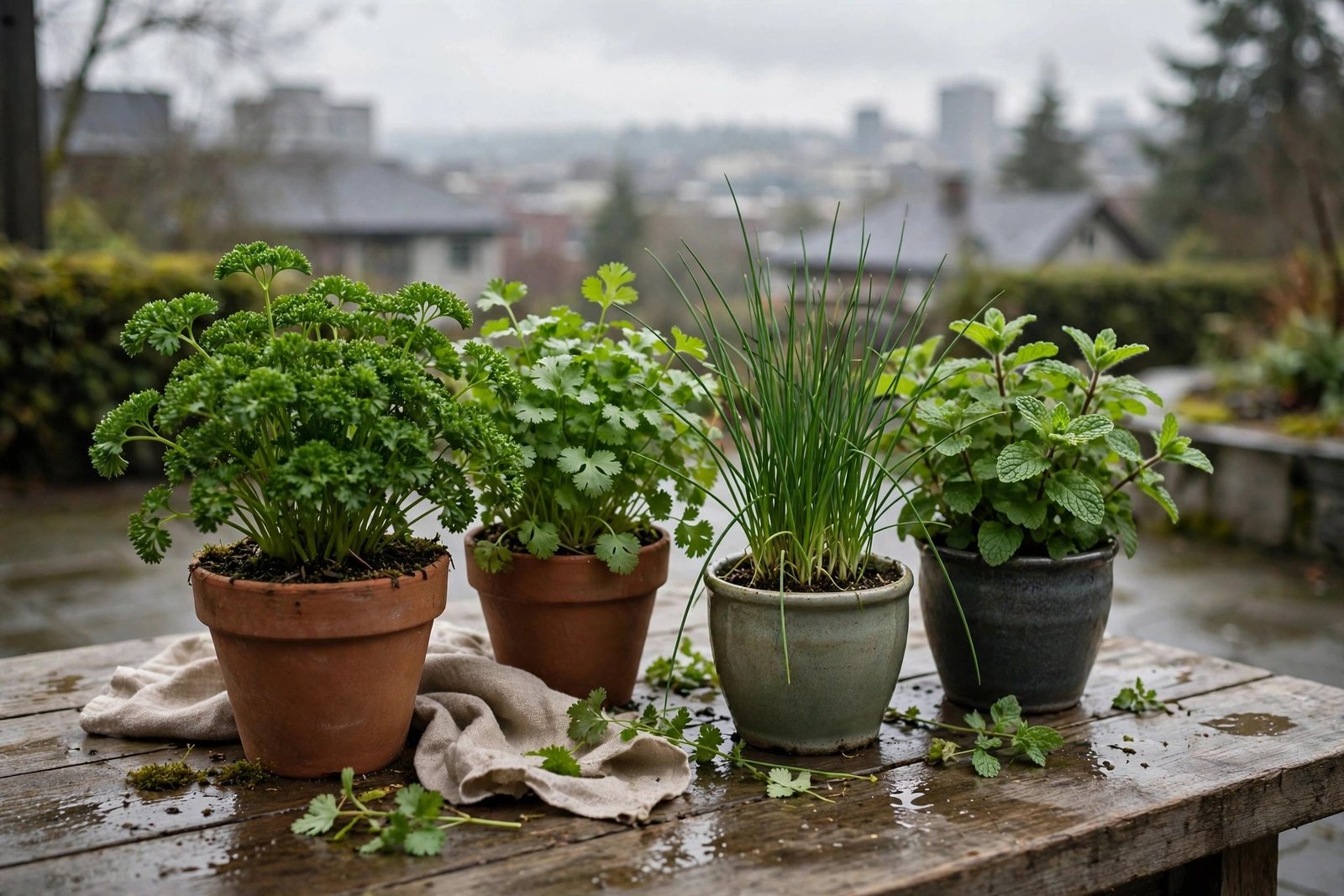
Seattle’s reputation precedes it: gray skies, drizzle, summers that arrive in August. Conventional gardening wisdom says herbs need blazing sun — so can you actually grow flavorful herbs in one of America’s cloudiest major cities? Absolutely. Seattle’s cool, moist climate is secretly excellent for many herbs; you just need to work with the clouds, not against them.
This guide covers which herbs thrive in Seattle’s conditions, how to maximize limited light, drainage strategies for the rainy season, and indoor setups that keep you in fresh herbs year-round.
Why Seattle Is Better for Herbs Than You Think
Here is the secret: many culinary herbs evolved in cool, temperate conditions and actually suffer in blazing heat. Cilantro bolts (goes to seed) in days under hot sun but grows lush and slow-bolting in Seattle’s cool summers. Parsley, chives, mint, and dill all prefer Seattle’s temperatures to Phoenix’s. Cool-season herbs produce more tender, flavorful growth without the bitterness heat induces.
Seattle’s challenges are real but specific: low light intensity (not just cloud cover, but the northern latitude’s weaker sun angle), soggy winter soil that rots Mediterranean herbs, and a short warm season for heat-lovers like basil. The strategy is not fighting these conditions but selecting herbs that love them — and giving the heat-lovers special treatment. Washington State University Extension publishes Pacific Northwest-specific herb growing guides grounded in local research.
The Shade-Tolerant All-Stars
These herbs thrive in Seattle’s typical 3–5 hours of direct sun: mint (nearly indestructible; always container-grown to contain its spread), parsley (biennial; Seattle’s mild winters often carry it through), cilantro (sow every 2–3 weeks spring through fall for continuous harvest), chives (perennial, trouble-free, pretty purple flowers), and lemon balm (vigorous; great for tea).
Dill, fennel, and lovage all do well in cool partial sun. Bay laurel grows slowly but steadily into a handsome container shrub. These are your reliable backbone — plant them first, harvest constantly, and build confidence before tackling the divas. The Old Farmer’s Almanac offers planting calendars adjusted for the Pacific Northwest’s unusual season timing.
The Mediterranean herbs: drainage is everything
Rosemary, thyme, oregano, and sage can grow in Seattle — the killer is not cold but winter wet. Plant them in the sunniest, most sheltered spot (against a south-facing wall), in sharply draining soil (amend heavily with grit or perlite), ideally in raised beds or containers that never waterlog. Choose hardy varieties (Arp rosemary over tender ones), and do not coddle them — these herbs prefer neglect to attention. A gravel mulch around their crowns keeps winter moisture away from stems.
Maximizing Light in a Cloudy City
Light strategy separates thriving Seattle herb gardens from sad ones. Site selection: the sunniest spot you have — south-facing, unobstructed, reflective surfaces nearby (light-colored walls bounce precious photons). Containers: grow in pots you can move to chase the sun through the seasons; a pot that gets 3 hours in June might get 5 in August as the sun angle shifts.
Reflective mulches (light gravel, white stones) bounce light up into lower leaves. Prune overhead competition: that overgrown shrub stealing your herb bed’s afternoon sun is costing you harvests. Succession planting exploits the light you have: fast crops (cilantro, dill) sown repeatedly outproduce a single struggling basil. And accept reality gracefully — a Seattle basil will never match a Tucson one, but Seattle cilantro embarrasses Tucson’s. Play to the climate’s strengths.
Beating the Rain: Drainage and Disease
Seattle’s 150+ rainy days demand drainage obsession. In-ground beds: amend clay soil with compost and coarse organic matter, consider raised beds (12+ inches) for guaranteed drainage. Containers: oversized drainage holes, potting mix (never garden soil), pots on feet so they drain freely. Herbs sitting in winter-wet soil develop root rot — the number-one Seattle herb killer.
Disease pressure runs high in cool damp air: space plants for airflow, water at the base (never overhead), harvest regularly (dense unharvested growth traps moisture), and remove diseased foliage promptly rather than hoping it improves. Copper fungicide is OMRI-listed and effective for persistent fungal issues. Good drainage plus airflow prevents 90% of Seattle herb problems — and rich, living soil helps everything; start composting at home and your herbs get the biology that keeps them resilient.
Indoor Herb Gardens for Year-Round Harvests
Seattle winters (November–February) are the indoor herb season. A sunny south-facing windowsill sustains parsley, chives, and mint; for serious winter production, a simple LED grow light ($25–$40) transforms results — 12–14 hours of supplemental light grows basil and thyme that windowsills cannot. The skills overlap heavily with houseplant care — if you can keep houseplants alive if you travel a lot, you can run a winter herb station.
Best indoor performers: basil (needs the most light — prioritize it under the grow light), parsley, cilantro, chives, mint, and thyme. Start indoor pots in September from outdoor divisions or new seedlings so they are established before the dark months. Indoor herbs need less water (no sun to drive transpiration) but more attention to humidity — Seattle’s indoor winter air is dry, so group pots together or mist occasionally.
Preserving the summer surplus
Seattle’s short intense summer can bury you in herbs all at once — preserve the glut. Pesto (basil, parsley, cilantro) freezes beautifully in ice-cube trays; woody herbs (thyme, oregano, rosemary) dry well hung in bundles; soft herbs freeze well chopped in olive oil. A summer’s abundance becomes winter’s flavor, and preserving teaches you which varieties are worth growing again. Keep notes on what thrived — Seattle microclimates vary block by block, and your own records beat any generic guide.
Conclusion
Growing herbs in Seattle’s cloudy climate is about matching plants to reality: lean into the shade-tolerant all-stars that love cool weather, give Mediterranean herbs sharp drainage and shelter, chase every photon with smart siting and containers, and run an indoor setup through winter. Seattle will never grow basil like the Mediterranean — but it grows cilantro, parsley, and mint like nowhere else. Work with the clouds, and your kitchen will never lack fresh herbs.
Frequently Asked Questions
What herbs grow best in Seattle?
Mint, parsley, cilantro, chives, dill, lemon balm, and lovage thrive in Seattle’s cool, cloudy conditions. Hardy Mediterranean herbs (rosemary, thyme, oregano, sage) succeed with sharp drainage and sheltered sunny spots.
Can I grow basil in Seattle?
Yes, but it needs help: the sunniest warmest spot available, black pots (absorb heat), cold frames or cloches early in the season, and realistic expectations. For winter basil, an indoor LED grow light is the reliable answer.
How do I keep herbs alive through Seattle winters?
Hardy perennials (thyme, sage, chives, mint) survive outdoors with good drainage. Tender herbs (basil, cilantro) move indoors to sunny windows or grow lights. The killer is winter wet, not cold — drainage matters more than warmth.
Why do my herbs get leggy in Seattle?
Low light intensity causes stretching as plants reach for sun. Maximize light (sunniest spot, reflective mulch, no overhead competition), harvest aggressively (pinching promotes bushiness), and accept that some legginess is the price of northern-latitude gardening.
When should I plant herbs in Seattle?
Cool-season herbs (cilantro, parsley, dill) go in March–April; tender herbs (basil) wait until nights stay above 50°F, typically late May. Fall planting (September) of hardy perennials lets roots establish over winter for explosive spring growth.