
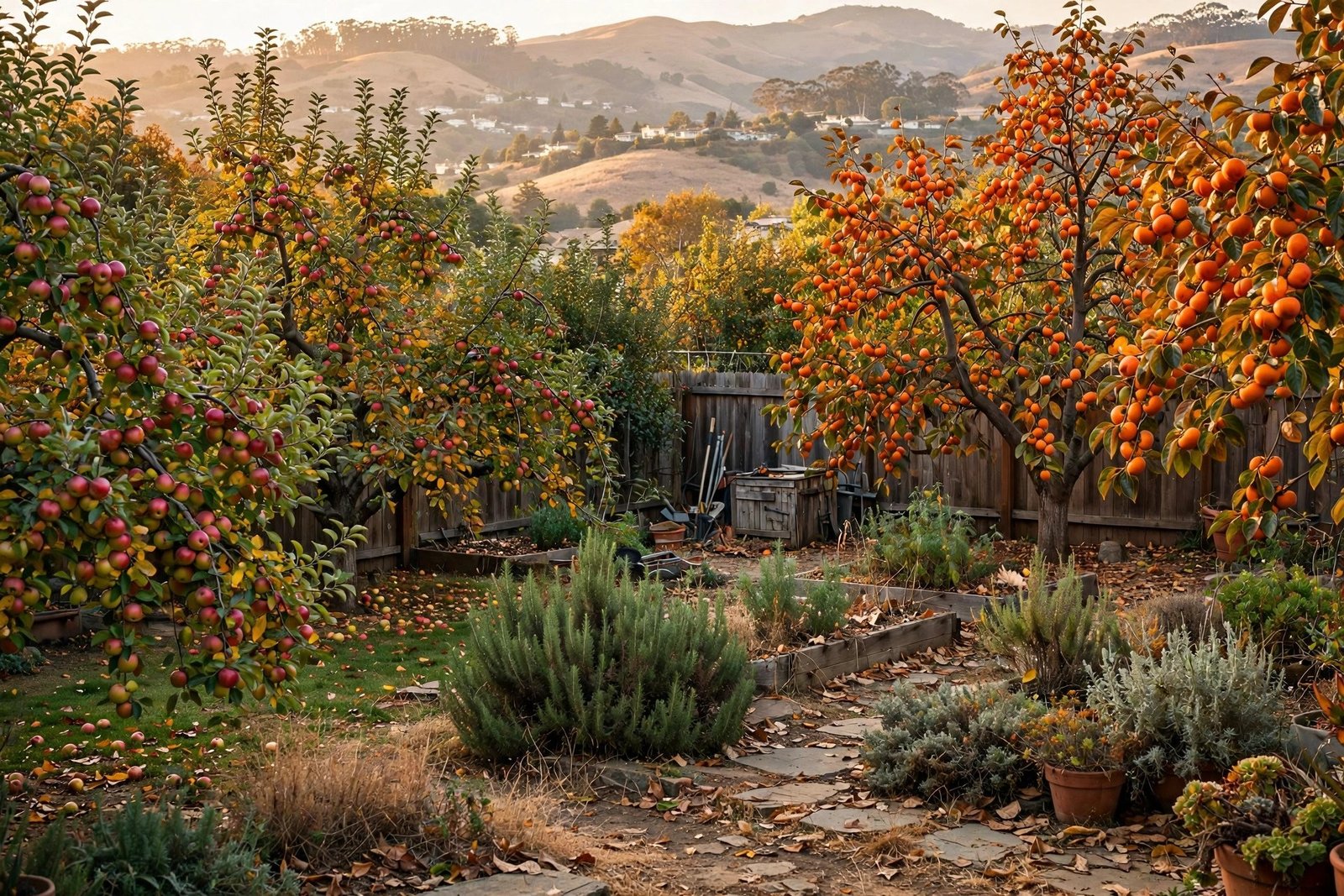
The Bay Area is fruit-tree heaven disguised as a tech hub. Mild winters, warm dry summers, and a patchwork of microclimates mean you can grow everything from apples to figs to persimmons — often in the same yard. But “mild” cuts both ways: low chill hours rule out some varieties, and foggy summers humble others.
This guide covers the best fruit trees for Bay Area gardens: how chill hours shape your choices, the top varieties for each fruit, microclimate matching, and where to buy trees that thrive.
Chill Hours: The Number That Rules Everything
Most deciduous fruit trees need a certain number of winter “chill hours” (hours between 32–45°F) to set fruit properly. The Bay Area’s chill varies enormously: San Francisco proper gets as few as 200–400 hours, inland valleys (Walnut Creek, San Jose) get 600–1,000+, and the Peninsula falls in between. Plant a high-chill apple in San Francisco and you get leaves but no fruit — the single most common Bay Area fruit-tree disappointment.
Look up your zip code’s chill hours (UC Cooperative Extension publishes maps), then choose varieties rated at or below your number. When in doubt, go lower-chill — a tree rated for 300 hours fruits fine at 800, but the reverse fails. The University of California’s agriculture extension maintains the definitive chill-hour maps and variety lists for Bay Area growers.
Stone Fruits: Peaches, Plums, Cherries, Apricots
Plums are the Bay Area’s most reliable stone fruit — Santa Rosa, Burgundy, and Beauty need only 300–500 chill hours and produce outrageously in fog and heat alike. Peaches and nectarines need more care (choose low-chill varieties like Eva’s Pride or Snow Beauty, 200–300 hours) and suffer in foggy summers — inland gardeners do best.
Sweet cherries are the heartbreakers: most need 700–1,000 chill hours, ruling out much of the Bay Area. Low-chill exceptions (Minnie Royal, Royal Lee, 200–300 hours) fruit in warm microclimates — plant them as a pair for pollination. Apricots bloom early and lose crops to late frost in cold pockets, but Blenheim (the legendary Bay Area apricot) thrives in warm sheltered spots. Always check pollination needs: many stone fruits need a partner variety, though most modern plums and peaches are self-fertile.
The multi-graft solution
Short on space? Multi-graft trees — one trunk, 3–4 varieties grafted on — give you an extended harvest from a single planting hole. Dave Wilson Nursery, the California wholesaler behind most nursery fruit trees, pioneered the home-orchard multi-graft, and their “fruit cocktail” trees are Bay Area staples. Balance the grafts with summer pruning so no single variety dominates.
Pomes and Persimmons: Apples, Pears, and Fall Stars
Apples: choose low-chill varieties — Anna, Dorsett Golden, and Fuji (200–400 hours) are Bay Area reliables; Gravenstein, the Sonoma County heirloom, needs ~700 hours for inland spots. Asian pears (Shinseiki, 20th Century) need only 300–400 hours and produce crisp, juicy fruit even in fog. European pears (Bartlett) want more chill — inland only.
Fuyu persimmons are arguably the perfect Bay Area fruit tree: gorgeous fall color, zero chill requirement issues, no pests to speak of, and fruit that hangs like ornaments into winter. Figs (Black Mission, Brown Turkey) are nearly indestructible and produce two crops in warm microclimates. Pomegranates (Wonderful) thrive in hot inland spots. These “easy” fruits are ideal first trees — plant them while you learn, alongside starting composting at home to build the soil they will feast on.
Citrus and Subtropicals
In warm Bay Area microclimates (South Bay, sheltered Peninsula, inland East Bay), citrus thrives: Meyer lemon everywhere, satsuma mandarins where frost nips, kumquats for the adventurous. Avocados are the aspirational pick — Mexicola and other cold-hardy varieties survive (not thrive) in the warmest spots; treat them as experiments, not staples.
Loquats are the sleeper hit: evergreen, ornamental, fragrant flowers, delicious spring fruit, and utterly unfussy about Bay Area conditions. Feijoa (pineapple guava) handles cold and fog with grace. These subtropicals extend your harvest calendar into seasons when deciduous trees rest — a thoughtful orchard mixes both. For design ideas on fitting fruit trees into ornamental landscapes, these low-maintenance landscaping ideas for beginners show how productive and beautiful can coexist.
Buying and Planting for Success
Buy from California nurseries in winter for bare-root trees (cheapest, widest selection, best establishment) — bare-root planting season is December through February. Choose 5-gallon grafted trees if you missed the window. Inspect graft unions (clean, healed), roots (fibrous, not circling), and trunks (straight, undamaged).
Plant in the dormant season: dig wide not deep, keep the graft union 4–6 inches above soil, water deeply, mulch 3–4 inches (not against the trunk). First-year care — consistent deep watering, no fruit allowed (pick off blossoms to build roots) — determines the tree’s lifetime productivity. Space dwarf trees 8–10 feet apart, semi-dwarfs 12–15; most Bay Area yards suit dwarfs and multi-grafts better than standard trees.
Pest and disease watch
Bay Area fruit trees face modest pest pressure: codling moth on apples (use pheromone traps and prompt fallen-fruit cleanup), peach leaf curl on peaches and nectarines (a single dormant-season copper spray prevents it — timing matters more than product), and scale on citrus (horticultural oil in late winter). The region’s dry summers naturally suppress most fungal diseases, which is a quiet blessing. Monitor weekly in spring, act early, and you will rarely need more than these basics. Healthy trees in good soil resist most problems on their own. Prevention through observation beats intervention every time.
Conclusion
The best fruit trees for the Bay Area match your chill hours and microclimate: low-chill plums, persimmons, figs, and citrus for most; apples, Asian pears, and low-chill cherries where conditions allow. Start with the easy winners, buy bare-root in winter, plant the graft union high, and be patient through year one. In five years, your yard becomes the neighborhood’s favorite season — and you will wonder why you ever bought fruit at the store.
Frequently Asked Questions
What are chill hours and why do they matter?
Chill hours are winter hours between 32–45°F that deciduous fruit trees need to break dormancy and set fruit. The Bay Area ranges from ~200 hours (San Francisco) to 1,000+ (inland valleys). Planting a variety needing more chill than your site provides means leaves without fruit.
Can I grow cherries in the Bay Area?
Standard sweet cherries need more chill than most Bay Area sites provide, but low-chill varieties (Minnie Royal, Royal Lee — 200–300 hours) fruit in warm microclimates. Plant two compatible varieties for pollination, and expect smaller harvests than inland orchards.
What is the easiest fruit tree for Bay Area beginners?
Fuyu persimmon, fig, and Meyer lemon are the holy trinity of easy Bay Area fruit: minimal chill concerns, few pests, forgiving of beginner mistakes, and reliably productive. Start with one of these while you learn.
When should I plant fruit trees in the Bay Area?
Bare-root trees: December through February, during dormancy. Container trees: fall through spring, avoiding summer heat. Dormant-season planting gives roots months to establish before growth demands begin.
Do I need two trees for pollination?
It depends on the fruit: most peaches, plums, and apricots are self-fertile (one tree suffices), while apples, sweet cherries, and European pears typically need a compatible partner. Multi-graft trees solve this elegantly in small yards.