
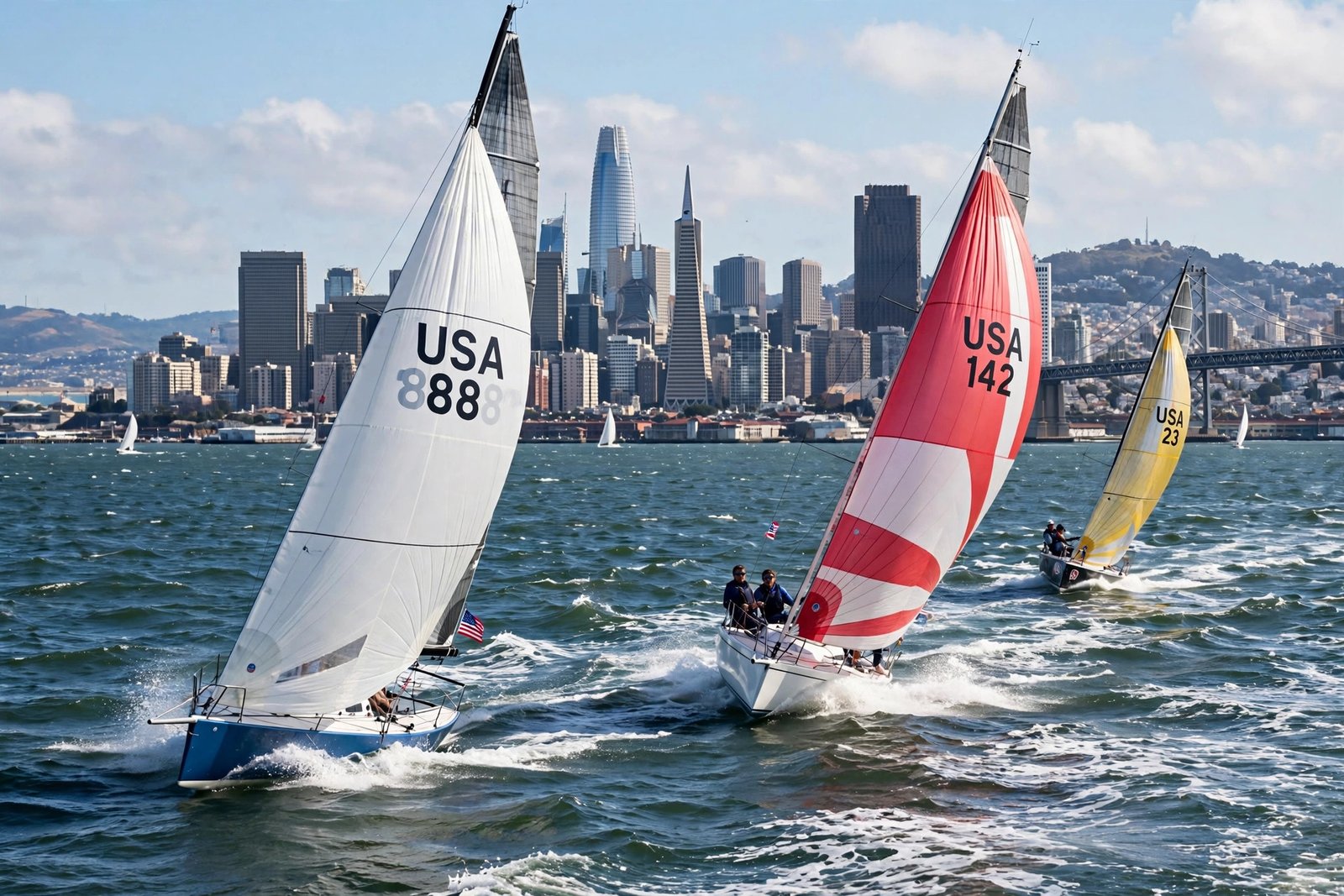
San Francisco Bay is one of the world's great sailing venues — consistent breeze, stunning scenery, and a sailing community deep enough to absorb total beginners. It's also famously challenging: strong currents, cold water, fog, and afternoon winds that humble newcomers.
That combination makes the Bay arguably the best place to learn: master sailing here and you can sail anywhere. Here's the practical path from curious landlubber to competent Bay sailor.
Start with Lessons, Not a Boat
Every experienced sailor gives the same advice: take lessons before buying anything. The Bay's top beginner programs include OCSC Sailing in Berkeley (comprehensive certification courses on the water), Club Nautique's sailing school (Alameda and Sausalito locations), and Cal Sailing Club in Berkeley — the legendary cooperative where membership costs a few hundred dollars a year and includes lessons, boats, and community.
Expect to pay $400–$900 for a solid beginner course (ASA 101 or US Sailing Basic Keelboat), typically 2–4 days on the water. You'll learn points of sail, tacking, jibing, docking, and — critically for the Bay — how to read wind and current. Don't skip the classroom theory; understanding why a sail works makes the practical clicks come faster. Most schools offer a free or cheap intro sail — take one before committing to confirm you actually enjoy heeling over in 20 knots of breeze.
The Bay's Unique Challenges (Respect Them)
The Bay's afternoon westerly builds reliably to 20–30 knots through the Golden Gate — exhilarating for sailors, terrifying for the unprepared. The ebb current can run 3–5 knots, enough to overwhelm a small boat's engine. Water temperature hovers in the 50s year-round: a capsize without a wetsuit becomes a hypothermia emergency in under an hour. Fog can drop visibility to near zero in minutes.
None of this should scare you off — it should shape your learning. Always check NOAA marine forecasts before going out, learn the tide and current tables (the ebb against the afternoon breeze creates the Bay's infamous steep chop), dress for the water temperature not the air temperature, and file a float plan. The sailors who get in trouble on the Bay are overwhelmingly the ones who underestimated it, not the ones who respected it.
For the authoritative take, visit US Sailing official site.
The Affordable Path: Clubs and Crewing
Boat ownership is the expensive way to sail; club membership and crewing are the smart ways. Sailing clubs (OCSC, Club Nautique, and others) charge monthly memberships roughly comparable to a gym, giving you access to a maintained fleet without purchase, maintenance, insurance, or slip fees — which together easily exceed $10,000/year for even a modest boat.
Crewing is the cheapest entry of all: racing skippers always need crew, and Wednesday-night beer-can races around the Bay welcome beginners. Show up at yacht club crew boards (St. Francis, Golden Gate Yacht Club), join Latitude 38's crew list, and be reliable, early, and willing to learn — that's the entire job description for new crew. You'll learn more in one racing season than in years of casual daysailing, and you'll meet the community that makes Bay sailing special.
Your First Year Timeline
Months 1–2: intro sail and ASA 101/US Sailing basic course. Months 3–4: practice sails with club boats or as crew, focusing on boat handling. Months 5–8: intermediate coursework (coastal cruising, bareboat) and regular crewing — aim for 20+ days on the water. Months 9–12: by now you'll know whether sailing is a passion or a pastime; either answer is fine.
Budget for year one: $1,500–$3,000 all-in for lessons, club membership, and gear (foul-weather jacket, sailing gloves, non-marking shoes, PFD). Compare that to a single year of boat ownership and the club path's economics are undeniable. Most Bay sailors who started this way describe the same arc: lessons → club → crewing → (maybe, years later) a boat of their own, bought with eyes wide open.
You can verify the details at NOAA marine forecasts.
Racing vs. Cruising: Choosing Your Sailing Style
Bay sailing splits into two cultures, and beginners should sample both. Racing — the Wednesday-night beer cans, weekend regattas, club championships — is the fastest skill-builder in sailing: you'll learn sail trim, tactics, and boat handling under pressure, surrounded by sailors who'll teach you if you're keen and reliable. It's also deeply social, with post-race gatherings that form the community's backbone. The commitment is real (regular crew spots expect regular attendance), but the learning-per-hour is unmatched.
Cruising — daysails to Angel Island, weekend trips to Sausalito or China Camp, the slow art of anchoring and onboard cooking — is sailing as lifestyle rather than sport. It's lower-pressure, more flexible, and frankly more romantic. Many sailors do both: race Wednesdays for skills and community, cruise weekends for joy. Your first year should include at least one regatta and one overnight cruise; the contrast will tell you which culture is yours. Either way, the Bay rewards the sailor who shows up consistently.
The social onboarding deserves emphasis because it's where most beginners stall: walking into a yacht club as a non-member feels intimidating, but sailing culture is genuinely welcoming to keen newcomers — every experienced sailor remembers their first bewildered Wednesday night. Introduce yourself to the race committee, volunteer for regatta support boats (you'll learn race dynamics while helping), and say yes to every invitation for your first three months. The network you build becomes your crew pipeline, your knowledge base, and eventually your friendship circle.
Set a one-year goal to keep yourself honest: 'crew 20 races' or 'earn my bareboat certification' or 'sail to Angel Island and back confidently.' Vague intentions dissolve; specific targets focus effort. And document the journey — photos, a sailing log, notes on what each outing taught you. In five years, when you're the experienced sailor welcoming a nervous newcomer on a Wednesday night, you'll have the full arc to share. That's how Bay sailing perpetuates itself, one welcomed beginner at a time.
Keep exploring with packing for a week-long beach vacation and traveling more sustainably without spending extra.
Getting into sailing on San Francisco Bay means lessons first (OCSC, Club Nautique, or Cal Sailing Club), respecting the Bay's wind, current, and cold water, and choosing clubs and crewing over premature boat ownership. It's one of the most rewarding sports the Bay Area offers — challenging enough to stay interesting for decades, social enough to build a community around. The water's waiting.
Frequently Asked Questions
How much does it cost to learn sailing in San Francisco?
A beginner certification course runs $400–$900. A full first year including club membership and gear typically costs $1,500–$3,000 — far less than owning a boat.
Is San Francisco Bay good for beginner sailors?
Yes, with proper instruction. The consistent wind and challenging conditions make it an excellent training ground — but beginners should learn through certified schools, not trial and error.
Do I need to buy a boat to sail regularly?
No. Sailing clubs provide fleet access for a monthly fee, and racing skippers constantly need crew. Most Bay sailors never own a boat.
What should I wear sailing on the Bay?
Dress for 50°F water: layers, a waterproof outer shell, sailing gloves, non-marking shoes, and always a PFD. The air may be 70°F while the water can kill in under an hour.