
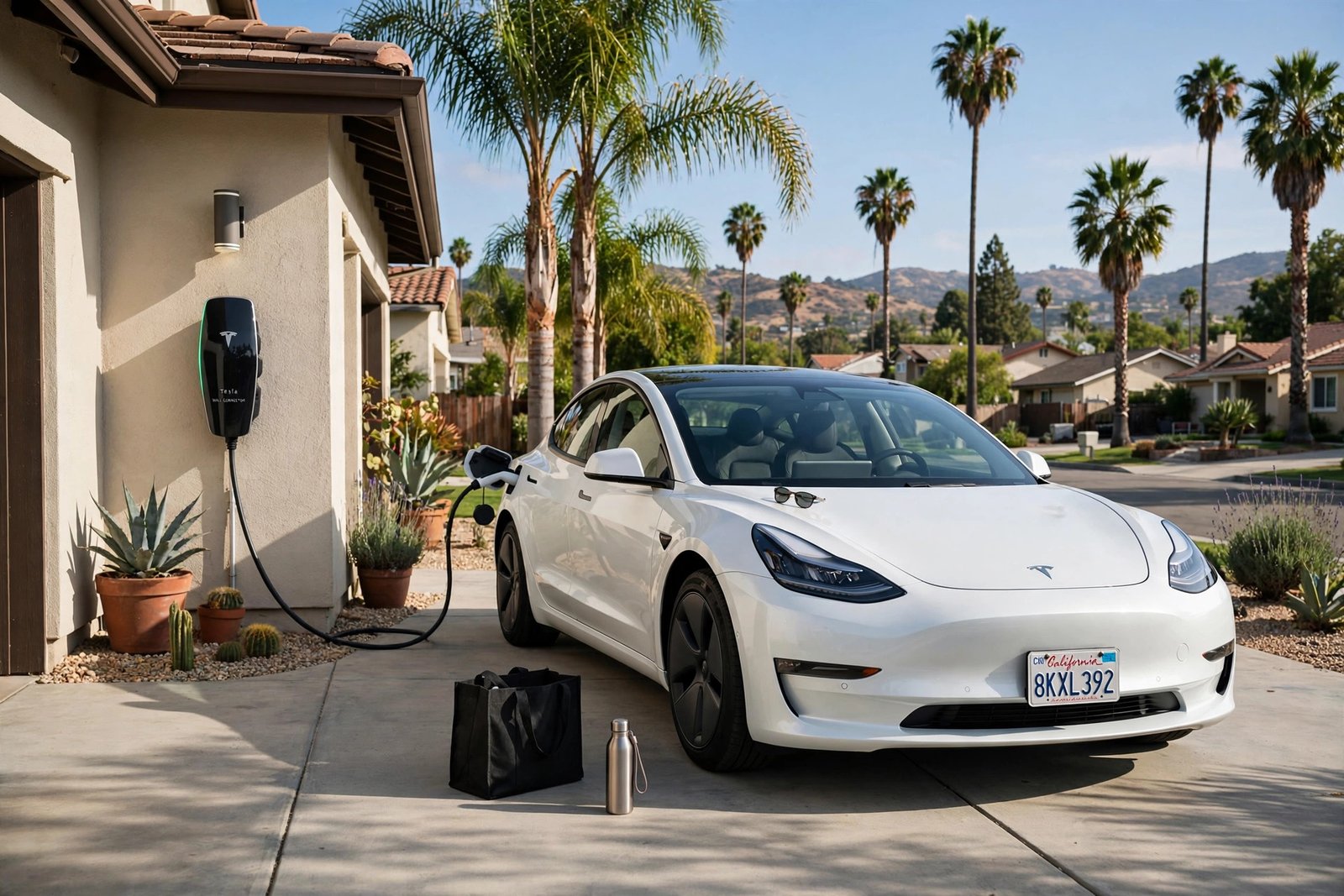
California is Tesla’s home turf — the Fremont factory, the densest Supercharger network in America, HOV lane access, and some of the country’s most generous EV incentives. But “available rebates” in 2026 is a moving target: federal credits have new rules, California’s programs have waitlists and income caps, and dealership (well, Tesla doesn’t do dealerships) pricing games can erase the savings if you’re not careful. Here’s how to buy a Tesla in California in 2026 while capturing every dollar you’re entitled to.
This guide covers the full incentive stack, the buying process, and the traps that cost California Tesla buyers thousands.
The 2026 Incentive Stack: What’s Actually Available
Federal Clean Vehicle Credit (up to $7,500)
The federal EV tax credit remains the biggest single incentive, but 2026 rules are strict: the vehicle must meet battery-component and critical-mineral sourcing requirements, MSRP caps apply ($55,000 for sedans, $80,000 for SUVs/trucks), and buyer income caps apply ($150,000 single / $300,000 joint). The good news: since 2024, buyers can transfer the credit to the dealer (Tesla) as an instant point-of-sale discount rather than waiting for tax time — a genuine improvement. Verify the specific model’s eligibility at purchase; Tesla’s lineup shifts between full, partial, and no credit as sourcing changes. The Department of Energy’s EV resources and fueleconomy.gov’s tax center track current eligibility.
California Clean Vehicle Rebate Project (CVRP)
California’s own rebate program has historically offered $2,000–$7,000 depending on the vehicle and buyer income, with increased rebates for low-income buyers. Critical 2026 caveat: CVRP funding is cyclical — the program has paused and relaunched multiple times as funds exhaust. Check current status before counting on it, apply promptly after purchase (there are deadlines), and note the income caps. When funded, it’s stackable with the federal credit.
Utility and local incentives
Many California utilities (SCE, PG&E, SDG&E) offer EV rebates ($500–$1,500), discounted time-of-use charging rates, and rebates for home charger installation. Air quality management districts in some regions add their own incentives. These are the most overlooked dollars — check your utility’s EV page during the buying process.
HOV lane access
Not a rebate, but worth real money in time: California’s Clean Air Vehicle decals grant solo HOV lane access. The program has been extended multiple times but faces periodic sunsets — verify current validity periods when you buy, since a decal expiring in a year is worth less than one good for four.
The Buying Process: Tesla Is Different
Tesla sells direct — no dealerships, no haggling, no finance-manager upsell gauntlet. You order online, choose from inventory or custom-build, and take delivery at a Tesla center. This simplicity is genuine, but it creates its own traps: prices change frequently (Tesla adjusts MSRP with demand — the price you see today may differ next month, which also affects credit eligibility against MSRP caps), inventory discounts appear on in-stock vehicles (check the existing-inventory listings for discounts of $1,000–$5,000+), and end-of-quarter pushes historically bring the best deals as Tesla chases delivery numbers.
Financing: Tesla offers its own loans and leases, but compare against credit unions and banks — California credit unions frequently beat Tesla’s rates by meaningful margins. For the federal credit’s point-of-sale transfer, ensure the paperwork reflects it correctly at delivery; errors here are painful to fix retroactively.
Which Tesla in 2026: Quick Model Guidance
Model 3: the value pick — refreshed design, best efficiency, lowest price, most likely to fit under credit MSRP caps. Model Y: the family pick — America’s best-selling EV, classified as an SUV for the higher $80,000 MSRP cap. Model S/X: the luxury picks — superb but priced beyond credit eligibility; buy for the car, not the incentives. Cybertruck: the wildcard — polarizing, production-constrained, and incentive eligibility varies by configuration.
Cross-shop honestly: Hyundai, Kia, Ford, and GM now field compelling alternatives, some with better credit eligibility or dealer discounts that undercut Tesla’s effective price. The NHTSA’s vehicle safety ratings and EPA fuel economy data are worth consulting regardless of brand.
Total Cost of Ownership: The Full 5-Year Math
Purchase price is only the opening bid. A realistic 5-year comparison for a California driver doing 12,000 miles/year: Model 3 ($40,000 effective after incentives): home charging ~$600/year in electricity, insurance ~$3,000/year, minimal maintenance (tires, cabin filters) ~$400/year — roughly $20,000 in running costs over five years. Comparable gas sedan ($32,000): fuel ~$2,400/year at LA prices, insurance ~$1,800/year, maintenance ~$800/year — roughly $25,000 over five years.
The Tesla costs more upfront but runs cheaper — the crossover point typically lands in years 3–4 for average drivers, sooner for high-mileage ones. Factor in resale: Teslas have historically held value well (though 2024–2025 price cuts compressed used values — check current depreciation curves, not old assumptions). And don’t forget the intangibles with real value: HOV access saving 30+ minutes daily, never visiting gas stations, and home-charging convenience. Run your own numbers with your mileage, electricity rate, and insurance quotes — the generic math favors EVs, but your specific situation decides.
Traps That Cost Buyers Thousands
Counting incentives before confirming them. Verify federal credit eligibility for your exact configuration at delivery, and check CVRP funding status — don’t assume. Ignoring insurance costs. Teslas are expensive to insure in California (costly repairs, high theft-target profile) — get quotes before buying; the premium shock ruins many budgets. Skipping the home charging math. Public Supercharging costs 2–3x home charging; if you can’t install home charging (renters, condo owners), run the fuel-savings math honestly. Overlooking the used market. Depreciated 2–3-year-old Teslas offer 70% of the experience at 50% of the price, and used EVs under $25,000 may qualify for a federal used-EV credit.
And enjoy the drive — making long car rides more enjoyable applies beautifully to silent electric cruising, and keeping an emergency kit in your car is smart in any vehicle, EV or not.
Conclusion
Buying a Tesla in California with available rebates in 2026 means stacking the federal credit (up to $7,500, ideally as point-of-sale discount), California’s CVRP when funded, and utility incentives — while verifying each program’s current status, income caps, and MSRP limits before you count the dollars. Buy from inventory for discounts, time end-of-quarter pushes, finance competitively, and get insurance quotes early. Done right, the incentive stack can take $10,000+ off your effective price — making California the cheapest place in America to go electric.
Frequently Asked Questions
What rebates are available for Teslas in California in 2026?
The federal Clean Vehicle Credit (up to $7,500, subject to sourcing, MSRP, and income rules), California’s CVRP rebate (when funded, $2,000–$7,000), plus utility rebates ($500–$1,500) and local air-district incentives.
Can I get the federal EV tax credit at point of sale?
Yes — since 2024, buyers can transfer the credit to Tesla as an instant discount at purchase instead of claiming it on their tax return, provided the vehicle and buyer meet eligibility rules.
Do Teslas qualify for California HOV lane access?
Eligible clean vehicles receive Clean Air Vehicle decals for solo HOV use, but the program faces periodic sunsets — verify current validity periods when purchasing.
Is it cheaper to buy a new or used Tesla in California?
Used Teslas (2–3 years old) often offer the best value — roughly half the price for most of the experience — and used EVs under $25,000 may qualify for a federal used-EV credit. New wins if you maximize the full incentive stack.
How much does Tesla insurance cost in California?
Typically above average — often $200–$400+/month depending on model, driver profile, and location. Get quotes before buying, as insurance costs surprise many first-time Tesla owners.