
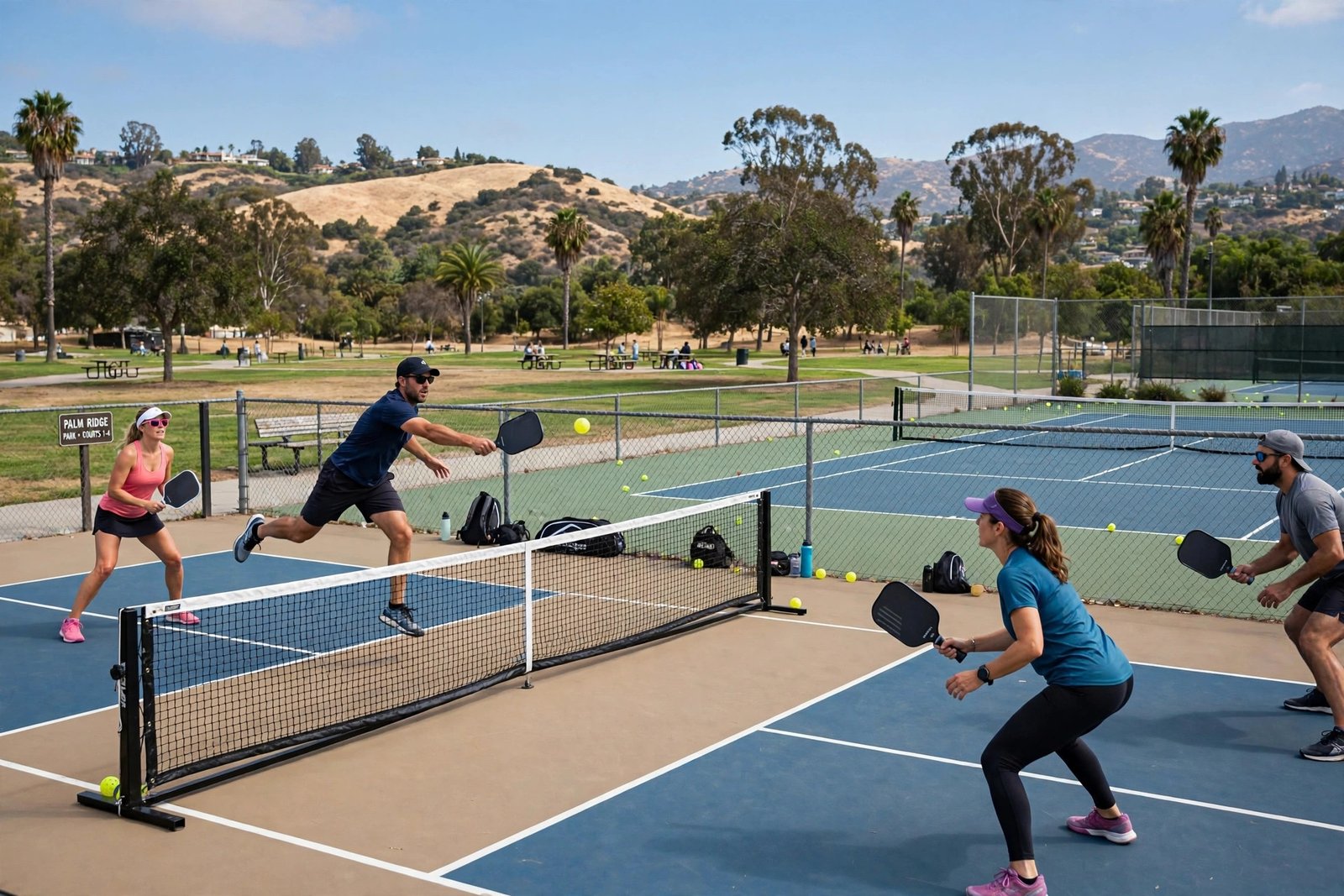
Drive past any California park on a Saturday morning and you’ll see it: tennis courts — the same courts that sat half-empty for decades — now packed with players wielding oversized paddles, playing a game with a funny name and a plastic whiffle ball. Pickleball is America’s fastest-growing sport, and nowhere is the boom more visible than California. But is pickleball actually taking over tennis courts, or is this a coexistence story the headlines are oversimplifying?
We looked at the data, the court-conversion fights, and what players of both sports actually say. The reality is more interesting than either side admits.
The Numbers Behind the Boom
Pickleball participation has exploded — from niche retirement-community pastime to millions of US players, with growth rates that dwarf every other sport. California, with its year-round outdoor weather and park infrastructure, has become the epicenter: hundreds of dedicated pickleball facilities have opened statewide, and park-and-rec departments report pickleball programming as their most requested new offering.
Tennis, meanwhile, hasn’t collapsed — it’s actually grown too, just more slowly. The real story isn’t pickleball killing tennis; it’s pickleball absorbing the casual athlete demographic that tennis struggled to retain: adults 30–60 who want social, accessible exercise without tennis’s steep learning curve. The USA Pickleball Association tracks the sport’s formal growth, while the USTA documents tennis’s steady participation — both can be true simultaneously.
Why Tennis Courts Are Ground Zero
The conflict is architectural. A standard tennis court fits four pickleball courts, and pickleball’s smaller court means games are louder in a different way — the distinctive pop of paddle on plastic ball carries, irritating nearby residents and tennis purists alike. Converting underused tennis courts is far cheaper than building new facilities, so municipalities facing surging pickleball demand and flat parks budgets take the path of least resistance: paint pickleball lines on tennis courts, or convert them outright.
This is where the “takeover” narrative comes from, and in specific places it’s literally true — some California parks have converted the majority of their tennis courts, leaving tennis players driving across town. The flashpoints share a pattern: affluent suburbs with active tennis communities and surging pickleball demand, fighting over the same finite park space.
What the Data Actually Says About “Taking Over”
Statewide, the picture is conversion-plus-construction, not pure replacement. California cities are pursuing three strategies: dual-striping (painting pickleball lines on tennis courts for shared use — the compromise nobody loves), dedicated conversion (full tennis-to-pickleball rebuilds, usually of the least-used courts), and new dedicated facilities (purpose-built pickleball complexes, increasingly funded by private operators).
The trend in 2025–2026 has shifted toward the third option as the market matures: private pickleball clubs — membership-based, indoor/outdoor, with coaching and leagues — are opening across California’s metros, absorbing demand that was pressuring public courts. That’s the sign of a sport growing up rather than merely squatting on tennis’s infrastructure.
The Player’s Perspective: Why People Switch
Ask converts and the reasons are consistent. Accessibility: a beginner can rally in pickleball within an hour; tennis takes months to become fun. Social: doubles is the default, games are short, and the smaller court means constant conversation. Body-friendly: less running, less joint impact — a huge factor for the 50+ crowd that forms pickleball’s core. Cost: a decent paddle costs $50–$150 versus tennis’s racket-plus-stringing economics, and court time is often free at parks.
Tennis loyalists counter — fairly — that tennis offers superior athletic development, that the sports aren’t substitutes (different skills, different fitness), and that dedicated tennis players shouldn’t lose facilities to a trend. Both perspectives are legitimate; the conflict is fundamentally about public resource allocation, not which sport is “better.”
If the boom has you curious about getting active yourself, building a simple workout routine as a beginner applies whatever sport you choose — and morning versus evening exercise is worth settling before you book regular court time.
Getting Started: Your First Pickleball Games
Curious enough to try? The barrier is delightfully low. Gear: any $50–$80 paddle from a reputable brand, court shoes with lateral support (running shoes roll ankles on court), and athletic clothes you already own. Skip the $200 paddles until you’ve played 20+ games — you won’t feel the difference yet. Where: search your city’s parks-and-rec site for pickleball programming; most California cities now list open-play sessions, many free. Private clubs offer beginner clinics ($20–$40) that compress the learning curve dramatically.
The rules in 60 seconds: serve underhand diagonally, the ball must bounce once on each side before volleys are allowed (the “two-bounce rule”), no volleying from the kitchen (the 7-foot zone at the net), games to 11, win by 2. That’s genuinely most of it. Etiquette for shared courts: at busy public courts, paddle-stack systems (lining paddles up for next-game rotation) are the norm — ask a regular how the local queue works before jumping on. Bring your own balls (they crack; extras make friends), call out the score before serving, and give way graciously on dual-striped courts when tennis players have reserved time.
Expect your first session to be humbling in the best way — the game looks easy until a soft dink dies in the kitchen and you lunge like a newborn giraffe. That’s normal, and it’s exactly why people get hooked: the skill ceiling reveals itself gradually, one satisfying rally at a time. Within a month of weekly play, most beginners hold their own in recreational games, which is a faster payoff than almost any other sport offers. The social onboarding is part of the design — pickleball’s culture is famously welcoming to newcomers in a way tennis clubs historically haven’t been.
Where This Is Headed
The likely 2026–2030 equilibrium: pickleball gets its own dedicated infrastructure (private clubs plus converted underused courts), tennis keeps its core facilities, and dual-use arrangements fade as each sport’s players demand proper surfaces. The noise issue will drive more indoor and sound-mitigated facilities. And the generational story is the real headline — pickleball has done what tennis couldn’t: made racket sports socially irresistible to middle-aged America, expanding the total pie rather than just reslicing it.
Conclusion
Is pickleball taking over tennis courts in California? In specific parks, yes — conversions are real and tennis players’ frustration is legitimate. Statewide, it’s more accurate to say pickleball is outgrowing shared infrastructure faster than new facilities can be built, creating friction during the transition. The sport isn’t killing tennis; it’s revealing how much latent demand existed for accessible, social racket sports. Give it five years: dedicated pickleball complexes will absorb the boom, and the court wars will feel like a strange chapter in both sports’ histories.
Frequently Asked Questions
Why is pickleball so popular in California?
Year-round outdoor weather, extensive park infrastructure, and a large 30–60 demographic seeking social, joint-friendly exercise. California’s park systems have been among the fastest to add pickleball programming.
Are tennis courts being converted to pickleball courts?
Yes, in many California municipalities — one tennis court fits four pickleball courts, making conversion the cheapest way to meet demand. Strategies range from dual-striping (shared use) to full conversion to new dedicated facilities.
Is pickleball easier than tennis?
Significantly, for beginners. Most people can rally in pickleball within an hour; tennis typically takes months of practice to become enjoyable. The smaller court, lighter ball, and underhand serve flatten the learning curve.
What does a pickleball paddle cost?
Decent beginner-to-intermediate paddles run $50–$150. Premium composite paddles can exceed $200, but beginners gain nothing from them.
Will pickleball replace tennis?
Unlikely — tennis participation is stable-to-growing, and the sports serve different athletic and social niches. The likelier outcome is parallel dedicated infrastructure for each.