
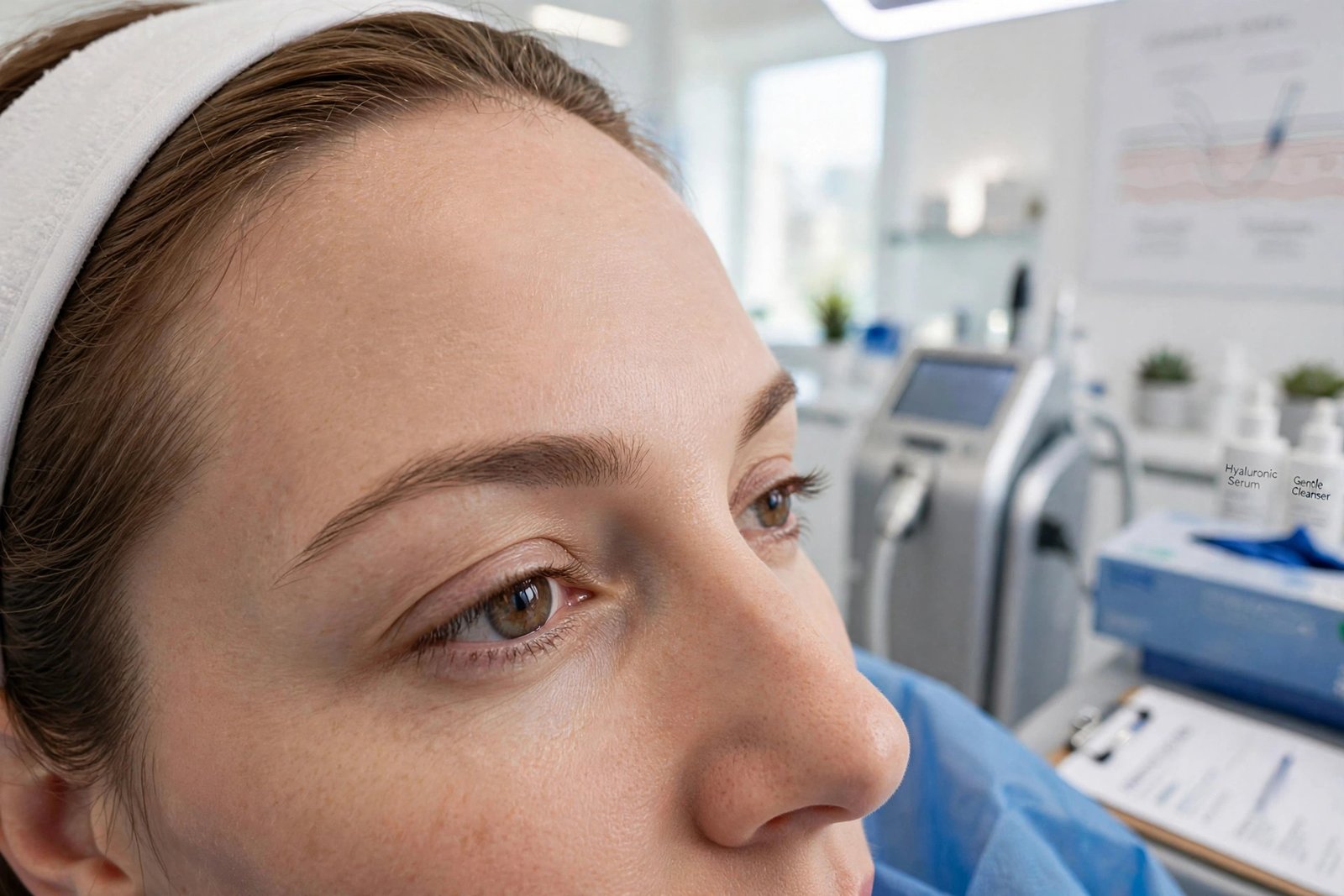
There’s a moment — usually around 30, catching your reflection in harsh lighting — when you first seriously Google Botox. Maybe it’s the “11s” between your brows that no longer fade when you stop frowning, or crow’s feet that have set up permanent residence. But jumping from curiosity to injections is a big step, and the internet is full of both hype and horror stories. So when should you get Botox for the first time?
The answer isn’t an age — it’s a set of signs. Here’s what dermatologists actually say about timing, what to expect, what it costs in 2026, and how to avoid the frozen-face fate everyone fears.
The Real Answer: It’s About Lines, Not Birthdays
Dermatologists evaluate Botox candidacy by dynamic versus static wrinkles. Dynamic wrinkles appear when you move your face (raising brows, squinting) and vanish at rest — Botox prevents these from becoming permanent. Static wrinkles are visible even with a relaxed face — Botox softens these but can’t erase them alone.
The sweet spot for a first treatment is when dynamic lines are starting to linger — they take longer to fade after you stop making the expression, or you notice faint lines at rest in the morning that disappear by noon. For most people, this happens between the late 20s and late 30s, but genetics, sun exposure, and facial expressiveness matter more than the calendar. Someone with strong frown muscles and a decade of outdoor sports might be ready at 28; someone with great sun habits might not need it until 45.
This is also the logic behind “preventative Botox” — treating in your late 20s to early 30s to stop dynamic lines from etching in. The evidence supports the mechanism (relaxed muscles crease skin less), but it’s not mandatory. If your lines still fully disappear at rest, waiting is perfectly reasonable — and cheaper.
Signs You’re Ready (and Signs You’re Not)
Green lights
Your “11” lines or forehead lines linger after expressions fade. Makeup settles into lines by midday. You’re bothered by it — not because someone commented, but because you notice it. You have realistic expectations (Botox softens and prevents; it doesn’t resurface skin or replace volume).
Red lights
You’re under 25 with no visible lines (no reputable injector should treat this). You’re doing it because a partner, friend, or influencer suggested it. You expect it to fix skin texture, sagging, or volume loss — those need different treatments. You’re pregnant, breastfeeding, or have certain neuromuscular conditions. You can’t afford maintenance — Botox lasts 3–4 months, and stopping just returns you to baseline, but budget for the ongoing cost honestly.
What a First Treatment Actually Involves
A first appointment starts with a consultation: the injector watches your facial movements, discusses goals, and maps injection points. The treatment itself takes 10–15 minutes — a series of tiny injections with a very fine needle. Most people describe it as mild pinching; numbing cream is available but often unnecessary.
Results aren’t instant. You’ll notice softening in 3–5 days, with full effect at 10–14 days. That’s why reputable injectors schedule a two-week follow-up — to assess and adjust. First-timers often need a small touch-up as the injector learns your muscle patterns; this is normal, not a failure. Bruising is possible (avoid blood thinners like ibuprofen and alcohol for a few days before if your doctor approves), and you should skip intense exercise, facials, and lying face-down for 24 hours after.
The FDA regulates Botox as a prescription biologic — it’s one of the most studied cosmetic treatments in existence, with decades of safety data when administered by qualified professionals. The American Academy of Dermatology offers guidance on choosing qualified providers and understanding realistic outcomes.
What It Costs in 2026
Botox is priced per unit (typically $12–$20/unit in major US metros) or per area ($200–$500+). A first-timer treating the forehead and glabella (“11s”) usually needs 20–40 units — roughly $300–$600 per session. Crow’s feet add another 12–24 units. Most people need treatment 3–4 times per year, so budget $1,200–$2,400 annually for ongoing maintenance.
Beware prices that seem too good to be true — discount Botox often means diluted product, inexperienced injectors, or both. This is your face; the injector’s skill matters more than the product, since every injector buys the same FDA-approved vials. A board-certified dermatologist or plastic surgeon, or a highly experienced injector working under one’s supervision, is worth the premium.
Avoiding the Frozen Look
The frozen face everyone fears comes from overtreatment, not from Botox itself. Modern aesthetic philosophy favors “baby Botox” or micro-dosing — smaller amounts placed precisely, preserving natural movement while softening lines. Tell your injector you want to look rested, not different, and that keeping some movement matters to you. A good injector will start conservatively; you can always add more at the two-week follow-up, but you can’t subtract for three months.
Also worth knowing: Botox pairs well with the rest of a thoughtful skincare routine. Consistent sunscreen for sensitive skin does more for long-term wrinkle prevention than any injectable — UV damage causes the vast majority of visible aging. And if you’re refining your overall look, finding your personal style in your 30s is the bigger transformation; Botox is just polish.
Alternatives Worth Considering First
Botox isn’t the only answer to early lines, and for some people it isn’t the best first step. Prescription retinoids (tretinoin) remain the gold standard for improving fine lines, texture, and collagen over 6–12 months — slower than Botox but addressing skin quality rather than muscle movement. Many dermatologists recommend starting retinoids before injectables, since they improve the canvas everything else works on.
Professional chemical peels and microneedling target texture and superficial lines that Botox can’t touch — remember, Botox relaxes muscles; it does nothing for sun damage or crepey texture. Dysport, Xeomin, and Daxxify are Botox alternatives with slightly different diffusion patterns and durations (Daxxify markets longer-lasting results); a good injector can explain which suits your anatomy. And the unglamorous truth: for many people in their late 20s, the highest-ROI “treatment” is simply better sun protection, consistent sleep, and quitting the unconscious frowning habit — free interventions that compound for decades.
Conclusion
You should get Botox for the first time when dynamic lines start lingering at rest — typically late 20s to late 30s, but driven by your face, not your age. Choose a board-certified dermatologist or plastic surgeon, start conservatively with baby Botox, budget $1,200–$2,400 per year for maintenance, and keep wearing sunscreen. Done right, nobody should be able to tell you’ve had it — they’ll just think you look well-rested. That’s the whole point.
Frequently Asked Questions
What is the best age to get Botox for the first time?
There’s no magic age — it’s about when dynamic wrinkles start lingering at rest, typically between the late 20s and late 30s. Genetics, sun exposure, and facial expressiveness matter more than birthdays.
How long does Botox last?
Typically 3–4 months for cosmetic use. With regular treatments, some people find results last slightly longer as treated muscles weaken over time.
Does Botox hurt?
Most people describe it as mild pinching from a very fine needle. Treatments take 10–15 minutes, and numbing cream is available for sensitive patients.
Will Botox make my face look frozen?
Only if overdone. Conservative dosing (“baby Botox”) by a skilled injector preserves natural movement while softening lines. Start conservatively — you can add more at follow-up but can’t remove it for months.
What happens if I stop getting Botox?
Nothing bad — your muscles gradually regain full movement and wrinkles return to their natural state over several months. There’s no “worse than before” rebound; you simply return to baseline.