
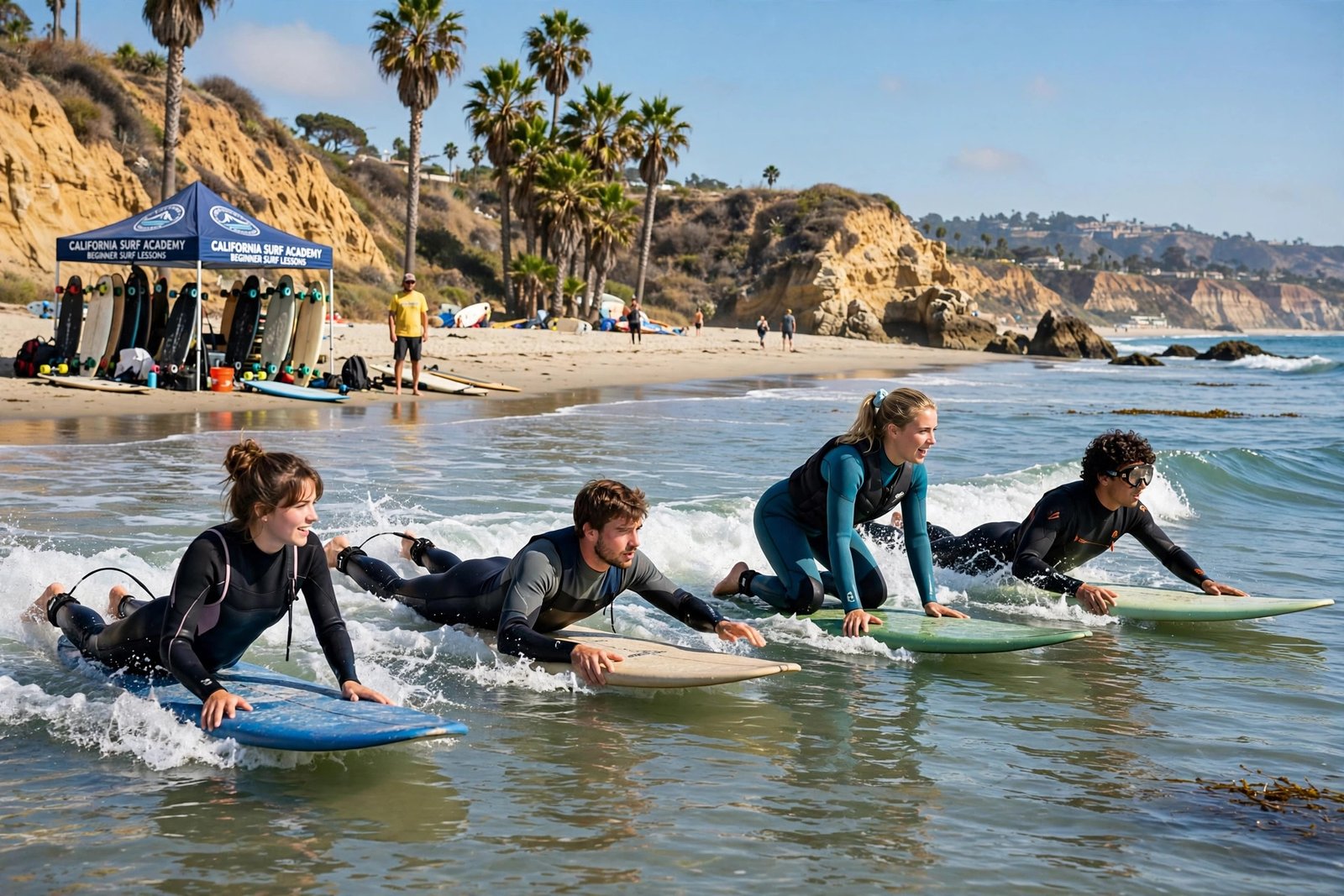
Your first wave matters. Surf it at the wrong beach and you’ll spend the afternoon getting pummeled in shore break, dodging experienced locals, and wondering why anyone does this. Pick the right one and you’ll stand up on your first day, ride whitewater to the sand, and understand the obsession instantly. California has over 800 miles of coastline, but only a handful of beaches are genuinely built for beginners.
This guide ranks the best California beaches for first-time surfers in 2026 — from San Diego’s mellow rollers to Santa Cruz’s legendary learner breaks — plus what to know about crowds, rentals, and staying safe before you paddle out.
What Makes a Beach Beginner-Friendly
Before the list, know what you’re looking for. The ideal learner beach has a sandy bottom (no reef or rocks to meet on a wipeout), gentle, slow-breaking waves in the 1–3 foot range, multiple peaks so beginners can spread out, and a lifeguarded zone nearby. A gradual beach slope is a bonus: waves break softly over a long distance instead of dumping all at once.
Just as important is what to avoid: famous reef breaks, beaches with heavy localism, and anywhere with a rocky entry. Your ego will want Pipeline-adjacent glory; your collarbones want sand.
The Best Beginner Surf Beaches in California
1. La Jolla Shores, San Diego — the gold standard
If there’s one beach custom-built for learning, it’s La Jolla Shores. The waves here are famously gentle — small, slow, and forgiving — breaking over a wide sandy bottom with a gradual slope. The beach is enormous, so there’s room for surf schools, soft-top rentals, and wobbly first-timers without crowding. Water temperatures run 65–72°F depending on season, meaning a 3/2mm wetsuit keeps you comfortable year-round. The vibe is welcoming rather than territorial, which matters more than any wave forecast. Arrive before 9 a.m. on weekends to beat the lesson groups.
2. Cowell Beach, Santa Cruz — where surf schools live
Cowell’s sits at the foot of the Santa Cruz Beach Boardwalk and has taught more first-timers than arguably any break in California. The wave is a long, slow, mushy roller that gives you an eternity to pop up — instructors love it because students actually ride, not just survive. The water is colder (55–60°F, full 4/3mm wetsuit territory), and summer weekends get busy, but the sheer density of surf schools means help is always within shouting distance. Bonus: you’re surfing in the shadow of Steamer Lane, so you can watch the pros after your session.
3. Zuma Beach, Malibu — space to spread out
Zuma’s two miles of sand mean you can always find your own peak away from the crowd. The waves are typically mellow beach break, and the gradual entry makes it forgiving for first-timers. It’s more exposed than La Jolla Shores, so check the forecast — on bigger swell days, sit this one out and come back when it’s 2–3 feet. Parking is plentiful (a rarity in Malibu), and the lifeguard presence is strong.
4. Manhattan Beach, Los Angeles — the South Bay learner’s pick
The El Porto end of Manhattan Beach offers consistent, manageable beach break with a sandy bottom and plenty of room. It’s one of the most accessible learner spots in LA County — easy parking, nearby rentals, and a mellow local scene compared to the more competitive breaks up the coast. Go on weekday mornings for the emptiest lineup.
5. Morro Bay / Cayucos, Central Coast — uncrowded and forgiving
If crowds stress you out, the Central Coast is your answer. The breaks around Morro Bay and Cayucos are gentle, the lineups are thin, and the scenery — Morro Rock looming over your session — is unreal. Water is cold year-round (bring the thick wetsuit), but you’ll often have a peak to yourself on weekdays.
Rentals, Lessons, and What to Bring
Don’t buy a board before your first session — rent a foam soft-top (8–9 feet) from a beachside shop for $20–$30. Soft-tops are buoyant, stable, and won’t concuss you when they hit you, which they will. Take at least one group lesson ($75–$100 in most California surf towns): an instructor will teach you ocean safety, etiquette, and the pop-up in a single session, compressing weeks of flailing into an afternoon.
Bring reef-safe sunscreen — you’ll be in the water for hours, and choosing the right sunscreen for sensitive skin matters when salt water and sun are working you over. Rash guards add sun protection and prevent the chest rash that plagues beginners. Apply sunscreen 20 minutes before paddling out (it needs time to bind), and reapply every 80 minutes — the reflection off the water intensifies UV exposure far beyond what you’d get on the sand.
Timing your session matters too. Early morning typically brings the cleanest conditions — lighter winds, smaller crowds, and glassy faces before the afternoon onshore breeze chops things up. The classic “dawn patrol” isn’t just romantic; it’s strategic. And if you’re making a trip of it, check what to pack for a week-long beach vacation so the non-surfing hours are covered too.
Safety and Etiquette: The Non-Negotiables
Surfing has rules, and beginners who learn them earn respect fast. Never drop in on someone else’s wave — the surfer closest to the breaking peak has the right of way. Hold onto your board in the whitewater rather than letting it fly toward swimmers. Stay out of designated swim zones. And know your limits: if the waves are overhead or the rip current is pulling, watch from the sand — there’s no shame in it, and the NOAA rip current safety guidance is worth reading before every session.
Check the surf forecast (Surfline and Magicseaweed are the standards), note the tide — many beginner breaks work best on an incoming mid-tide — and never surf alone as a beginner. California State Parks maintains safety and access information for state beaches that’s worth a look before visiting an unfamiliar break.
Conclusion
For most first-timers, La Jolla Shores is the answer — gentle waves, sandy bottom, welcoming vibe, and warm-ish water. Santa Cruz’s Cowell Beach is the Northern California equivalent with colder water and an unbeatable surf-school scene. Wherever you go, rent a foamie, take a lesson, learn the etiquette, and respect the ocean. Your first real ride to the sand will hook you for life — just make sure the beach you choose gives you the chance to feel it.
Frequently Asked Questions
What is the easiest beach to learn to surf in California?
La Jolla Shores in San Diego is widely considered the easiest — small, slow waves over a sandy bottom with minimal crowds pressure and a welcoming atmosphere for beginners.
Do I need a wetsuit to surf in California?
Yes, almost everywhere and almost year-round. San Diego is manageable in a 3/2mm wetsuit; Central and Northern California require a 4/3mm or even 5/4mm in winter. Water temps range from the mid-50s to low 70s.
How much do surf lessons cost in California?
Group lessons typically run $75–$100 for 1.5–2 hours including board and wetsuit rental. Private lessons run $120–$200. Most beginners benefit enormously from just one or two sessions.
Can I learn to surf without lessons?
You can, but it’s slower and riskier. A single lesson teaches ocean safety, right-of-way rules, and proper pop-up technique that would take weeks to figure out alone.
What size surfboard should a beginner use?
An 8- to 9-foot foam soft-top longboard. The extra length and buoyancy make paddling easier and give you maximum stability when popping up.