
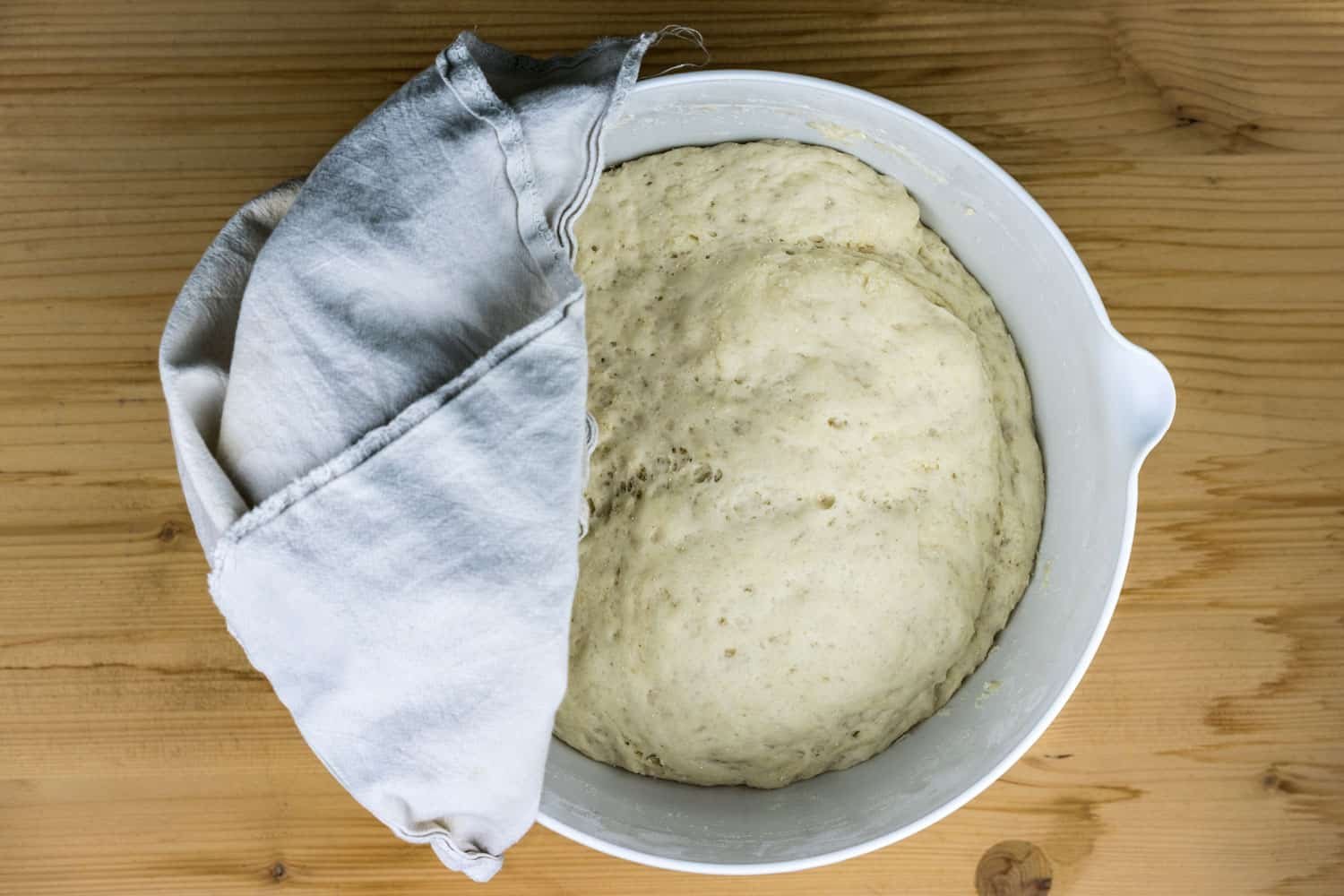
Why Does My Bread Dough Not Rise Properly?
You followed the recipe exactly. You waited patiently. And your dough sits there, dense and sullen, refusing to puff. Few kitchen disappointments sting like flat bread dough. If you’re asking why does my bread dough not rise properly, the culprit is almost always one of five things — and four of them are about the yeast, not you.
Cause #1: Dead or Weak Yeast (The Usual Suspect)
Yeast is alive, and it dies. Old yeast, yeast stored badly, or yeast killed by hot liquid accounts for most rising failures.
- Test your yeast: dissolve 1 tsp sugar in 1/2 cup warm water (105–115°F), stir in 2 tsp yeast, wait 10 minutes. If it foams vigorously, it’s alive. If nothing happens, it’s dead — replace it, and your dough problem is solved.
- Water too hot kills yeast. Above ~140°F is lethal; the ideal range is 105–115°F for active dry, up to 120–130°F for instant. “Warm to the touch, not hot” — if it feels hot on your wrist, it’s too hot for yeast. This single mistake ruins more dough than any other.
- Check expiration dates and store yeast properly: unopened in a cool pantry; opened in an airtight container in the fridge (3–4 months) or freezer (6+ months).
- Salt directly on yeast in high concentration inhibits it. Mix salt into the flour first, not directly onto blooming yeast.
Cause #2: Too Cold (or Too Hot) Environment
Yeast is happiest at 75–85°F. A cold kitchen in winter can double rising time or stall it entirely.
- The oven trick: turn the oven on for 1 minute, then off — or just turn on the oven light. The enclosed warmth creates a perfect proofing box (~80°F).
- Microwave method: heat a cup of water to boiling, remove it, put the dough in the warm steamy microwave (don’t turn it on).
- Too hot is also bad: above ~95°F, yeast works frantically and produces off-flavors; above 140°F it dies. Warm, not hot.
Why Does My Bread Dough Not Rise Properly?
Recipes lie about rising times — or rather, they assume a warm kitchen and vigorous yeast. Judge by the dough, not the clock: it’s ready when doubled in size, regardless of what the recipe says. Cold kitchens, whole grain flours, and enriched doughs (with butter, eggs, sugar) all rise slower. The poke test: press a floured finger 1/2″ in. If the indent springs back immediately, it needs more time. If it springs back slowly and partially, it’s ready. If it doesn’t spring back at all, it’s over-proofed (see below).
Cause #4: Too Much Flour / Over-Kneading Issues
- Too much flour makes dense dough that can’t expand. Measure by weight if possible (120g per cup of all-purpose, spooned and leveled if using cups). Wet, slightly sticky dough rises better than stiff dough — resist the urge to keep adding flour during kneading.
- Under-kneading means weak gluten that can’t trap gas — the dough rises then collapses. Over-kneading (harder with hand kneading, possible with stand mixers) tears gluten. The windowpane test: stretch a small piece thin — if it forms a translucent membrane without tearing, gluten is developed.
Cause #5: Over-Proofing (Rose Too Much, Then Fell)
Sometimes the dough did rise — then collapsed before baking. Over-proofed dough has exhausted its yeast, producing a sour taste and flat, dense crumb. Signs: dough that rose beautifully then deflated, smells strongly alcoholic, or fails the poke test (no spring-back). Prevention: watch the dough, not the clock, and bake when it passes the poke test. Rescue: punch down, reshape, and give a shorter second rise — it won’t be perfect, but it’s salvageable.
Quick Diagnostic Checklist
- Yeast foams in the sugar-water test? If no → replace yeast.
- Was the liquid wrist-warm, not hot? If hot → yeast died.
- Is the rising spot 75–85°F? If cold → move it somewhere warm.
- Has it actually had enough time? Poke test it.
- Did you measure flour correctly? Too much = too dense.
- Did it rise and fall? Over-proofed — reshape and re-proof briefly.
The science of dough fermentation is worth understanding — once you know what yeast wants (warmth, food, moisture, time), troubleshooting becomes intuitive instead of mysterious.
Enriched Doughs: Special Rules
Doughs with butter, eggs, sugar, or milk (brioche, challah, cinnamon rolls, dinner rolls) play by tougher rules. Fat coats flour proteins and slows gluten development — knead enriched doughs longer (12–15 minutes) for proper structure. Sugar competes with yeast for water in very sweet doughs (over ~20% sugar by flour weight), slowing fermentation significantly — expect rising times 50–100% longer, and consider osmotolerant yeast (SAF Gold) for very sweet doughs. Butter should be soft, not melted — melted butter coats flour and inhibits gluten; soft butter incorporates while letting gluten form. And enriched doughs are easy to over-proof because they’re so active once going — watch them closely in the final rise. The reward for the fussiness: the richest, tenderest breads in baking.
Sourdough vs. Commercial Yeast: What’s Different
Working with sourdough starter instead of commercial yeast? The principles rhyme but the tempo changes. Sourdough rises 2–4x slower — a bulk ferment of 4–8 hours at room temperature is normal, not a failure. Temperature matters even more: starters are sluggish below 70°F and happiest around 75–80°F. The float test checks starter readiness: drop a spoonful in water — if it floats, it’s active enough to leaven. Feed timing: a starter fed 4–12 hours before mixing (at its peak) gives the strongest rise; a hungry, unfed starter gives sour flavor but weak lift. And don’t expect the poke test to behave identically — sourdough’s longer, cooler ferments develop flavor that commercial yeast can’t match, which is the entire point. Different organism, different rhythm, worth learning.
Dough skills transfer — once this clicks, try your hand at homemade pizza dough from scratch, which uses the same rise-and-wait instincts.
The Takeaway
Why does your bread dough not rise properly? Test the yeast first (dead yeast is the #1 cause), keep liquids wrist-warm not hot, proof somewhere 75–85°F, judge readiness by doubling and the poke test rather than the clock, and don’t drown the dough in extra flour. Ninety percent of rising failures are yeast temperature or yeast age.
Bread baking is a skill built on exactly these small failures — every flat loaf teaches you something. Your next one will be better. Baking more? Our baking soda vs. baking powder guide demystifies the other leavening question every baker hits.