
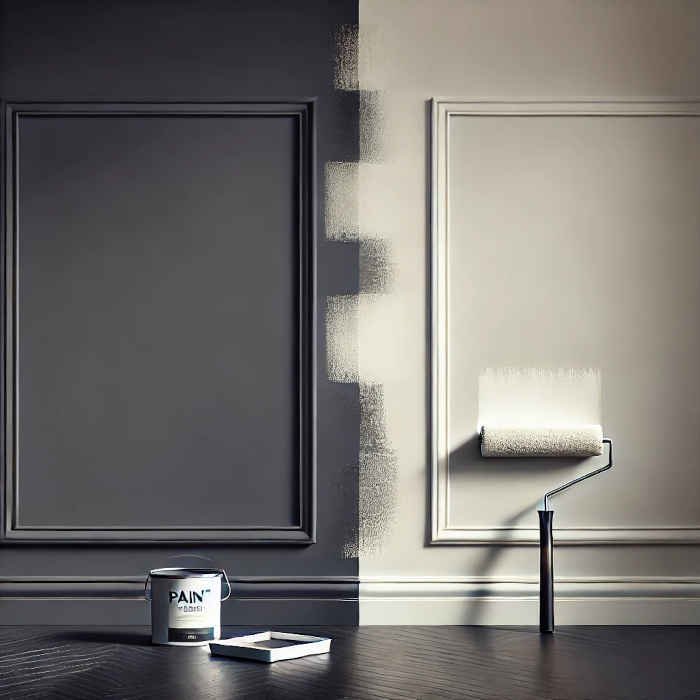
Can I Paint Over Dark Walls Without Priming First?
You’re staring at burgundy walls, holding a gallon of warm white, and wondering if you can skip the primer. I get the temptation — priming feels like painting the room twice. So can I paint over dark walls without priming first? Technically, sometimes. Practically, skipping primer on dark walls is one of the most common ways DIY paint jobs go wrong. Here’s when you can get away with it and when you absolutely can’t.
The Short Answer
Prime. Just prime. Going from dark to light without primer typically requires 3–4 coats of paint instead of 1 coat of primer + 2 coats of paint. The primer route uses less total product, takes less total time (primer dries fast and covers aggressively), and gives a more uniform finish. The “savings” of skipping primer are an illusion — you spend the saved primer money on extra topcoat gallons and extra hours.
The math: a gallon of quality primer ($20–$30) replaces roughly a gallon of finish paint ($40–$60) you’d burn on extra coats. Priming saves money going dark-to-light.
When You Might Skip Primer
There are narrow exceptions where painting over dark walls without priming works acceptably:
- Dark to dark (or dark to similarly deep color). Navy over forest green, charcoal over black — the existing dark base doesn’t fight the new color. Two coats of quality paint usually suffice.
- Using paint-and-primer-in-one products. These aren’t magic, but modern 2-in-1 paints have better hide than plain paint. For moderate color changes (medium to light), two coats of a quality 2-in-1 can work. For dramatic dark-to-white changes, they’re still not enough alone.
- The existing paint is in perfect condition — clean, matte, well-adhered, no stains. Any gloss, damage, or staining, and you’re back to needing primer.
When Primer Is Non-Negotiable
- Dark to white or light. Burgundy, navy, forest green, or black to white/cream/pastel — primer is mandatory for a sane number of coats.
- Reds and oranges especially. Red pigments are notoriously translucent — they bleed through multiple coats. A gray-tinted primer (ask the paint store to tint it toward your topcoat color) is the pro move for reds.
- Glossy existing finish. Paint doesn’t grip gloss well. You need a bonding primer (or at minimum a thorough sanding + primer).
- Stains, smoke damage, or water marks. These bleed through paint endlessly. Only a stain-blocking primer (shellac-based for the worst cases) stops them.
- Bare drywall patches or repairs. Joint compound and spackle absorb paint differently — unprimed patches flash through as dull spots.
Can I Paint Over Dark Walls Without Priming First?
Not all primers are equal for this job:
- High-hide white primer: the standard choice. One to two coats neutralizes most dark colors.
- Gray-tinted primer: have the store tint it gray (or toward your finish color). Gray covers dark colors faster than white primer and needs fewer topcoats — this is the professional’s trick for dramatic color changes.
- Stain-blocking primer: for reds, smoke, water stains, or wood tannins. Shellac-based (strong fumes, best blocking) or oil-based.
- Bonding primer: for glossy surfaces or tricky adhesion situations.
The Correct Process, Start to Finish
- Clean the walls. Degrease with TSP substitute, especially in kitchens. Paint over grime and it peels.
- Repair and sand. Fill holes, sand glossy spots to degloss (150-grit), wipe dust.
- Prime. One coat of quality (ideally gray-tinted) primer. Let it dry fully — check the can, usually 1–2 hours.
- Two topcoats. Quality paint, applied properly. The primer did the heavy lifting; these coats are about color and finish.
- Evaluate in daylight. Dark colors hide in dim light and ambush you in sunshine. Check coverage in natural light before calling it done.
For the full room-painting process and costs, our bedroom painting cost guide walks through the complete DIY timeline.
The “Paint and Primer in One” Reality Check
Marketing has oversold these products. They’re thicker, higher-solids paints — genuinely better at hiding than old-school paint. But they’re not primer. On a dramatic dark-to-light change, a 2-in-1 paint still needs 3+ coats where primer + 2 topcoats would do. Use 2-in-1s for what they’re good at (moderate changes, previously painted walls in good shape), not as a primer replacement on burgundy walls. The basics of how primer works explain why a dedicated bonding and sealing coat does things topcoat paint simply isn’t formulated to do.
The Gray Primer Trick, Explained
Professional painters tinting primer gray for dark-to-light jobs aren’t being fancy — it’s physics. White primer over a dark wall needs multiple coats to stop the dark color ghosting through, because white pigment is relatively translucent. Gray primer (specifically a mid-tone gray, or primer tinted toward your finish color) covers dark colors in fewer coats because the gray base neutralizes both dark and light extremes — it’s closer to the “average” the topcoat needs to achieve. Paint stores will tint primer for free; ask for it tinted to roughly half the depth of your finish color. On deep reds and blacks, this trick alone can save an entire coat of primer.
How Many Coats Will You Actually Need?
Realistic expectations by scenario: dark to similar dark — 2 coats finish paint, no primer. medium to light — 1 coat primer + 2 coats paint. dark to white — 1–2 coats gray-tinted primer + 2 coats paint. red/orange to anything light — 2 coats stain-blocking primer + 2 coats paint (reds are the worst bleeders). glossy dark to light — sand to degloss + bonding primer + 2 coats. Anyone promising “one-coat coverage” over burgundy is selling paint, not truth. Budget the coats honestly and the project goes smoothly; budget optimistically and you’re making a fourth trip to the store.
The Takeaway
Can you paint over dark walls without priming first? Only for dark-to-dark changes or with quality 2-in-1 paint on moderate shifts. For dark-to-light — the scenario you’re actually asking about — primer isn’t optional; it’s cheaper, faster, and better than the extra topcoats you’d need without it. Get it tinted gray, and watch one coat do the work of two.
Skipping primer to “save time” is the DIY equivalent of skipping the foundation to save concrete. Do it right once. Painting more? See the best paint finish for kitchen walls for sheen selection.