
How Much Cash Should I Carry When Traveling Internationally?
On my first big international trip, I landed with the equivalent of $500 in crisp bills tucked into three different pockets, convinced I’d need cash for everything. By day four I’d spent about $40 of it. On another trip, I landed with almost nothing and immediately needed cash for a taxi driver who laughed at my credit card. So how much cash should I carry when traveling internationally? The honest answer: it depends on where you’re going — but there’s a simple formula that works almost everywhere.
The Short Answer
For most destinations, carry the equivalent of $100–$200 USD in local currency for a week-long trip, plus a backup $50–$100 USD in American dollars as an emergency reserve. That’s it. Cards handle the rest in most of the world. But the details matter, because “most of the world” isn’t all of it — and the exceptions are exactly where travelers get stuck.
Let me break down how much cash to carry when traveling internationally by destination type, because a week in Tokyo and a week in rural Vietnam are completely different cash situations.
Cash-Heavy vs. Card-Friendly Destinations
You’ll need more cash in:
- Japan — famously cash-loving despite its tech reputation. Small restaurants, temples, and rural shops often take cash only. Budget $30–$50 per day in yen.
- Southeast Asia (Vietnam, Cambodia, Laos, Myanmar) — street food, tuk-tuks, markets, and small guesthouses run on cash. $20–$40 per day is usually plenty.
- Parts of Latin America and Africa — outside major cities, cash is king. Carry more than you think and split it up.
- Germany and Austria — surprisingly cash-centric for Western Europe. Many bakeries, beer gardens, and smaller shops still prefer it.
You can go nearly cashless in:
- Scandinavia — Sweden and Norway are practically cashless. Some places literally won’t take cash.
- South Korea, Singapore, Australia, UK cities, Canada — cards and phones accepted nearly everywhere, including taxis and street vendors.
- Major US-style tourist infrastructure anywhere — hotels, chain restaurants, and big attractions take cards worldwide.
Before any trip, I spend five minutes searching “[destination] cash or card” and reading recent traveler reports. Conditions change fast — countries that were cash-only five years ago may have gone digital.
Where to Get Local Currency (Ranked Best to Worst)
- ATMs at your destination — usually the best exchange rate, close to the real interbank rate. Use ATMs attached to actual banks, not standalone tourist ATMs in convenience stores.
- Your bank before you leave — order foreign currency a week ahead. Rates aren’t the best, but it’s convenient and safe.
- Currency exchange offices in the destination — fine in a pinch, but compare rates; the spread at airports and hotels is brutal.
- Airport exchange counters — the worst rates on earth. Only as a last resort for taxi fare.
One critical ATM tip: when the machine asks if you want to be charged in your home currency or local currency, always choose local currency. The “convenience” of home-currency conversion (called dynamic currency conversion) hides a markup of 3–7%. This single choice saves more money than almost any other travel money habit.
The Backup Cash Strategy That Saves Trips
Here’s what I actually do on every international trip, and I recommend it to everyone:
- Daily wallet: one day’s worth of local cash plus one card. If it’s lost or stolen, the damage is limited.
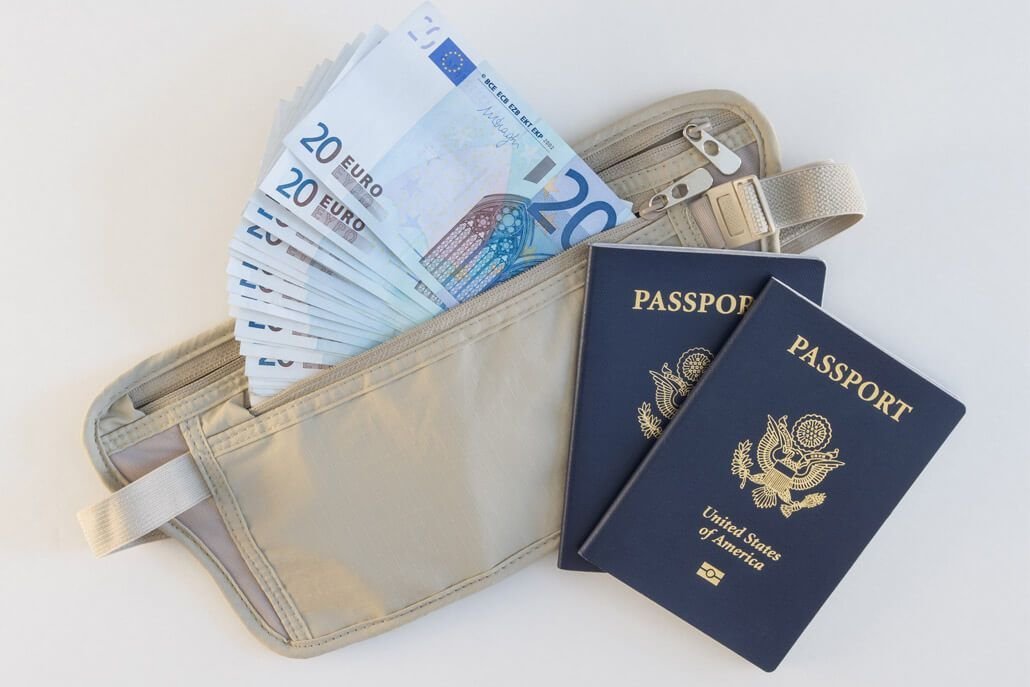
- Hidden reserve: $50–$100 USD in a separate spot (money belt, locked bag, hotel safe). US dollars are accepted or exchangeable in emergencies almost everywhere on earth.
- Two different cards: a primary and a backup from different networks (Visa + Mastercard), kept in different places. Cards get blocked, eaten by ATMs, and demagnetized at the worst moments.
- Card with no foreign transaction fees: this is non-negotiable for regular travelers. Paying 3% extra on everything is just lighting money on fire.
Split your cash across at least two locations on your body or in your bags. The classic mistake is keeping everything in one wallet. If that wallet goes, your trip’s finances go with it.
How Much Cash Should I Carry When Traveling Internationally?
Think about what cash actually buys on your specific trip: street food and market snacks, tips, small transit fares, public toilets (yes, really, in parts of Europe and Asia), temple donations, and small vendors. Then estimate:
- Budget traveler in cash-heavy Asia: $20–$40/day
- Mid-range traveler in mixed destinations: $15–$30/day (cards cover hotels and nicer restaurants)
- Europe (cities): $20–$40/day, mostly for small purchases and tips
- Cashless destinations: $0–$20/day — a small emergency stash is still wise
I’d rather withdraw twice from ATMs than carry a week’s cash at once. Most foreign ATM fees are a few dollars — cheap insurance against loss or theft compared to carrying a fat stack.
Tipping, Small Bills, and Other Cash Details
ATMs spit out large bills, and large bills are useless at street stalls. Break big notes at convenience stores, supermarkets, or your hotel early in the trip. In many countries, vendors genuinely can’t make change for a large bill, and it’s not a scam — it’s just how cash economies work.
Also research tipping customs before you go. The US tips 18–20% on cards; Japan considers tipping rude; much of Europe rounds up or adds a small service charge. Getting this wrong is one of the fastest ways to feel like an outsider, and it’s entirely avoidable with five minutes of reading. The tipping customs around the world vary enormously, so don’t assume home rules apply.
Safety: Carrying Cash Without Worry
Carrying cash internationally is safe if you’re sensible about it. Use a hotel safe or hostel locker for the reserve. Carry the day’s cash in a front pocket or a slim wallet, not a bulging back pocket. In genuinely high-risk areas, a “decoy wallet” with a small amount of cash is an old traveler’s trick that still works.
The US State Department’s international travel guidance is worth a read before any trip — it covers money safety alongside the bigger safety picture for your destination.
The Takeaway
How much cash should you carry when traveling internationally? For most trips: $100–$200 in local currency for the week, a $50–$100 USD emergency reserve stashed separately, and two cards from different networks. Adjust up for cash-heavy countries like Japan or rural Southeast Asia, and down for nearly cashless places like Sweden.
Get your currency from ATMs at banks, always pay in local currency, break big bills early, and split everything across two spots. Do that, and money becomes one less thing to think about — leaving you free to think about the important stuff, like where to find dinner. Speaking of which, our guide to finding authentic local food while traveling will help you spend that cash well, and if you’re still planning, check the best US cities for a long weekend trip.
[…] health. Flying out soon? Our premium economy guide can make those long flights less brutal, and our travel cash breakdown handles the money […]