
What Is the Best Way to Document a Trip Without a Fancy Camera?
Here’s a confession: some of my favorite travel memories live in a battered notebook with coffee stains on it, not on a memory card. When people ask what is the best way to document a trip without a fancy camera, I tell them the truth — the phone in your pocket and a few old-school habits will capture a trip better than a $3,000 mirrorless setup you don’t know how to use. The best travel documentation isn’t about gear. It’s about paying attention.
I’ve tried it both ways. I once lugged a DSLR through three countries and came home with technically perfect photos and almost no memory of what I actually felt. These days I travel light, and my trip records are richer, more personal, and honestly more fun to revisit. Here’s exactly how to do it.
Start With the Tool You Already Have: Your Phone
Modern phone cameras are absurdly good. A mid-range smartphone from the last few years shoots photos that would have required professional gear a decade ago. But the real trick isn’t the camera — it’s using it deliberately. When you’re figuring out the best way to document a trip without a fancy camera, your phone covers photos, video, voice notes, and GPS-tagged memories all in one device.
A few phone habits that make a real difference:
- Shoot bursts of everyday moments, not just landmarks. The laundromat, the breakfast spread, the view from your hostel window — these are the photos you’ll actually look at in five years.
- Record 10-second video clips of sounds: market noise, street musicians, waves, rain on a train window. Sound triggers memory like nothing else.
- Use voice memos as a travel diary. Talking for two minutes while walking is easier than writing, and hearing your own voice later is weirdly moving.
- Turn on location tagging so every photo and note carries a pin. Future you will be grateful.
- Take one photo of every place you sleep — the room, the view from the door. It anchors the whole trip in your memory.
The Notebook Method: Analog and Unbeatable
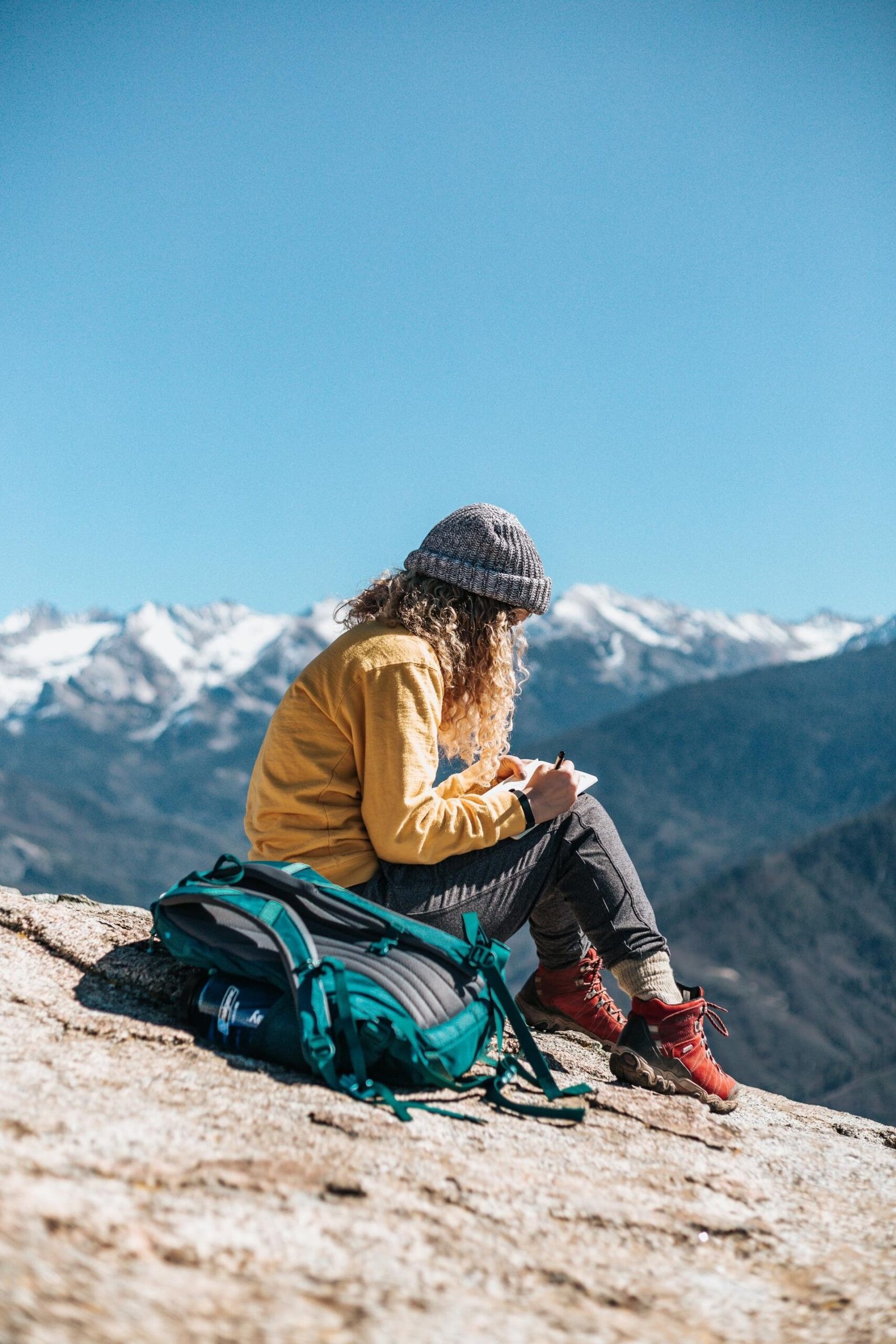
A small notebook and a pen weigh almost nothing and need no battery. I’m not talking about writing a novel every night — just ten minutes before bed. Jot down what you ate, who you talked to, the thing that surprised you, the thing that annoyed you. Specifics beat summaries: “the old man at the bakery in Lyon who insisted I try the praline tart and wouldn’t take no for an answer” beats “had a nice day in Lyon” every time.
Paper has advantages no app can match. You can sketch badly (bad sketches are charming), tape in ticket stubs and sugar packets, press a flower between pages. My notebooks are messy, incomplete, and absolutely my most treasured travel possessions. Nobody ever lovingly flips through a cloud photo backup. People do flip through notebooks.
If writing feels like homework, try the “three things” rule: each night, write down three specific things from the day. That’s it. Three things. You’ll be amazed how those fragments reconstruct entire days when you read them later.
Collect, Don’t Just Photograph
One of the most satisfying ways to document a trip is to become a collector of small physical things: metro tickets, café receipts with doodles on them, business cards from restaurants, coins, postcards you buy and never send. Toss them in an envelope each day. At the end of the trip, you’ve got a tactile timeline of everywhere you went.
This pairs beautifully with the notebook. Tape the day’s finds onto the page next to your three things. Instant scrapbook, zero craft skills required. The scrapbooking tradition exists because physical mementos carry emotional weight that pixels don’t.
Use Free Apps That Do the Heavy Lifting
You don’t need fancy software. A few free tools turn your phone into a serious documentation machine:
- Google Photos or Apple Photos — automatic backup, searchable by place and even by what’s in the picture (“beach”, “dog”, “food”). Searching “noodles” across five years of trips is genuinely delightful.
- A simple journaling app like Day One’s free tier — date-stamped entries with photos, weather, and location attached automatically.
- Google Timeline / location history — a silent, automatic map of everywhere you went. Reviewing it after a trip fills in gaps you’d forgotten.
- A shared album if you’re traveling with others — everyone dumps photos in one place, and you get angles and moments you missed.
The key is setting these up before you leave, not on day three when you’re already behind. Ten minutes of setup saves hours of sorting later.
What Is The Best Way To Document A Trip Without A Fancy Camera?
Here’s what most travel photos get wrong: they’re all buildings and landscapes with no humans in them. Years later, those all blur together. The photos that hit hardest are the human ones — your travel buddy laughing at dinner, the hostel roommate from Brazil, the chef who posed proudly with your empty plate.
Ask permission, take the photo, and offer to send it to them. Some of my longest-running friendships started with “can I take your photo?” And when you’re trying to document a trip without a fancy camera, people shots don’t need great gear — they need a moment of connection, which no lens can buy.
The End-of-Day Ritual That Ties It All Together
My routine, refined over many trips: each evening, I spend fifteen minutes doing three things. First, I favorite the day’s best 10–15 photos and delete the obvious duds (blurry, duplicates) so the collection stays manageable. Second, I write my three things in the notebook. Third, I record a one-minute voice memo summarizing the day while it’s fresh.
Fifteen minutes. That’s the whole system. It means I never come home with 4,000 unsorted photos and a vague sense of guilt. Everything is already organized, already meaningful, already a story I can revisit.
What About Social Media?
Posting as you go is fine, but treat social media as a highlight reel, not your archive. The algorithm wants your most photogenic moments; your memory wants the real ones. I’ve found that posting a little actually helps — it forces me to pick the day’s best moments — but the notebook and the voice memos are where the trip really lives. Don’t let the pressure to post shape what you bother to capture.
The Takeaway
So what is the best way to document a trip without a fancy camera? It’s a simple kit: your phone used deliberately, a cheap notebook, an envelope for ephemera, and fifteen minutes each evening. No expensive gear, no complicated workflow, no photography degree required.
The fancy camera was never the point. Paying attention was. Start tonight — even on a trip you’re already on — and you’ll come home with something better than photos. You’ll come home with the trip itself, kept.
Heading out soon? Our guide on finding authentic local food while traveling pairs well with a food-focused travel journal, and if you’re deciding how to structure the getaway, see our cruise vs. all-inclusive resort comparison.