
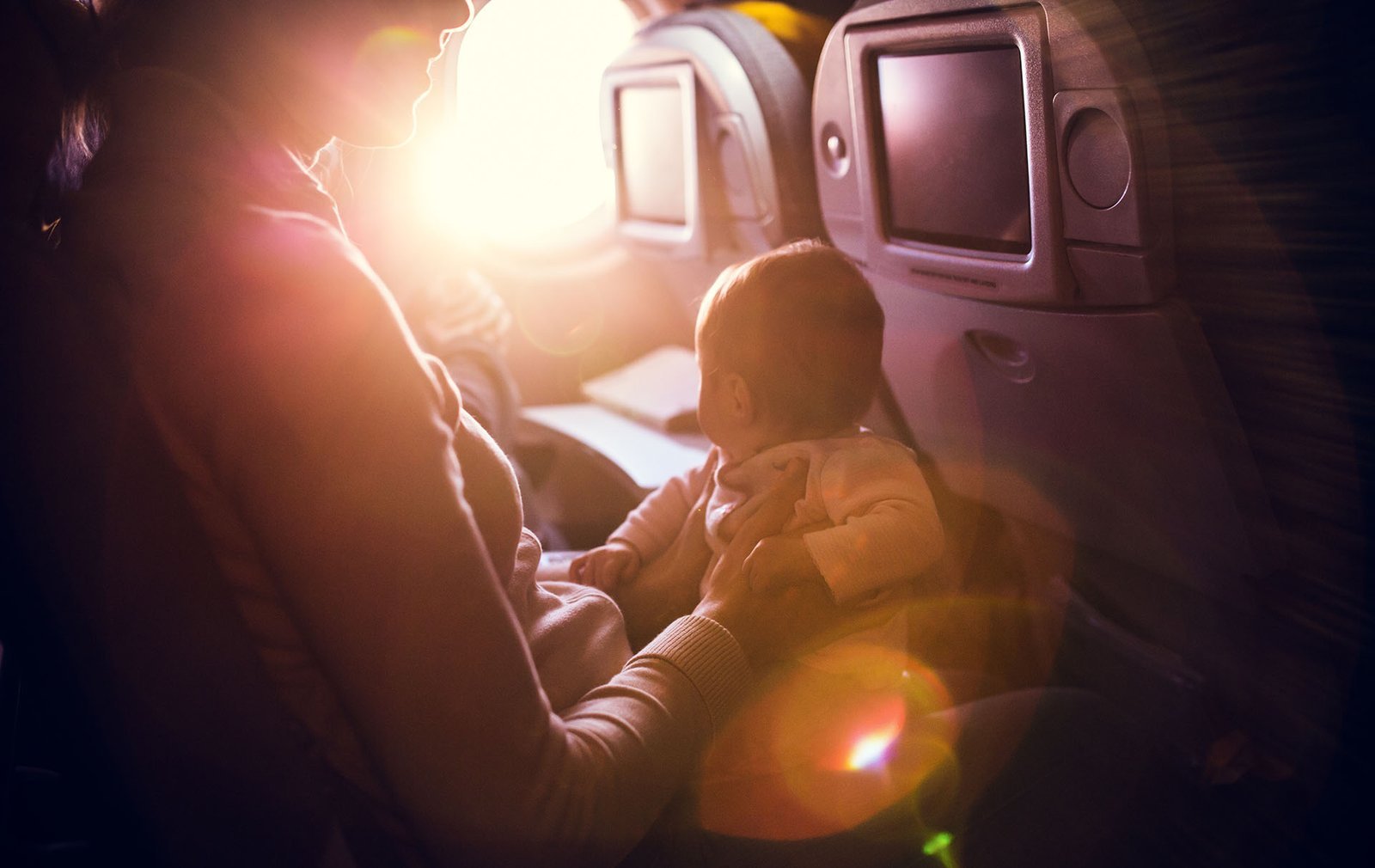
How Do I Travel Comfortably With a Baby on a Plane?
How do I travel comfortably with a baby on a plane? Flying with a baby terrifies every new parent — the crying, the judgmental stares, the logistics of tiny humans at 35,000 feet. But here’s the truth from parents who’ve done it (including red-eyes with twins): babies are actually easier plane passengers than toddlers, and with the right preparation, the flight is usually fine. Here’s how, from booking to baggage claim.
Book Smart
- Fly during nap times or overnight. A sleeping baby is the goal. Red-eyes and early-morning flights align with natural sleep — your best odds of a peaceful cabin.
- Choose your seats strategically. Bulkhead rows have bassinet attachments on many international airlines (reserve early — they’re limited). Aisle seats give you escape routes for bouncing and bathroom trips. If the flight isn’t full, ask at the gate about blocking the middle seat.
- Lap infant vs. seat: under 2s can fly as lap infants (domestic: free or minimal fee; international: ~10% of adult fare). It’s cheaper, but a car seat in a purchased seat is safer and often more comfortable for everyone. For long-haul, the seat is worth serious consideration.
- Direct flights, always. Every connection doubles the stress. Pay extra for nonstop if you possibly can.
How to Travel Comfortably With a Baby on a Plane: The Packing List
Pack the diaper bag like you’re preparing for double the flight time:
- Diapers: one per hour of travel, plus 3–4 extra. Blowouts obey Murphy’s Law.
- Wipes: the whole pack. They clean babies, trays, hands, and everything else.
- Change of clothes for baby (2x) and one for you. Trust me on the one for you.
- Feeding supplies: bottles + formula (TSA allows reasonable quantities of breast milk/formula/baby food — declare them), nursing cover if you use one, snacks for older babies. Feed during takeoff and landing — swallowing helps equalize ear pressure.
- Entertainment: new-to-baby small toys (novelty holds attention), soft books, a tablet with downloaded shows for older babies. Rotate toys — don’t reveal them all at once.
- Comfort items: pacifier, lovey/blanket, white noise app on your phone.
- Ziplock bags: for dirty clothes, trash, and containing messes.
- Infant pain reliever (ask your pediatrician first) — for ear pressure discomfort.
Gate-check the stroller and car seat for free — use protective bags. Wear the baby through security in a carrier (you’ll need to take them out briefly at the checkpoint, but carriers simplify everything else).
At the Airport
- Arrive early but not too early. 2 hours domestic, 3 international — enough buffer without hours of terminal purgatory.
- Use family lanes at security — they’re slower-paced and less judgmental.
- Board early or late? Most parents prefer boarding last (less time confined) — but if you need overhead bin space for the car seat, board with family boarding. Pick your priority.
- Burn energy pre-flight. Let crawlers crawl and toddlers run in the terminal. A tired baby boards better.
On the Plane: Survival Tactics
- Feed on takeoff and landing. Nursing, bottle, or pacifier — swallowing equalizes ear pressure and prevents the classic ascent/descent screaming.
- Walk the aisles. When fussiness starts, motion and new scenery help. Flight attendants are usually kind about it.
- Lower your standards. Screen time rules don’t apply at 35,000 feet. Whatever works, works.
- Ignore the judgers. Most passengers are sympathetic (many are parents). The rare grump isn’t your problem. A brief “sorry about the noise” to neighbors goes a long way — and then let it go.
- Tag-team. If traveling with a partner, take shifts. One rests while the other parents. You’ll both survive.
For your own comfort on the flight, our long-haul personal item guide covers the adult survival kit — you’ll need it more than ever.
How Do I Travel Comfortably With a Baby on a Plane on a Long-Haul Flight?
Domestic hops are sprints; long-haul with a baby is a marathon — 8+ hours with an infant in a metal tube. It’s absolutely survivable (millions of families do it yearly), but it requires long-haul-specific strategy beyond the standard advice.
The bassinet is the holy grail — reserve it early. Most long-haul aircraft have bulkhead bassinets for infants under ~10 kg / 22 lbs (airline limits vary). They’re free but extremely limited — sometimes 2–4 per flight. Request at booking, confirm by phone, and reconfirm 72 hours before. Call, don’t just click: phone agents can actually secure it while online requests sometimes vanish. If you get the bassinet, the baby sleeps flat and your arms survive. If you don’t, the carrier-and-lap shift system still works — just with more effort.
Time the flight to the baby’s biology, not your convenience. Overnight eastward flights are ideal: the cabin dims, white noise hums, and babies often sleep 4–6 hour stretches — their longest sleep of the trip. Daytime westward flights are harder (bright cabin, alert baby, endless hours). When booking, the red-eye isn’t the enemy; it’s the strategy. A baby that sleeps half the flight transforms the experience for everyone.
Pack the long-haul diaper bag differently. Beyond the standard supplies: double the diapers (delays happen), a full change of clothes for baby AND you (blowouts at hour 6 are a special experience), familiar sleep cues (the lovey, the white noise app, pajamas for the “bedtime” routine in the air), more feeding supplies than you think (formula for the flight plus 50% extra), and new toys revealed hourly (novelty is attention). The long-haul personal item packing list covers your half of the equation — combine both and you’re equipped for anything.
Manage your own survival too. Tag-team in shifts: one parent sleeps (eye mask, earplugs — non-negotiable) while the other handles the baby, then switch. Eat when food comes even if you’re not hungry — you won’t get another chance. Hydrate constantly. And lower every standard: screen time, sugar, schedules — all suspended. The only goal is landing with everyone intact.
On arrival, give everyone a recovery day. Don’t plan anything significant for day one — the baby’s schedule will be chaos regardless of your jet lag strategy. A low-key day (grocery run, playground, early bedtime) lets the whole family reset. The trip starts on day two, and that’s fine. The families who enjoy long-haul travel with babies aren’t the ones whose babies behaved perfectly — they’re the ones who planned for imperfection and brought enough diapers.
The Bottom Line
Traveling comfortably with a baby means: booking around sleep, packing for double the time, feeding on ascent/descent, and letting go of perfection. The flight you dread is usually fine — and the destination is worth it. Millions of parents fly with babies every year; you’re joining a very large, very tired, very capable club. You’ve got this.
For official guidelines, the FAA’s children and air travel page covers safety rules, and the TSA’s family travel guidelines explain screening with little ones.
[…] actually provides (most have cribs and babysitting; few have the baby supplies you assume). Our guide to traveling comfortably with a baby on a plane covers the flight portion, and the same preparation mindset applies to the sailing: over-pack […]