
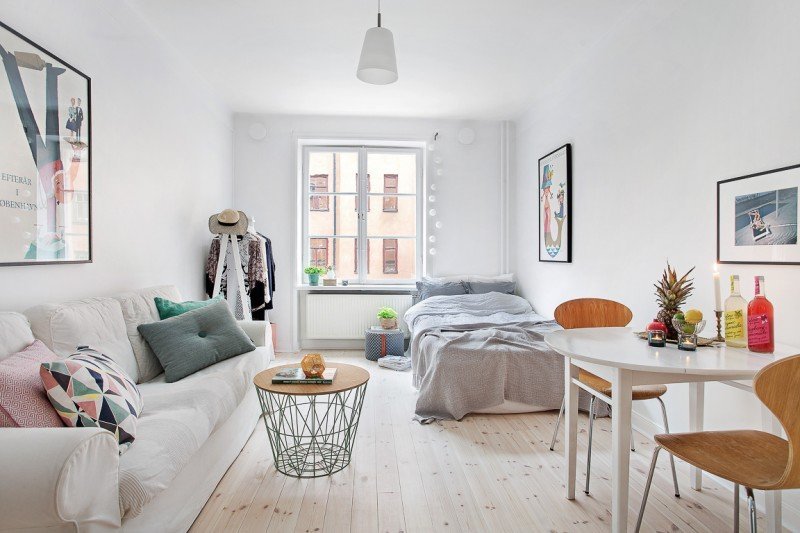
How Can I Make My Small Apartment Feel Bigger?
How can I make my small apartment feel bigger without renovating or spending a fortune? Living in a small apartment doesn’t have to feel like living in a shoebox. The difference between a cramped 500-square-foot place and one that feels open and calm usually isn’t square footage — it’s layout, light, and how much visual noise is fighting for your attention. Here’s how to make a small apartment feel bigger using tricks interior designers actually use, most of them free or cheap.
Light Is Everything
Small spaces feel smaller when they’re dark. Maximize every bit of natural light you have:
- Ditch heavy curtains. Swap them for sheer panels or light-filtering blinds that let daylight through while keeping privacy. Hang the rod wider and higher than the window — it tricks the eye into seeing a bigger window.
- Mirrors are magic. A large mirror opposite or adjacent to a window bounces light around and visually doubles the space. One big mirror beats five small ones.
- Layer your lighting. Overhead lights create harsh shadows that shrink rooms. Use floor lamps, table lamps, and warm bulbs (2700K) at different heights. A well-lit corner stops being dead space.
How to Make a Small Apartment Feel Bigger: The Furniture Rules
Furniture choice makes or breaks a small space. The rules:
- See-through and leggy wins. Furniture you can see under and through — glass coffee tables, sofas on legs, open shelving — lets light and sightlines flow. A bulky sectional to the floor visually eats a room.
- Scale down, don’t cram. An apartment-size sofa (not a full sectional), a round dining table instead of rectangular, a queen bed instead of a king. Right-sized pieces leave breathing room.
- Go vertical. Tall bookshelves, wall-mounted storage, and hooks draw the eye up and free floor space. Floor space is what your brain reads as “room.”
- Multifunction everything. Storage ottomans, a drop-leaf table, a sofa bed for guests. Every piece should earn its footprint twice.
If you’re furnishing from scratch, our breakdown of whether to rent or buy furniture for a first apartment will help you spend wisely.
Declutter Ruthlessly (Small Spaces Punish Clutter)
In a big house, a messy counter is a minor eyesore. In a studio, it’s 10% of your visual field. Small apartments demand stricter clutter discipline — which is why decluttering a messy apartment pays off double in small spaces. The one-in-one-out rule isn’t optional here; it’s survival.
Hide what you can: baskets, closed storage, under-bed boxes. Open shelving looks great in photos but requires constant curation. In real life, closed storage keeps small spaces calm.
Color and Pattern Tricks That Actually Work
- Light, cohesive colors. You don’t need all-white walls, but keeping the palette light and consistent (walls, rug, large furniture in the same family) erases visual boundaries that chop up a room.
- One accent, not ten. A single bold color in pillows or art gives personality without chaos.
- Stripes and vertical patterns on a rug or curtains can elongate a room. Use sparingly.
- Match curtains to the wall color so windows blend in instead of creating hard stops.
Zone the Space Without Walls
Studios and open layouts feel bigger when each area has a purpose. Use rugs to define zones — one under the bed area, one under the sitting area. A bookshelf placed perpendicular to the wall creates a room divider that still lets light through. Even a curtain on a tension rod can carve out a sleeping nook.
Each zone should have its own light source, which reinforces the feeling of separate “rooms.” For a dedicated cozy spot, see how to create a cozy reading corner in a small room — it doubles as a perfect zoning trick.
How Can I Make My Small Apartment Feel Bigger on a $100 Budget?
You don’t need a renovation budget to transform a small space. A hundred dollars, spent on the right five things, delivers 80% of the spacious feeling that expensive makeovers promise. Here’s the priority-ranked shopping list.
First: a large mirror ($25–$40 at thrift stores or discount retailers). This is the single highest-impact purchase. Lean an oversized mirror against the wall opposite your main window or light source — no hanging hardware needed. The reflected light and doubled sightline instantly expand the room. Bigger is better here; one large mirror outperforms three small ones.
Second: sheer curtain panels ($15–$25 for a pair). Replace heavy curtains or blinds with sheers that flood the room with diffused daylight while keeping privacy. Hang them as high and wide as possible — a $10 tension rod mounted near the ceiling with panels extending past the window frame makes windows look dramatically larger, which makes the whole wall feel larger.
Third: warm LED bulbs and one extra lamp ($20–$30). Swap any harsh cool-white bulbs for warm 2700K ones, and add a floor or table lamp to the darkest corner. Dark corners read as “the room ends here”; lit corners read as “the room continues.” A $15 thrift-store lamp with a warm bulb can visually add fifty square feet.
Fourth: a light-colored large rug ($20–$30 secondhand). A rug that extends under the front legs of your furniture unifies the seating area and makes it feel like one generous zone instead of scattered pieces. Light colors bounce light around; one large rug beats several small ones that chop the floor into pieces.
Fifth: storage baskets ($10–$15 for a set). Visual clutter is the enemy of spaciousness, and open clutter reads as “small.” Two or three matching baskets corral the remote controls, chargers, mail, and random items that colonize surfaces. Closed, coordinated storage is the cheapest spaciousness hack there is.
Total: roughly $95–$140 depending on thrift luck. Install everything in one Saturday afternoon: mirror placed, sheers hung, bulbs swapped, rug laid, baskets deployed. Then stand in the doorway and compare — the before/after is the kind of transformation people assume cost thousands. It didn’t. It cost a hundred bucks and an understanding of how eyes perceive space.
The Bottom Line
Making a small apartment feel bigger is about light, leggy furniture, ruthless clutter control, and visual cohesion. None of it requires renovation or real money. Start with mirrors and lighting this weekend — they’re the two highest-impact changes — and work through the rest one zone at a time. Small space, big feeling. Entirely doable.
For design principles behind these tricks, Wikipedia’s interior design overview covers the fundamentals, and Architectural Digest regularly features brilliant small-space transformations for inspiration.