
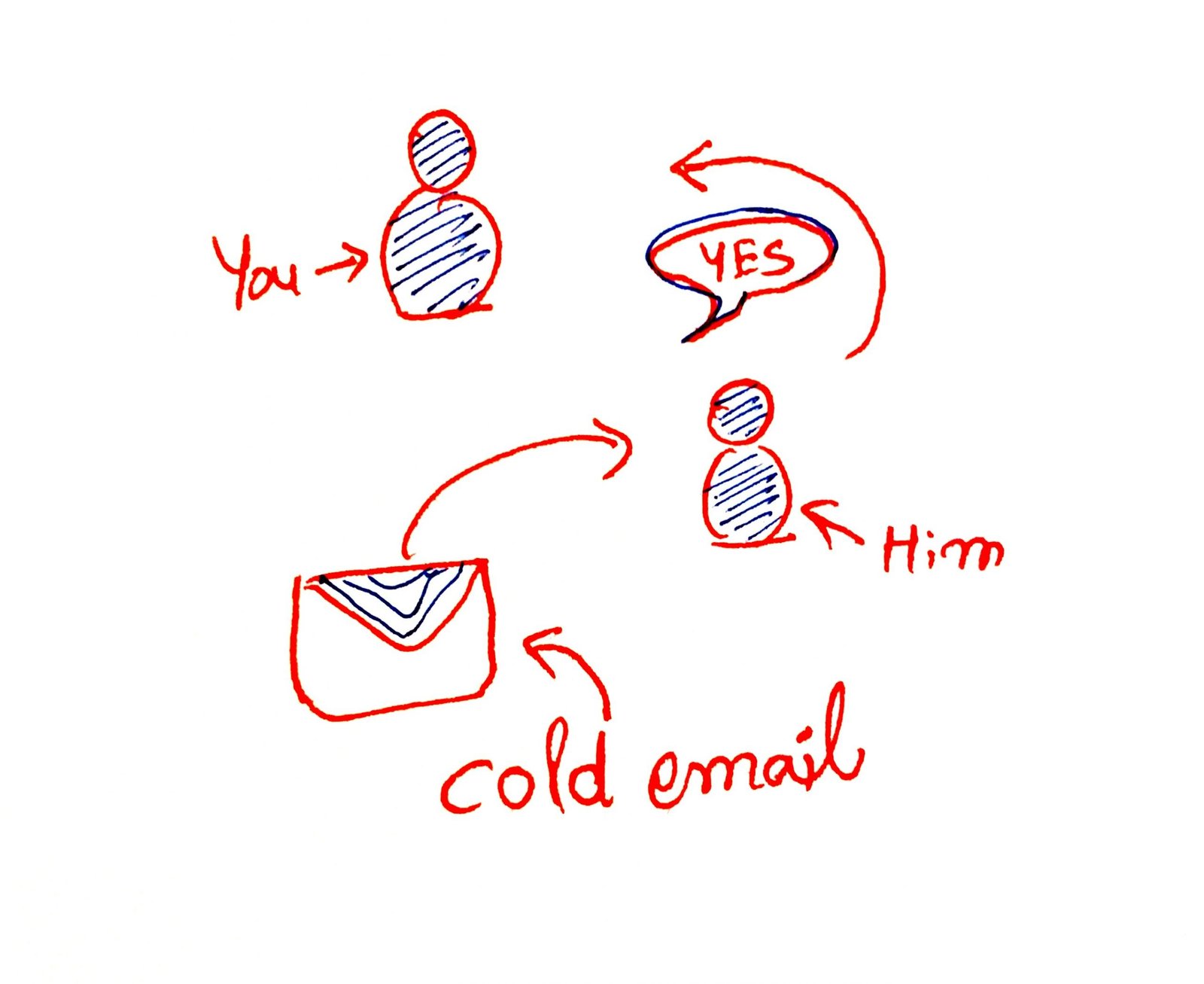
How Do I Write a Cold Email That Actually Gets Responses?

How do I write a cold email that actually gets responses? Most cold emails fail for one reason: they’re about the sender, not the recipient. ‘I’m a freelance designer with 5 years of experience…’ — delete. Nobody cares about your experience until they believe you can solve their problem.
I’ve sent thousands of cold emails and refined the approach down to a formula that consistently gets 10–15% reply rates. It’s not magic — it’s respect for the recipient’s time plus genuine specificity.
How Do I Write a Cold Email? The Structure That Works
The anatomy: subject line (under 40 characters, specific, no clickbait — ‘quick thought on [Company]’s checkout page’ beats ‘Explode your revenue!!!’), opener (one sentence proving this isn’t mass spam — reference something specific about them), the observation (one concrete thing you noticed: a problem, an opportunity, a compliment with substance), the value (what you can do about it, briefly — credentials only as proof, not the point), and the ask (one low-friction CTA: ‘worth a 15-minute chat Thursday?’ — never ‘let me know a time that works,’ which is homework).
Total length: under 125 words. Every sentence must earn its place. The test: could this email have been sent to anyone else? If yes, it’s not specific enough. Specificity is the entire game — it’s what separates the 1% reply rate from the 15%. For finding the freelance clients to email, pair this with How do I get my first clients as a new freelancer.
Personalization at Scale (Without Lying)
Real personalization takes 2–3 minutes per prospect: check their website, LinkedIn, recent news, or content. Note one specific thing — a new product launch, a job post revealing a need, a blog post you actually read. Reference it naturally in the opener. This is unscalable in the best way: 50 deeply personalized emails outperform 500 templated ones every time, and the math favors quality (50 × 15% = 7 conversations vs. 500 × 1% = 5, with far better conversation quality).
What not to do: fake personalization (‘I loved your recent [INSERT] post!’), flattery without substance, or pretending a connection that doesn’t exist. Recipients smell automation instantly, and nothing kills trust faster than a mail-merge error. If you can’t personalize genuinely, shrink the list until you can. Fifty real prospects beat five hundred names.
Cold email formula card:
- Under 125 words: specific subject, personalized opener, one observation, brief value, one easy ask.
- Personalize genuinely (2–3 min/prospect); 50 deep beats 500 templated.
- Follow up twice: a value-add bump at day 5, a graceful breakup at day 11.
- Technical: real domain, SPF/DKIM/DMARC, warm up gradually, never buy lists.
- CAN-SPAM: physical address + opt-out on every commercial email.
The Follow-Up Sequence (Where Half the Replies Hide)
Most replies come from follow-ups, not first emails — but most people never follow up. The sequence: Day 1 (initial email), Day 4–5 (bump: ‘floating this back up — [one new relevant thought]’), Day 10–12 (breakup: ‘I’ll assume timing’s off — if [problem] becomes a priority, I’m here’). Three touches total, each adding something, then stop gracefully.
The breakup email is counterintuitively effective — it gives the recipient permission to say no, which paradoxically prompts yeses from people who were meaning to reply. Never follow up more than three times without a response; persistence becomes pestering fast. And track everything: who you emailed, when, what version — a simple spreadsheet prevents the cardinal sin of emailing someone twice with the ‘first’ email.
Deliverability and the Unsexy Technical Stuff
Great copy means nothing in the spam folder. Basics: use a real domain email (not Gmail) with SPF, DKIM, and DMARC records set up (your email provider has guides — 20 minutes, do it once), warm up new domains gradually (start with 10–20 emails/day, ramp over weeks), keep lists clean (bounce rates over 2–3% hurt your sender reputation), and never buy email lists (they’re full of traps and corpses — build your own).
Compliance: the CAN-SPAM Act requires a physical address and opt-out mechanism for commercial email in the US; include both. Keep daily volume sane (under 50–100/day per inbox for cold outreach), vary send times, and write like a human — spam filters increasingly score on ‘does this read like bulk mail.’ The technical foundation is boring and invisible, which is exactly why most people skip it and wonder why nothing lands.
The Bottom Line
How Do I Write a Cold Email That Actually Gets Responses? What Most People Get Wrong
What most people get wrong: leading with themselves. ‘I’m a freelance designer with 8 years of experience specializing in…’ — the recipient stopped reading at ‘I’m.’ Nobody cares about your biography until they believe you understand their problem. Flip every sentence: instead of what you do, lead with what you noticed about them; instead of your credentials, lead with the specific value. The email isn’t about you getting a client; it’s about them getting a result. That reframe changes every word.
Second mistake: the ask is too big. ‘Can we schedule a 30-minute call next week to discuss your marketing needs?’ is a commitment from a stranger — easy to ignore. ‘Worth a 15-minute chat Thursday?’ is smaller, specific, and easy to say yes to. Or even smaller: a question they can answer by reply (‘is checkout optimization on your radar this quarter?’). Every reduction in ask-size increases response rate. Make replying the path of least resistance, and the replies come.
A/B test your subject lines even with small lists — send half your prospects one subject line and half another, then use the winner going forward. With 50 prospects per variant you’ll see directional signal within days, and the learnings compound across campaigns. Most people never test and keep using the subject line they guessed on day one. The data is sitting there; collect it. Small optimizations in open rates cascade into meaningful differences in conversations started.
Cold emails get responses when they’re short, specific, and about the recipient — under 125 words, one genuine personalization, one concrete observation, one easy ask. Follow up twice (that’s where half the replies are), keep the technical deliverability foundation solid, and work a small list deeply rather than a big list shallowly. It’s a numbers game played with quality.
Cold email works when it’s short, specific, recipient-focused, and easy to answer — under 125 words, one genuine personalization, one concrete observation, one small ask. Follow up twice, keep the technical foundation clean, and work small lists deeply. It’s respectful persistence at scale, and it beats every shortcut.