
When to Stop Caffeine Before Sleep: A Simple Timeline
Tags: When to Stop Caffeine Before Sleep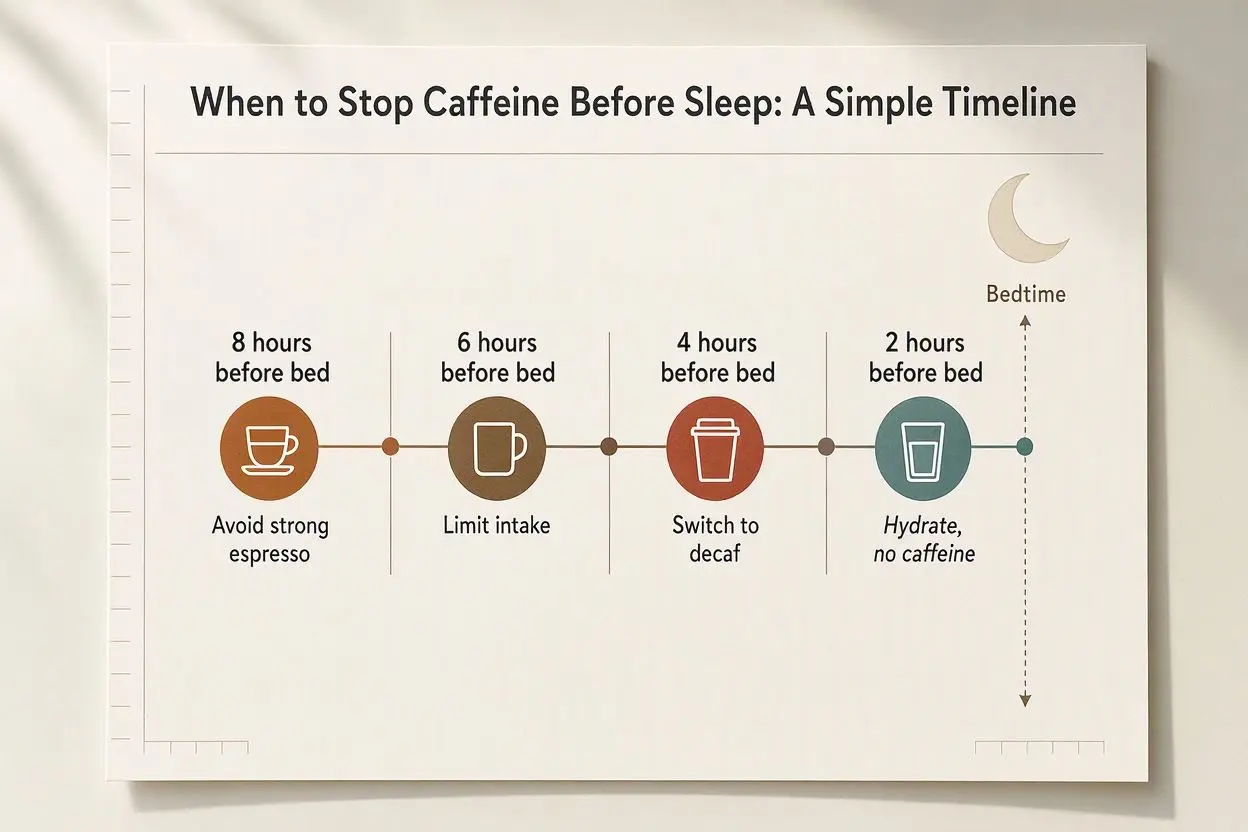
You had a coffee at 4 pm. You felt fine. You went to bed at 11 pm, and then you stared at the ceiling until nearly 1 am.
Sound familiar? Most of us have been there. The tricky part is that caffeine does not always make you feel wired. Sometimes it quietly wrecks your sleep while you think everything is normal.
So when should you actually stop caffeine before sleep? Short answer: about 8 to 9 hours before bedtime for a regular cup of coffee, and up to 14 hours for stronger drinks like energy drinks and pre-workout. Below is the full timeline, why it works, and how to adjust it for your own body.
Why Caffeine Messes With Your Sleep
During the day, your brain slowly builds up a chemical called adenosine. The more of it you have, the sleepier you feel. Caffeine does not remove tiredness. It simply blocks adenosine from doing its job. Under caffeine’s influence, adenosine’s effects are suppressed, which increases alertness and inhibits sleep.
The problem is that caffeine hangs around much longer than people expect. Its half-life (the time your body needs to clear half of it) usually sits somewhere between 2 and 10 hours depending on the person. Older studies found this half-life varies from two to 10 hours between individuals. That means a coffee at 3 pm can still be active in your system at midnight.
The Science-Backed Caffeine Cutoff Time
Researchers have looked at this question many times. Here is what the strongest studies say.
The 2023 meta-analysis. This review combined data from many studies. It found that caffeine caused about a 7% drop in sleep efficiency and roughly 45 minutes less total sleep time. The suggested cutoff for a single cup of coffee was just over 8 hours before bed, with earlier cutoffs needed for higher amounts. Other summaries of the same work put it at around 9 hours for about 100 mg, and around 14 hours for larger doses like pre-workouts or energy drinks.
The Journal of Clinical Sleep Medicine study. In this experiment, people took a large dose (400 mg) at different times before bed. Even when it was taken six hours before sleep, total sleep time dropped by more than one hour. And here is the scary part: participants often did not realize their sleep had been affected.
The Scottish research. Another team suggested a six-hour minimum and noted that late caffeine can disturb your internal body clock.
So where does that leave us? Six hours is the bare minimum. Eight to nine hours is the safer, more realistic target for most people.
Your Simple Caffeine Timeline
Count backwards from the time you plan to fall asleep. Here is an easy cheat sheet:
| Your Bedtime | Last Regular Coffee (about 100 mg) | Last Energy Drink or Pre-Workout |
|---|---|---|
| 9:00 pm | 12:00 pm | 7:00 am |
| 10:00 pm | 1:00 pm | 8:00 am |
| 11:00 pm | 2:00 pm | 9:00 am |
| 12:00 am | 3:00 pm | 10:00 am |
As one example from the research summaries, if you go to bed at 10 pm, your last cup should be around 1 pm. dailyherald
If you are a light sleeper, add an extra hour or two to these numbers. If you are someone who falls asleep easily and clears caffeine fast, you may have a bit more flexibility, but test it carefully before assuming that.
How Much Caffeine Is in Your Drink?
The dose matters as much as the timing. A rough guide:
- Brewed coffee (1 cup): about 95 to 100 mg
- Espresso (1 shot): about 60 to 65 mg
- Black tea: about 40 to 50 mg
- Green tea: about 25 to 35 mg
- Cola (1 can): about 30 to 40 mg
- Energy drink: about 80 to 300 mg depending on the brand
- Pre-workout powder: often 150 to 300 mg or more
- Dark chocolate (small bar): about 20 to 40 mg
These are averages, and brands differ a lot, so check the label when you can. Two big mugs of strong coffee can easily pass 300 mg, which pushes you into the “stop much earlier” zone.
Hidden Sources of Caffeine You Might Be Missing
People often follow the coffee rule and still sleep badly. Usually the culprit is something they did not count:
- Chocolate desserts or hot chocolate in the evening
- Iced tea or bottled tea from the shop
- Cold medicines and some painkillers that contain caffeine
- Protein bars and “focus” snacks
- Decaf coffee (it still holds a small amount, usually 2 to 15 mg)
If your sleep is off and you are sure you cut coffee, take a quick look at the labels in your kitchen.
Signs Caffeine Is Hurting Your Sleep
You might be sensitive to late caffeine if you notice:
- You take more than 30 minutes to fall asleep
- You wake up several times in the night
- You feel unrefreshed even after 7 to 8 hours in bed
- You need more and more coffee each afternoon to function
- Your heart feels like it is racing at bedtime
One more thing worth remembering: the research showed that caffeine can cut deep sleep and increase light sleep. Caffeine added about six minutes of light sleep and removed more than eleven minutes of deep sleep in the 2023 analysis. Deep sleep is the stage your body uses to recover, so losing it is why you can feel groggy even after a full night.
Why Some People Are More Sensitive Than Others
Two people can drink the same coffee and have totally different nights. A few reasons:
- Genetics. Some people carry gene variants that break caffeine down slowly.
- Age. Sensitivity often increases as we get older.
- Medications. Certain medicines, including some birth control pills, can slow caffeine clearance.
- Pregnancy. Caffeine stays in the body longer, and many doctors recommend lower limits.
- Daily habit. Regular drinkers build some tolerance, but that does not protect sleep as much as people think.
If any of these apply to you, speak to your doctor about a safe daily limit.
9 Practical Tips to Protect Your Sleep
- Pick a hard cutoff time and set a phone reminder for it.
- Move your coffee earlier. Try your biggest cup in the morning.
- Switch to half-caf after lunch.
- Try decaf or herbal tea in the afternoon. Chamomile, peppermint and rooibos are good caffeine-free choices.
- Drink water when the afternoon slump hits. Mild dehydration often feels like tiredness.
- Get sunlight and move around at midday. A 10-minute walk can beat a second coffee.
- Cut back slowly instead of quitting overnight, to avoid headaches.
- Keep a simple sleep diary for a week to see how your cutoff time affects you.
- Keep a steady bedtime. A regular schedule makes you less dependent on caffeine in the first place.
What About a Short Nap or Late Meeting?
Sometimes life gets in the way. If you absolutely need caffeine late in the day, keep the dose low (a small tea instead of a large coffee) and protect the rest of your evening: dim the lights, avoid screens for the last hour, and keep your room cool. It will not erase the effect, but it can reduce the damage.
Final Thoughts
There is no magic number that works for everyone, but the research gives us a clear, usable rule. Aim to finish your last regular coffee about 8 to 9 hours before bed, and stop energy drinks and pre-workout up to 14 hours before. Treat six hours as the absolute minimum, not the goal.
Try this cutoff for one week. Most people notice they fall asleep faster and wake up feeling more rested, and that often means they need less caffeine the next day. That is a win for both your sleep and your energy.
This article is for general information only and is not medical advice. If you have ongoing sleep problems, a heart condition, anxiety, or you are pregnant, please speak with a healthcare professional.
Frequently Asked Questions (FAQs)
1. How many hours before bed should I stop drinking caffeine?
For a standard cup of coffee, aim for about 8 to 9 hours before bed. For larger doses such as energy drinks or pre-workout, plan for up to 14 hours. Six hours is the minimum most sleep studies suggest.
2. What time should I have my last cup of coffee if I sleep at 10 pm?
Around 1 pm is a good target. If you are sensitive to caffeine, try finishing by noon.
3. How long does caffeine stay in your system?
Caffeine’s half-life is usually between 2 and 10 hours depending on your genetics, age, medications and health. Traces can remain in your body for many hours after that.
4. Can I drink coffee at 4 pm and still sleep well?
Some people can, but many cannot. Research shows caffeine can reduce sleep time and quality even when people feel fine. If you sleep at 11 pm or later, a 4 pm coffee is cutting it close, and you may not notice the damage.
5. Does decaf coffee affect sleep?
Decaf has very little caffeine (about 2 to 15 mg per cup), so it affects most people very little. Very sensitive people may still feel it, so try a caffeine-free herbal tea in the evening.
6. Is tea better than coffee before bed?
Tea usually has less caffeine than coffee, but black and green tea still contain some. Herbal teas like chamomile or peppermint are naturally caffeine-free and are safer for evenings.
7. Does caffeine affect deep sleep?
Yes. Studies show caffeine can reduce deep sleep and increase lighter sleep stages, which is why you can wake up tired even after enough hours in bed.
8. Why do I feel sleepy after coffee but still can’t sleep at night?
Caffeine blocks the signal of tiredness but does not remove the sleep pressure itself, and it can interfere with how well you sleep later. You may feel sleepy, yet your brain stays alert enough to delay sleep.
9. How much caffeine is safe per day?
Many health authorities consider up to about 400 mg a day (roughly 4 cups of brewed coffee) safe for most healthy adults. Pregnant women and people with certain conditions should follow lower limits advised by their doctor.
10. How can I quit afternoon caffeine without headaches?
Cut down slowly. Replace your afternoon cup with half-caf, then decaf, over one to two weeks. Staying hydrated and sleeping well also helps reduce withdrawal headaches.