
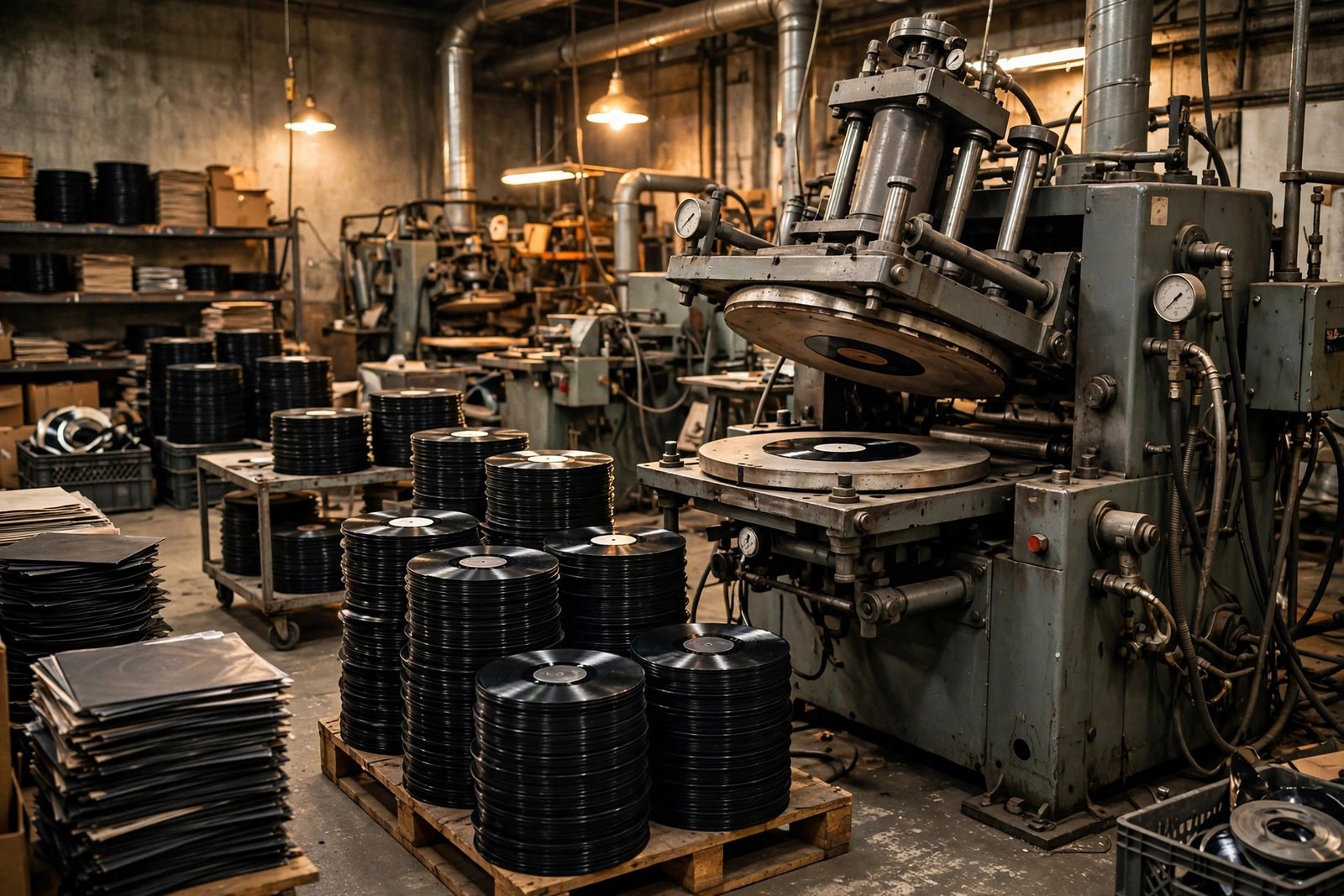
Vinyl was supposed to die. Instead, it outsells CDs, commands $30–$40 per record, and turns merch tables into gold mines. For indie artists, the question is no longer whether vinyl is cool — it is whether pressing records is a smart business decision or an expensive vanity project that leaves 300 unsold LPs in your garage. The answer depends entirely on your math, your audience, and your patience.
Is vinyl worth pressing for indie releases? When you have the fanbase to sell through the run, the timeline to wait out production, and the margins to absorb the costs — absolutely. When any of those are missing, it is one of the fastest ways to torch a release budget. Here is the honest breakdown.
The Real Costs
Let us talk numbers. A standard run of 300 black-vinyl 12″ LPs typically costs $2,000–$3,500 all-in: lacquer cutting and mastering for vinyl (a specialized process — digital masters do not transfer directly), stampers, pressing, labels, and basic jackets. Add $500–$1,500 for premium packaging (gatefolds, colored vinyl, inserts), plus freight shipping — vinyl is heavy, and shipping 300 records is a meaningful line item.
Per-unit costs land around $8–$15 depending on quantity and specs, against retail prices of $25–$40. The gross margin looks healthy — until you factor in the hidden costs: test pressings, artwork setup, storage, and the opportunity cost of cash tied up for months. Crowdfunding platforms like Qrates let artists press with zero upfront inventory risk by collecting pre-orders first — a model that has saved countless indie budgets.
The Timeline Problem
Vinyl’s dirty secret is lead time. From approved audio to records in hand, expect 4–12 months — longer for complex packaging or during industry-wide capacity crunches. Test pressings alone add weeks of back-and-forth. This timeline breaks artists who plan vinyl as an afterthought: your digital release drops in March, and the vinyl arrives in October, missing every moment of launch momentum.
Plan vinyl from day one of the release timeline, not as a stretch goal. Order test pressings early, approve artwork on the pressing plant’s schedule (not yours), and build the wait into your marketing — “vinyl shipping this fall” sustains interest rather than disappointing it. Artists who treat vinyl as a parallel project, not a postscript, are the ones whose records arrive while anyone still cares.
When Vinyl Makes Sense
Press vinyl when three conditions hold. You have proven demand: an engaged fanbase that buys merch, sells out shows, or has explicitly asked for vinyl. Pre-orders are the gold standard — if 100+ fans commit before you press, the risk evaporates. Your music suits the format: albums and EPs with cohesive artwork and sequencing reward the vinyl ritual; scattered singles do not. You can absorb the timeline: the 6-month wait does not break your release plan.
The economics shine brightest at the merch table, where vinyl at $30–$40 carries the highest margin of any physical item and the ritual of the format — the large artwork, the liner notes, the ceremony of playing it — deepens fan relationships in ways streams cannot. Collectors and superfans drive this market; serve them deliberately with quality pressings and beautiful packaging. Fans who debate vinyl’s sound quality are already your target market — they care enough to pay.
When Vinyl Bankrupts You
Do not press vinyl as a debut artist with 200 monthly listeners and no merch history — you will own 280 unsold records and a storage problem. Do not press to “look legitimate”; legitimacy comes from listeners, not inventory. Do not press colored variants and gatefolds for your first run; the premium packaging that excites you doubles the cost and the risk.
Watch for the classic traps: pressing 500 to get a better per-unit price when you can only sell 150 (the “savings” evaporate in unsold stock), skipping test pressings to save time (and receiving 300 defective records), and ignoring freight and storage in the budget. Every pressing plant has stories of artists who ordered big, sold small, and learned the math the hard way. Start at 100–300 units; reorder if you sell through. Selling out is marketing — overstock is a liability.
Smarter Alternatives for Small Runs
If full pressing does not pencil out, options exist. Lathe-cut records (cut individually, not pressed) work for runs under 50 — pricier per unit but zero minimums. Cassettes have their own retro revival at a fraction of vinyl’s cost and timeline. And print-on-demand vinyl services are emerging for truly small quantities. Match the format to your actual demand, not your aspirations.
The Sound Question
Does vinyl sound better? Honestly: a well-mastered vinyl record on a good system sounds wonderful, but so does a well-mastered digital file — and vinyl’s technical specs (dynamic range, noise floor) are objectively worse than digital’s. What vinyl offers is not superior fidelity but a superior ritual: intentional listening, large artwork, the physical commitment of flipping sides. Fans buy vinyl for the experience and the artifact, and they are right to — just do not press records expecting audiophile miracles. Master specifically for vinyl (tame sibilance, control low-end, mind side lengths), because a digital master slapped onto wax sounds worse than either format done properly.
Selling Through: Marketing Your Vinyl
Pressing records is half the job; selling them is the other. Announce the vinyl early with mockups and pressing updates — the production journey is content that builds anticipation. Offer pre-orders with instant-gratification tracks (buyers get digital downloads immediately), and create urgency with limited color variants for direct orders versus black vinyl for retail.
Price strategically across channels: direct-to-fan sales (your store, Bandcamp) at full retail keep the most margin; wholesale to indie record stores moves volume at roughly 50 percent of retail. Tour remains the highest-margin channel — no shipping, no middleman, peak fan enthusiasm. And document everything: unboxing videos, pressing-plant footage, and “sold out” announcements turn each pressing into marketing for the next. The artists who sell through consistently treat vinyl as an ongoing product line, not a one-time trophy.
Conclusion
Vinyl is worth pressing for indie releases when you have proven demand (ideally pre-orders), music that suits the album format, and a timeline that accommodates 4–12 months of production — with costs of $2,000–$3,500 for 300 units against $25–$40 retail. Without those conditions, it is an expensive lesson in inventory. Press to your demand, start small, plan early, and let the format’s ritual do what streams cannot: turn listeners into collectors.
Further reading: For more on this topic, see discovering new music beyond playlists and RIAA manufacturing and sales data.
Frequently Asked Questions
How much does it cost to press vinyl as an indie artist?
Typically $2,000–$3,500 for 300 black-vinyl 12″ LPs including mastering, stampers, pressing, and basic jackets. Premium packaging, colored vinyl, and freight add more. Per-unit costs run $8–$15 against $25–$40 retail.
How long does vinyl pressing take?
Expect 4–12 months from approved audio to records in hand, including test pressings and artwork production. Plan vinyl from the start of your release timeline, not as an afterthought.
How many vinyl records should I press first?
Start with 100–300 units unless pre-orders justify more. Selling out creates demand and marketing momentum; overstock ties up cash and storage. Reorder when you sell through.
Does vinyl actually sound better than streaming?
Not technically — digital has superior specs. Vinyl’s appeal is the listening ritual, artwork, and physical artifact. Master specifically for vinyl for the best results; a digital master transferred directly to wax sounds worse than either format done right.