
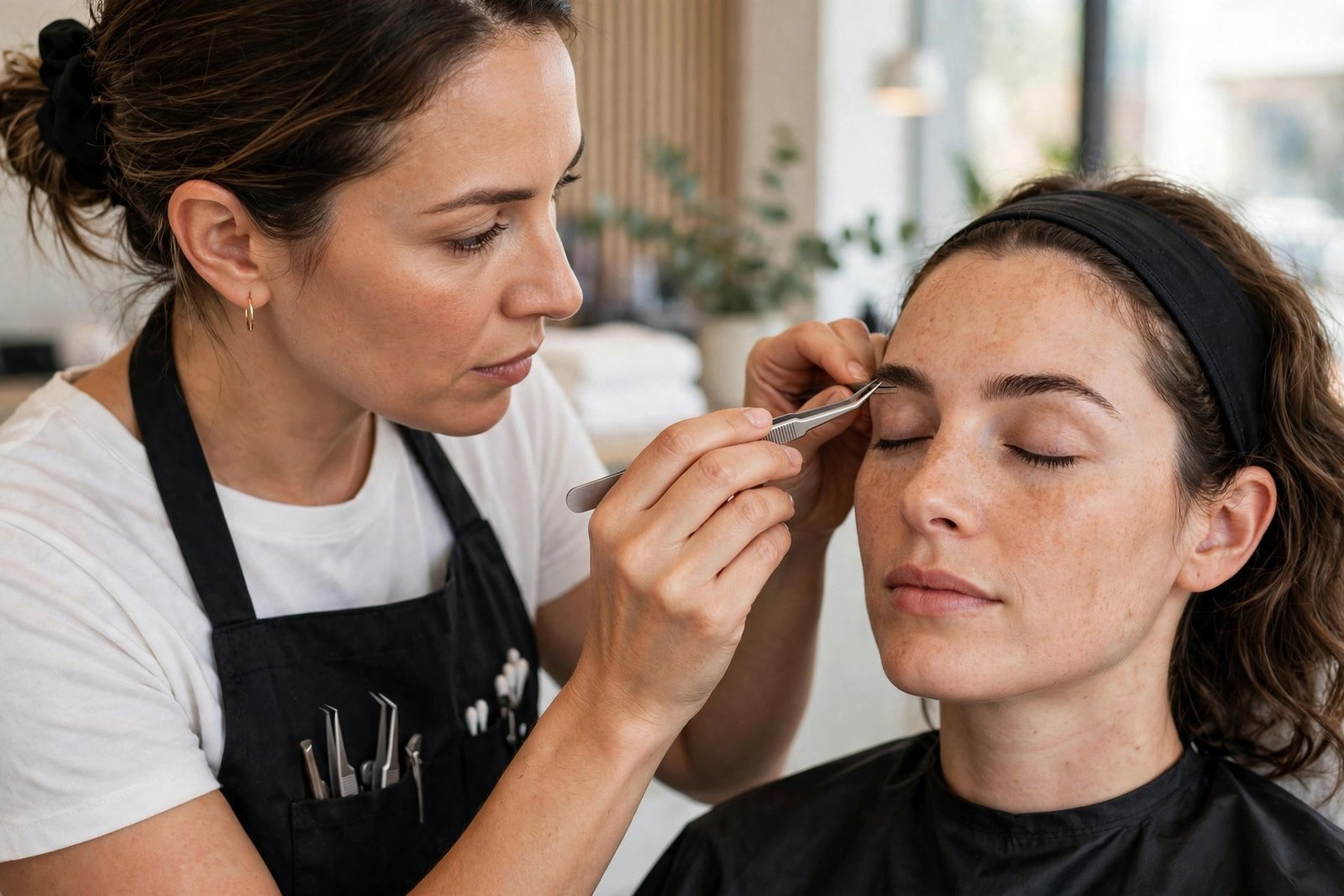
It starts innocently: a little cleanup here, a stray hair there. Then one day the mirror reveals the truth — brows that were once full are now thin, uneven commas, and the 90s-esque arches you accidentally created are not growing back on schedule. Over-plucked eyebrows are one of the most common beauty mishaps, and the panic they cause is disproportionate because brows frame the entire face.
The good news: most over-plucked brows recover. The honest news: it takes patience, strategy, and resisting the tweezers. This guide covers the regrowth timeline, what helps (and what is hype), how to fake full brows while you wait, and when to seek professional help.
The Regrowth Timeline: What to Actually Expect
Eyebrow hairs follow a growth cycle of 3-4 months — shorter than scalp hair, which is why brows never grow to your shoulders. After over-plucking, expect visible stubble in 2-3 weeks, meaningful fill in 6-8 weeks, and near-full recovery in 3-4 months — if the follicles are undamaged. The critical caveat: years of repeated plucking can permanently damage follicles, causing sparse patches that never fully return. One bad session recovers; a decade of aggressive plucking may not.
Stop all tweezing, waxing, and threading immediately — the single most important step. Every plucked hair restarts its 3-4 month clock. Resist “cleaning up” strays during regrowth; what looks like a stray at week 3 is often a soldier returning to formation. Mark a 12-week no-tweeze commitment on your calendar and treat it as sacred. Growth-supporting nutrition helps at the margins — the hair-skin-nail nutrients covered in the best time of day to take vitamins (biotin, vitamin D, iron if deficient) support follicle health, though no vitamin overrides the timeline.
What Actually Helps Growth (and What Doesn’t)
Evidence-backed: minoxidil 2% (yes, the hair-loss treatment) applied carefully to brows has legitimate off-label evidence for stimulating growth — discuss with a dermatologist first, as it can irritate eyes and cause unwanted hair growth if it migrates. Prescription bimatoprost (Latisse) grows brow hair in some patients. Gentle daily massage with a clean spoolie may support circulation (modest evidence, zero risk).
Probably harmless, possibly helpful: castor oil, rosemary oil (diluted), and peptide brow serums — the evidence is thin but the ritual keeps you from tweezing, which is itself the treatment. Hype: expensive “brow growth” serums with prostaglandin analogues carry risks (iris pigmentation changes, fat loss around eyes) that the marketing omits — research ingredients before applying anything near your eyes. The American Academy of Dermatology advises consulting a dermatologist before using medicated growth products on the brow area.
Fake It While You Wait: The Camouflage Toolkit
Twelve weeks is a long time to feel self-conscious. The camouflage strategy: brow pencils (fine-tipped, one shade lighter than your hair for natural looks) using hair-like strokes in the direction of growth — never a solid drawn line. Brow powders with an angled brush fill sparse areas softly. Tinted brow gels add color and hold to existing hairs, making the most of what is growing.
Shape illusion: filling slightly below your natural brow line creates the appearance of fullness; over-drawing above looks artificial. Concealer around the brow sharpens the shape and makes sparse areas less noticeable. For events, professional brow tinting ($20-40, lasts 2-4 weeks) colors fine vellus hairs you did not know you had, instantly adding density. And consider glasses as camouflage — the right frames draw attention to your eyes, not your brows, which is where guidance on choosing sunglasses that suit your face shape doubles as brow-recovery strategy. The Cleveland Clinic’s dermatology resources cover brow hair-loss causes worth ruling out.
When to Get Professional Help
See a dermatologist if: no regrowth after 4 months (possible follicle damage or underlying condition — thyroid disorders, alopecia areata, and nutritional deficiencies all cause brow thinning), sudden brow loss (not plucking-related), or you want prescription options. A dermatologist can distinguish plucking damage from medical hair loss with an exam.
For persistent sparse areas, professional options include: microblading ($400-800, lasts 1-3 years — research artists obsessively; bad microblading is worse than thin brows), brow lamination (redirects existing hairs for fuller appearance, lasts 6-8 weeks), and brow transplants ($4,000-8,000 — real hair follicles relocated to brows, permanent, for severe cases). Start conservative: most over-plucking resolves with time, camouflage, and tweezers in a drawer.
Shaping Brows Right: Avoiding the Next Mishap
Once brows recover, keep them that way with a maintenance philosophy, not a plucking habit. The mapping method: hold a pencil vertically against the nostril — where it meets the brow is where the brow should start; angle it through the pupil’s outer edge for the arch; angle to the nostril’s outer corner for the tail end. Pluck only hairs clearly outside these boundaries — when in doubt, leave it.
Rules for the reformed over-plucker: tweeze after showering (pores open, less pain, better judgment), in bright natural light (bathroom fluorescents lie), with a regular mirror — never a magnifying mirror, which makes every hair look like a problem. Step back every 2-3 hairs to assess; the damage happens in the unbroken 20-minute session. Never shape both brows in one sitting when learning — do one, live with it a day, then match. Consider professional shaping quarterly ($25-50): a skilled aesthetician establishes the shape, and you merely maintain strays between visits — outsourcing the decisions that caused the problem. And photograph your brows at their best; when the urge to “clean up” strikes, compare against the photo instead of the magnifying mirror. The goal is brows you maintain in five minutes monthly, not a hobby.
Conclusion
Fixing over-plucked eyebrows is 90% patience: stop tweezing completely, wait 3-4 months, support growth with proven options, camouflage skillfully meanwhile, and see a dermatologist if regrowth stalls. Brows are resilient — give them the chance to prove it, and hide the tweezers where future-you cannot find them.
Frequently Asked Questions
How long do over-plucked eyebrows take to grow back?
Visible stubble in 2-3 weeks, meaningful fill in 6-8 weeks, near-full recovery in 3-4 months — provided follicles are not permanently damaged from years of repeated plucking.
Do eyebrows grow back after years of over-plucking?
Sometimes partially, sometimes not — chronic plucking can permanently damage follicles. If no regrowth after 4 months of zero plucking, see a dermatologist to assess follicle viability and rule out medical causes.
Does castor oil grow eyebrows?
Evidence is anecdotal, but it is harmless and the nightly ritual prevents tweezing — which is the actual treatment. Minoxidil 2% has stronger (off-label) evidence; discuss with a dermatologist.
What is the best way to fill in sparse eyebrows?
Fine-tipped pencil with hair-like strokes in the growth direction, one shade lighter than your hair. Brow powder fills softly; tinted gel maximizes existing hairs. Professional tinting adds weeks of density.
Is microblading worth it for thin brows?
For persistent sparse areas after regrowth efforts, yes — $400-800 lasting 1-3 years. But research artists exhaustively (portfolios of healed work, not fresh), as bad microblading is difficult and expensive to correct.
Can eyebrow transplants look natural?
Yes, in experienced hands — surgeons relocate scalp follicles to the brow area, and results are permanent. The catch: transplanted hairs grow like scalp hair (requiring regular trimming) and the procedure costs $4,000-8,000. It is the last resort for severe follicle damage, not a first step — exhaust regrowth and microblading first.