
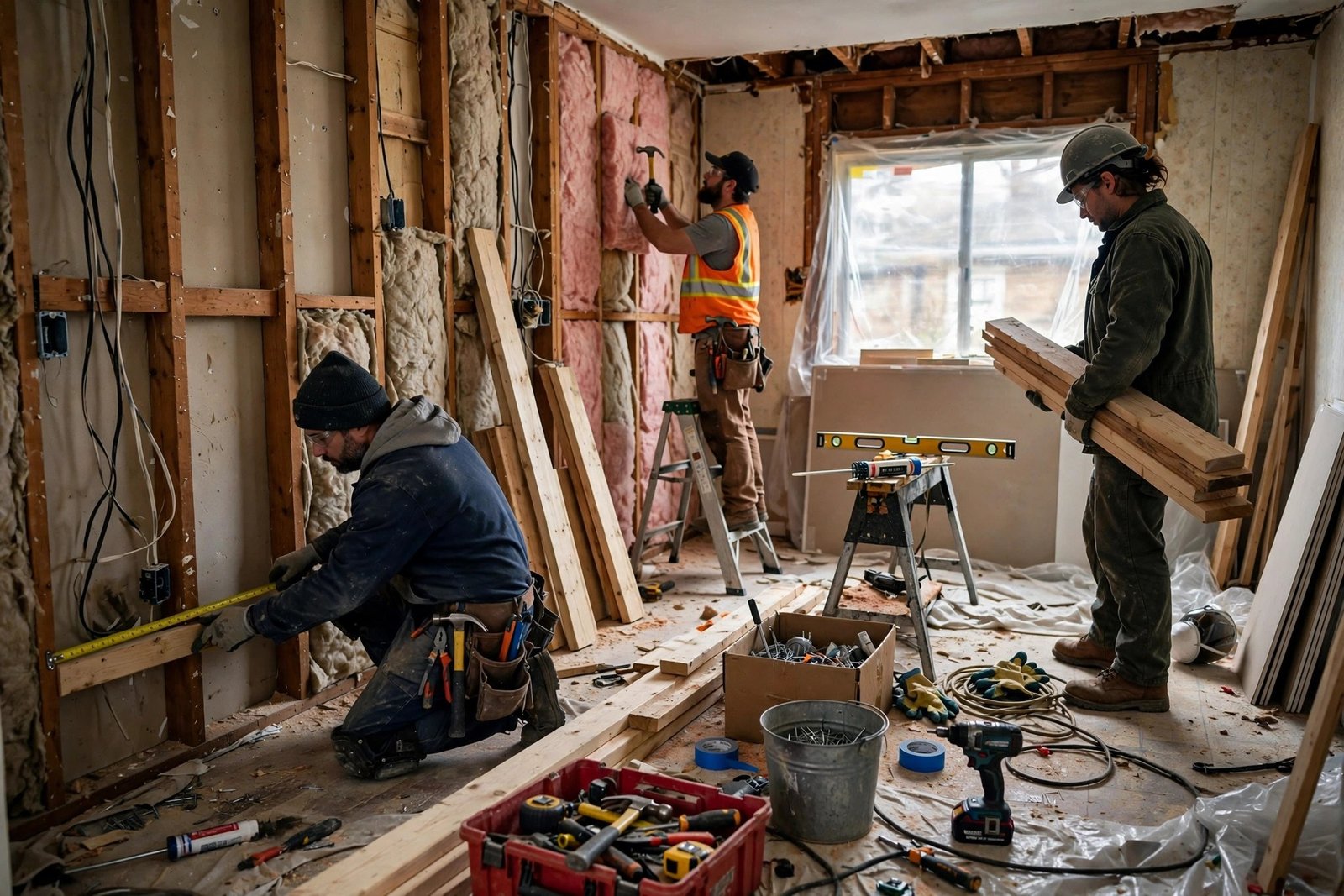
The listing says “charming fixer-upper with good bones.” Translation: the kitchen is from 1974, the bathroom has carpet, and the electrical panel is a fire inspector’s nightmare. Whether you are buying a flip, a forever home with potential, or your first investment property, estimating renovation costs before buying is the skill that separates profitable purchases from money pits.
This guide teaches systematic renovation estimation: the walkthrough method, real 2026 cost benchmarks by project, the hidden-cost multipliers amateurs miss, and how to build an offer price from your estimate.
The Walkthrough Method: Room by Room
Estimate with a structured walkthrough, not vibes. Bring a checklist covering every system: roof (age, visible damage), foundation (cracks, water intrusion), electrical (panel amperage, knob-and-tube or aluminum wiring), plumbing (galvanized pipes, water heater age), HVAC (furnace/AC age and condition), windows, and cosmetics room by room (flooring, paint, fixtures, kitchen, baths).
Photograph everything and note measurements — you will price from these later. Bring a contractor to the second showing for serious candidates; a 30-minute walkthrough with a pro ($0-200, often free for potential work) catches the $15,000 sewer line or the structural issue you would miss. Price each line item in three tiers — cosmetic, mid-range, and gut — because “renovate the kitchen” means $8,000 or $80,000 depending on scope. The contractor-vetting discipline in picking the right contractor for a home renovation starts here, before you own the problem.
2026 Cost Benchmarks by Project
Realistic mid-range benchmarks (varies 30%+ by market): kitchen remodel: $25,000-60,000 mid-range, $75,000+ upscale — cabinets are the cost driver. Bathroom remodel: bathroom remodel costs in the US run $12,000-30,000 for a full mid-range redo. Roof replacement: $10,000-25,000 (asphalt shingle, average home). Electrical panel upgrade: $2,500-5,000. HVAC replacement: $8,000-15,000. Flooring: $6-12/sq ft installed (LVP/laminate), $12-20+ (hardwood). Interior paint: $2-4/sq ft. Water heater: $1,500-3,500.
Whole-house rules of thumb: cosmetic refresh (paint, flooring, fixtures): $20-40/sq ft. Moderate renovation (kitchens, baths, systems): $60-100/sq ft. Gut renovation: $120-200+/sq ft. A 1,500 sq ft home needing moderate work: budget $90,000-150,000. Get three contractor bids per major trade once under contract — and remember the cheapest bid is often the most expensive mistake. The National Association of Home Builders publishes annual cost-vs-scope data grounding these ranges.
The Hidden-Cost Multipliers
Amateurs estimate the visible work; professionals estimate the invisible. Permits and fees: 1-5% of project cost, higher in strict jurisdictions — unpermitted work kills resale and insurance. Structural surprises: add a 15-20% contingency minimum (25%+ for homes pre-1960) — rot, termites, and code violations hide behind every wall. Code upgrades: touching electrical or plumbing often triggers whole-system modernization requirements. Asbestos and lead: testing ($300-800) and abatement ($2,000-15,000+) for pre-1980 homes.
Carrying costs: mortgage, taxes, insurance, and utilities during a 3-6 month renovation add thousands monthly — the most forgotten line item. Scope creep: “while we’re at it” is the four most expensive words in renovation; lock scope in writing. Market-specific costs: seismic retrofits (California, Pacific Northwest), flood-zone elevations, wildfire-hardening in the WUI. Budget-conscious buyers should also study the cheapest way to update an outdated kitchen — cosmetic strategies that capture 80% of the value at 20% of the cost.
Build Your Offer From the Estimate
The professional formula: Maximum offer = (After-Repair Value × 0.70) − repair costs − carrying costs − profit target (the “70% rule” for flips; adjust to 75-80% for buy-and-hold in appreciating markets). After-Repair Value (ARV) comes from sold comps of renovated homes within half a mile, adjusted for differences — not from the listing agent’s optimism.
Financing the renovation: conventional mortgages do not fund repairs — use FHA 203(k) or Fannie Mae HomeStyle renovation loans (purchase + renovation in one mortgage), HELOCs on other properties, or hard money for flips (expensive, short-term). HUD’s 203(k) program guide details the government-backed option. Negotiate with data: present the seller with your itemized estimate — documented repair costs justify price reductions far better than “it needs work.” And know your walk-away number before negotiating; the best renovation estimate is worthless if emotions override it.
DIY vs. Contractor: Drawing the Line
The biggest renovation savings come from knowing what to DIY and what to hire — and the line is about skill, permits, and risk, not just confidence. DIY-friendly: interior painting, landscaping, fixture swaps (faucets, lighting, hardware), backsplash tile, LVP/laminate flooring, and demolition (the fun part — but check for asbestos/lead first in pre-1980 homes). These capture real savings: painting a 1,500 sq ft interior yourself saves $3,000-5,000.
Always hire licensed pros for: electrical panel work and rewiring, gas lines, structural changes (load-bearing walls, foundation), roofing, and HVAC — the permit-required, life-safety trades where mistakes burn houses down or void insurance. The gray zone (drywall, plumbing fixture installs, fence/deck builds) depends on your skill and local code — many jurisdictions allow homeowner permits for these with inspections. The math: DIY saves 40-60% on labor for suitable tasks, but botched DIY costs more than hiring originally — contractors charge premium “fix-it” rates, and failed inspections restart timelines. Rule of thumb: DIY what you can do to professional standard (YouTube is not a credential — practice on low-stakes projects first), hire everything affecting structure, safety, or resale inspections. And never DIY to save money on a flip timeline — your holding costs during a slow DIY renovation usually exceed the contractor’s fee.
Conclusion
Estimating renovation costs before buying is a system: structured walkthrough, benchmark pricing by project, 15-25% contingency for the hidden, carrying costs included, and an offer built backward from after-repair value. Do this math before every offer, and “good bones” becomes an investment thesis instead of a gamble.
Frequently Asked Questions
How much does a full home renovation cost?
Rule of thumb: $20-40/sq ft cosmetic, $60-100/sq ft moderate, $120-200+/sq ft gut renovation. A 1,500 sq ft home needing moderate work: $90,000-150,000 plus 15-20% contingency.
What is the 70% rule in house flipping?
Maximum offer = (After-Repair Value × 70%) − repairs − carrying costs. It builds in profit margin and buffers estimation error; buy-and-hold investors may use 75-80%.
What hidden renovation costs do buyers miss?
Permits, structural surprises (budget 15-25% contingency), code-triggered upgrades, asbestos/lead abatement, and carrying costs during renovation — the most commonly forgotten line item.
How do I finance a fixer-upper renovation?
FHA 203(k) or Fannie Mae HomeStyle loans bundle purchase + renovation into one mortgage. Alternatives: HELOCs, cash-out refinances, or hard-money loans for flips.
Should I get a contractor walkthrough before buying?
Yes for any serious candidate — a pro spots the $15,000 sewer line or structural issue you will miss. Many contractors do pre-purchase walkthroughs free or cheap for potential work.
How long does a typical home renovation take?
Cosmetic refreshes: 2-6 weeks. Single-room remodels (kitchen/bath): 6-12 weeks. Whole-house moderate renovation: 4-8 months. Gut renovations: 8-14 months. Add 20-30% to contractor estimates for permits, inspections, and the inevitable surprises — timelines slip more often than budgets hold.
Should I live in the home during renovation?
For cosmetic work, yes with dust management. For kitchens, bathrooms (if only one), or whole-house projects: strongly consider moving out. Living through construction doubles stress, slows contractors, and exposes you to dust hazards — budget temporary housing as a project cost, not an afterthought.
When should I walk away from a fixer-upper?
Walk away when repair estimates exceed 70% of the after-repair value minus your profit target, when structural issues (foundation, major water intrusion) lack clear fixes, or when the numbers only work with optimistic assumptions. The best deal evaluation skill is the willingness to pass — another property always comes.