
Introduction
225°F is the classic low-and-slow temperature for ribs. It gives you tender meat, a beautiful smoke ring, and bark with real character. But the timing trips up a lot of first-timers.
In this guide, I will give you exact times for every type of rib, explain the famous 3-2-1 method, and show you how to tell when ribs are truly done.
Direct Answer: How Long to Smoke Ribs at 225°F?
At 225°F, baby back ribs take 5 to 6 hours and spare ribs (or St. Louis cut) take 6 to 7 hours. Ribs are done when the meat pulls back from the bone ends and the rack bends easily without breaking — usually around 195 to 203°F internal temperature.
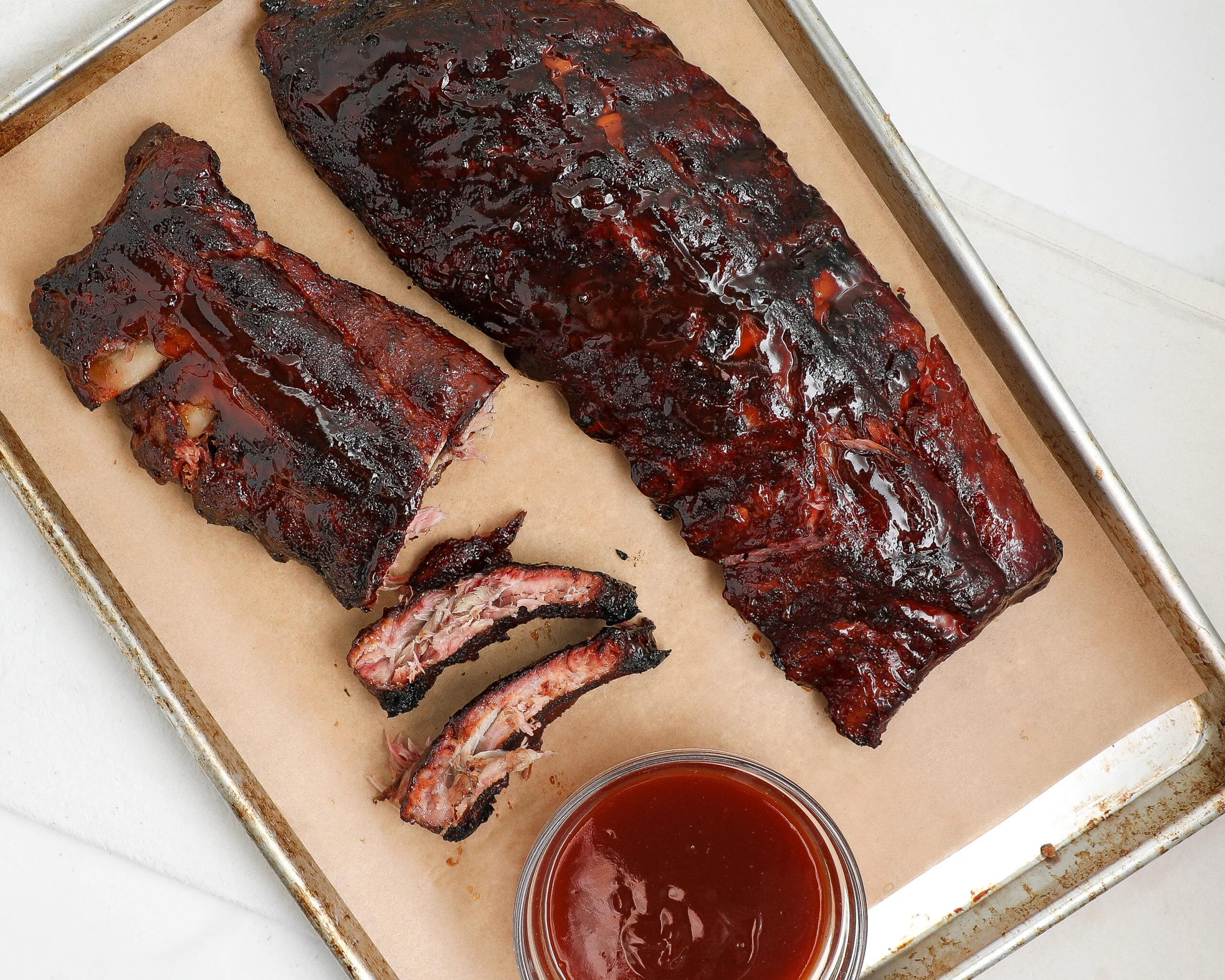
Smoking Times by Rib Type
- Baby back ribs: 5 to 6 hours — smaller, leaner, and quicker
- Spare ribs: 6 to 7 hours — bigger, fattier, need more time
- St. Louis cut spare ribs: 6 to 7 hours — trimmed spare ribs, same timing
- Beef short ribs: 7 to 9 hours — much thicker, cook more like brisket
These times assume a steady 225°F. Wind, cold weather, and opening the lid all add time, so treat these as guidelines and cook to doneness, not the clock.
The 3-2-1 Method (Spare Ribs)
The 3-2-1 method is the most popular rib formula for spare ribs at 225°F:
- 3 hours unwrapped: smoke the ribs bone-side down, spritzing with apple juice every 45 minutes
- 2 hours wrapped: wrap tightly in foil (or butcher paper) with a little butter, brown sugar, and honey — this powers through the stall and tenderises the meat
- 1 hour unwrapped: unwrap, brush with BBQ sauce, and let the sauce set into a sticky glaze
Total: 6 hours. For baby backs, use a 2-2-1 method instead (2 hours smoke, 2 wrapped, 1 sauced) since they are smaller.
Step-by-Step: Smoking Ribs at 225°F
Step 1: Prep the Ribs
Remove the membrane from the bone side — slide a butter knife under it at one end, grip with a paper towel, and pull. Trim excess fat. Pat dry.
Step 2: Season
Apply a thin coat of yellow mustard as a binder (it cooks off, do not worry), then season generously with your dry rub: salt, pepper, paprika, garlic powder, and brown sugar is a classic base. Rest 30 minutes while the smoker heats.
Step 3: Get the Smoker to 225°F
Stabilise your smoker at 225°F with clean, thin blue smoke. Good wood choices: hickory, oak, apple, or cherry. Avoid thick white smoke — it makes ribs bitter.
Step 4: Smoke
Place ribs bone-side down. Close the lid and leave them alone for the first 2 to 3 hours. After that, spritz with apple juice or apple cider vinegar every 45 minutes to keep the surface moist.
Step 5: Wrap (Optional but Recommended)
When the bark looks set and the internal temp hits around 160°F (usually hour 3 to 4), wrap in foil with butter, sugar, and honey. Return to the smoker.
Step 6: Sauce and Finish
Unwrap for the final hour. Brush with thinned BBQ sauce in the last 20 to 30 minutes so it sets without burning. Rest the ribs 15 minutes tented in foil before slicing.
How to Tell When Ribs Are Done
Forget the clock — use these tests:
- The bend test: pick up the rack with tongs from one end. It should bend easily and the surface should crack slightly. If it is stiff, it needs more time. If it falls apart, it is overdone.
- Pull-back: the meat shrinks back from the bone ends by about a quarter to half an inch.
- Toothpick test: a toothpick should slide between the bones with almost no resistance, like going into soft butter.
- Temperature: 195 to 203°F in the thickest meat (not touching bone). Ribs are thin, so temp is a guide — the bend test is more reliable.
Common Mistakes to Avoid
- Cooking by time alone. Every rack is different. Start checking with the bend test at hour 4 for baby backs and hour 5 for spares.
- Too much smoke. Thin blue smoke the whole cook. Heavy white smoke gives bitter, acrid ribs.
- Saucing too early. Sugar in sauce burns. Sauce only in the last 20 to 30 minutes.
- Skipping the rest. Cutting immediately lets juices run out. Fifteen minutes of rest makes a real difference.
- Boiling ribs first. It is faster, but you lose flavour and texture. Low and slow is worth the wait.
Tips for Better Ribs
- Keep the lid closed. “If you’re lookin’, you ain’t cookin’.” Every peek adds 10 to 15 minutes.
- Use a water pan. It stabilises temperature and keeps the cooking environment humid.
- Rest before slicing. Tent in foil for 15 minutes — the juices redistribute.
- Slice between the bones. Flip the rack bone-side up to see the bones clearly, then cut.
For more BBQ guides, see how long to smoke chicken thighs and how long to smoke a turkey at 275.
Frequently Asked Questions
Should I wrap ribs when smoking?
Wrapping (the “Texas crutch”) speeds up cooking and makes ribs more tender and juicy. Unwrapped ribs get better bark. Try both and see which you prefer — most beginners get better results wrapping.
What wood is best for ribs?
Hickory and oak are classics for pork ribs. Apple and cherry add a sweeter, milder smoke and give a beautiful colour. Avoid mesquite — it is too strong for long rib cooks.
Can I smoke ribs at 250°F instead?
Yes. At 250°F, baby backs take about 4 to 5 hours and spares about 5 to 6. The results are very similar — 225°F is traditional, but 250°F is more forgiving for beginners.
Why are my ribs tough?
They are undercooked. Tough, chewy ribs almost always need more time, not less. Keep cooking until they pass the bend test.
Why are my ribs mushy?
Overcooked or wrapped too long. If the meat falls off the bone with zero resistance, back off the wrap time next cook. Competition-style ribs have a slight bite.
Do I need to remove the membrane?
Yes, on the bone side. The membrane (silverskin) blocks smoke and seasoning, and it turns papery when cooked. It takes 30 seconds to pull off.
How many ribs per person?
Plan on half a rack (6 to 7 bones) per person for baby backs, or 4 to 5 bones of spare ribs. Hungry crowds: budget a full rack each.
Conclusion
At 225°F, plan 5 to 6 hours for baby backs and 6 to 7 for spare ribs. Use the 3-2-1 method as your roadmap, but trust the bend test over the clock.
Keep the smoke thin, the lid closed, and the sauce for the end — and you will have ribs worth bragging about.