
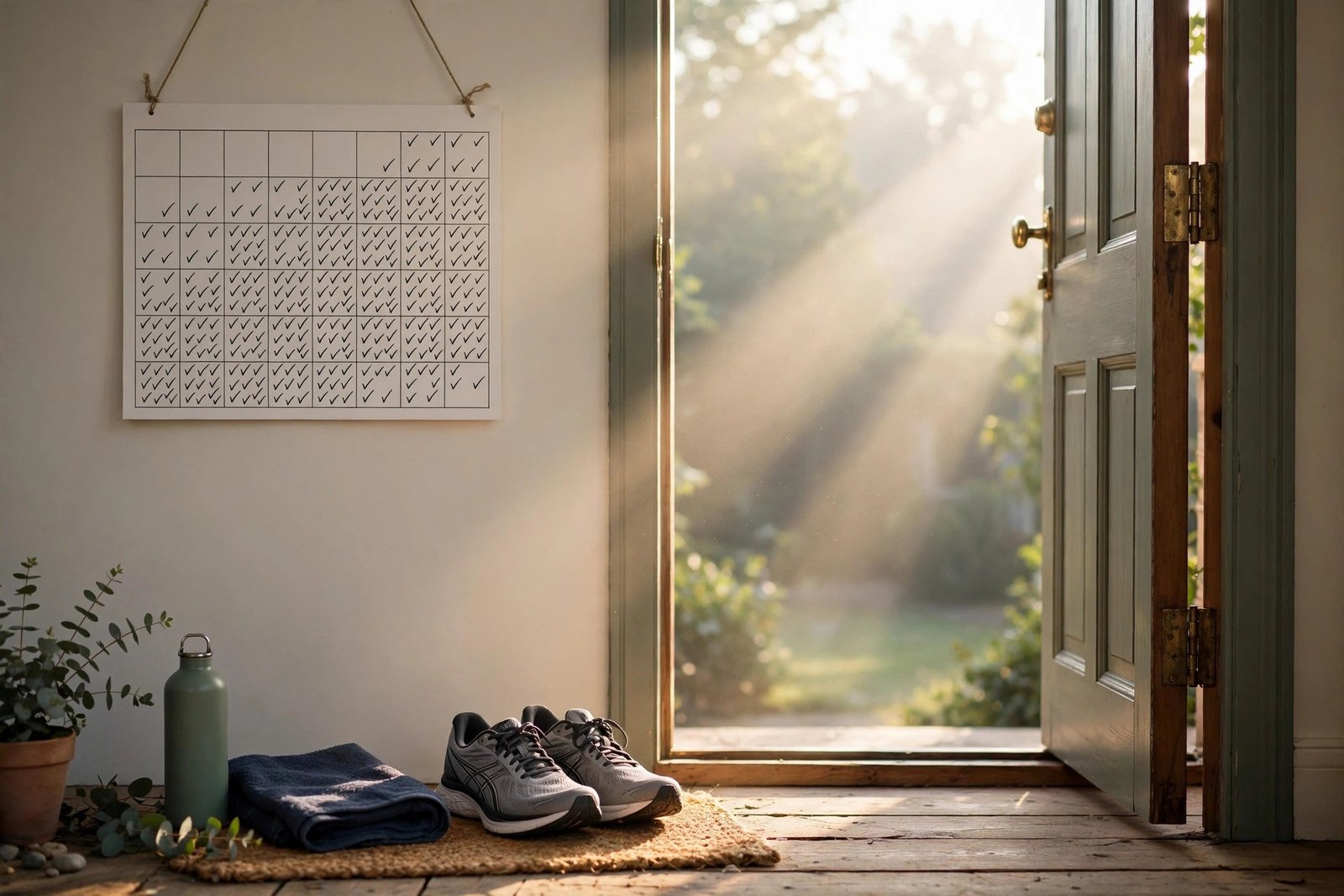
Discipline has a branding problem. We picture it as white-knuckled willpower — grinding through exhaustion, saying no to everything fun, running on fumes. That version of discipline does not build success; it builds burnout, and then the discipline collapses entirely. There is a better way.
Real discipline is not intensity but consistency: small actions, repeated daily, in systems designed to make them easy, with recovery built in rather than bolted on. This guide shows you how to build discipline that lasts — without burning out.
Why Willpower-Based Discipline Fails
Willpower is a depletable resource — decision fatigue is real, and every act of self-control draws from the same pool. The person who white-knuckles through a brutal morning routine, a restrictive diet, and a 12-hour workday does not have more discipline by evening; they have less, which is when the binge, the skipped workout, and the doomscrolling happen. Intensity borrows from tomorrow to pay for today.
Burnout is what happens when this borrowing compounds: chronic overexertion without recovery leads to exhaustion, cynicism, and collapse — and the discipline project dies with it. The American Psychological Association on personality and self-control finds that the most “disciplined” people do not actually exert more willpower — they experience fewer temptations because they design better environments. The secret of discipline is not strength but strategy.
Systems Over Willpower: Design Beats Discipline
Every disciplined behavior you admire is probably a system, not a struggle. Environment design: the runner’s shoes by the door, the phone in another room during work, the healthy food at eye level — each removes a decision. Friction manipulation: make good behaviors easy (gym bag packed, workout clothes laid out) and bad behaviors hard (delete the app, not just resolve to use it less).
Implementation intentions: “I will [behavior] at [time] in [place]” outperforms vague goals dramatically — the pre-decision eliminates the daily negotiation. Defaults and automation: automatic savings transfers, scheduled workouts with a partner, meal prep — discipline that runs without daily willpower. Audit your life for the three behaviors you repeat daily and systematize them first; best habits for a more organized life are almost all systems disguised as virtues.
The two-minute version
Every new discipline starts absurdly small: read two pages, do one push-up, meditate for one minute, write one sentence. The goal is not the action but the identity — “I am someone who shows up daily.” Small starts bypass resistance, build streaks, and scale naturally. The person doing two minutes daily for a month has more discipline than the person who did two heroic hours once.
The weekly review: discipline’s maintenance ritual
Discipline degrades without maintenance, and the weekly review is the maintenance. Fifteen minutes every Sunday: which disciplines did I keep, which slipped, and why? The review is diagnostic, not punitive — slipped workouts because of a brutal work week suggest schedule adjustment, not character failure. Look for patterns across weeks: the same slip three weeks running is a system flaw, not a willpower flaw, and it needs redesign rather than redoubled effort. People who review weekly sustain disciplines for years; people who do not drift within months. The review is where discipline becomes self-correcting instead of self-punishing.
Build Recovery In, Not On
Here is what separates sustainable discipline from the burnout kind: recovery is part of the program, not a reward for surviving it. Athletes periodize — hard training blocks followed by deload weeks — because adaptation happens during recovery, not stress. Apply this everywhere: weekly rhythms with genuine rest days, quarterly reviews to adjust what is not working, sleep as non-negotiable (the foundation every other discipline stands on).
Planned indulgence beats forbidden fruit: scheduled treats prevent the deprivation-binge cycle. Energy accounting: track not just time but energy — schedule demanding disciplines for high-energy hours and protect them. And recognize the difference between productive discomfort (growth) and destructive depletion (damage): soreness versus injury, tired versus exhausted, challenged versus drowning. UC Berkeley’s Greater Good Science Center covers the science of sustainable well-being — discipline without recovery is just slow self-destruction.
The Identity Method: Become, Don’t Just Do
The deepest discipline operates at identity level. “I am trying to work out” requires daily negotiation; “I am an athlete” makes the workout automatic — each action is evidence for the identity, and identities defend themselves. Start with identity, not outcomes: decide who you are becoming, then let small daily votes accumulate as proof.
Track the votes, not just the results: a simple checkmark calendar showing daily follow-through builds the identity faster than any single achievement. Join the tribe: identities are social — runners run with runners, writers with writers. Speak it: telling people “I am someone who…” creates accountability that private resolutions lack. Two disciplined people with identical routines differ in staying power based on identity strength — the one who is disciplined outlasts the one merely acting disciplined. Identity is the deepest system of all. Start with one small vote today — the identity follows the evidence.
Watch for the warning signs
Even well-designed discipline can tip into overdrive. Monitor the early warning signs of burnout at work and in life: dreading things you chose, declining performance despite more effort, irritability, and the feeling that rest is laziness. Discipline that produces these symptoms is not discipline — it is self-harm with a productivity aesthetic. Adjust immediately: reduce load, increase recovery, or both.
Conclusion
Discipline without burnout is built, not summoned: design systems that make good behaviors easy, start absurdly small to build identity, schedule recovery as part of the program, and monitor for the warning signs that separate productive discomfort from destructive depletion. The goal was never to suffer impressively — it was to become, sustainably, the person who shows up. Build the system, trust the process, rest without guilt, and let consistency do what intensity never could.
Frequently Asked Questions
How long does it take to build discipline?
Habit research suggests 2–8 months for behaviors to become automatic, varying by complexity. But “discipline” as an identity builds faster — a few weeks of consistent small wins starts shifting self-perception. Focus on never missing twice rather than any timeline.
What is the difference between discipline and burnout?
Discipline is sustainable consistency that includes recovery; burnout is chronic overexertion without recovery leading to exhaustion and collapse. The test: disciplined effort leaves you capable of continuing tomorrow; burnout-pattern effort borrows from tomorrow until there is nothing left.
Can you be disciplined and still rest?
Rest is part of discipline, not its opposite — athletes, musicians, and top performers all periodize effort with recovery. Scheduled rest prevents the crashes that destroy consistency. Anyone telling you rest is weakness is selling burnout.
How do I stay disciplined when motivation fades?
Stop relying on motivation — that is the entire point of systems. Environment design, implementation intentions, habit stacking, and identity-based tracking carry you through motivation’s absence. Motivation starts the engine; systems keep the car moving.
Is it better to build one habit or many at once?
One at a time, overwhelmingly. New habits consume attention until automatic; stacking several new ones divides that attention and all of them fail. Master one small discipline, let it become identity, then add the next. Sequential beats simultaneous every time.