
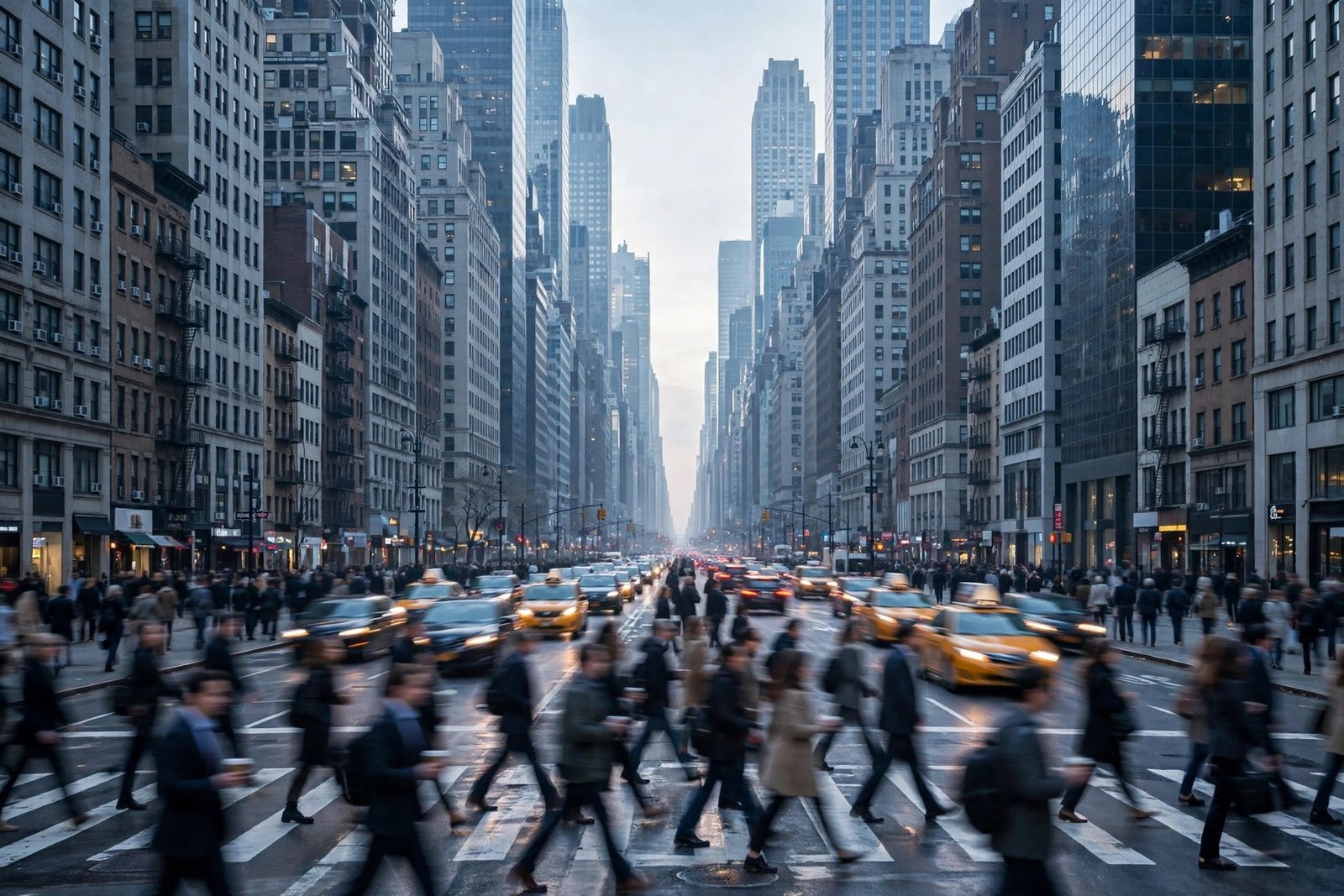
New York, San Francisco, Los Angeles — America’s hustle culture capitals run on a shared script: sleep is for the weak, weekends are for side projects, and your worth equals your output. The energy is intoxicating at first. Then, somewhere around year three, the 70-hour weeks, the comparison treadmill, and the inability to enjoy a Saturday without guilt start extracting their price.
Finding balance in a hustle culture city is not about abandoning ambition — it is about building a life where ambition does not eat everything else. This guide covers the boundaries that actually hold, how to rest without guilt, and how to redefine success on your own terms while living where the grind never sleeps.
Why Hustle Cities Make Balance Uniquely Hard
The pressure is structural, not just personal. In hustle cities, your rent demands high income, your peers broadcast their wins constantly, and the ambient message — from billboards to brunch conversations — is that you should be doing more. Opting out feels like falling behind because, visibly, everyone else is sprinting. Social comparison is the engine, and the city provides infinite fuel.
Recognizing this matters: your inability to “just relax” is not a personal failing but a rational response to an environment engineered for striving. That reframe is liberating — you stop blaming yourself and start designing defenses. The World Health Organization on burnout classifies it as an occupational phenomenon driven by chronic workplace stress — the condition is in the environment as much as in you.
Boundaries That Actually Hold in High-Pressure Cities
Generic advice (“set boundaries!”) fails because hustle cities punish weak boundaries. What works: hard stops with social enforcement — tell your team and friends your cutoff time; public commitments are harder to break. The phone jail: a physical box or drawer where the phone lives after 9 PM — environmental design beats willpower every time.
Calendar blocking for life: schedule workouts, dinners, and downtime with the same seriousness as meetings — if it is not on the calendar, the city’s demands will eat it. The “no” template: prepare polite declines for the constant invitations and opportunities; “I am at capacity right now” is complete and professional. And financial boundaries: lifestyle inflation is the trap that makes the grind mandatory — keeping expenses below income is what buys you the freedom to say no. Learning to reduce stress while working from home adds remote-work-specific tactics to the same arsenal.
The comparison detox
Unfollow or mute the accounts that make you feel behind — not out of bitterness but hygiene. Curate your information diet toward people living the values you actually want. And practice the reframe: someone’s highlight reel is not their life, and the “overnight success” you envy usually has a decade of invisible struggle behind it. Comparison is inevitable in these cities; curated comparison is a choice.
Rest Without Guilt: Rewiring the Hustle Brain
The hardest part is not finding time to rest but resting without the gnawing sense you should be working. This guilt is learned, which means it can be unlearned. Schedule rest as training: athletes rest strategically because recovery builds performance — treat your downtime the same way, as part of the work, not an escape from it.
Measure rest’s ROI: notice how much sharper, kinder, and more creative you are after real rest — the evidence convinces the hustle brain faster than philosophy. Start small: one fully unplugged evening weekly, then a full weekend day monthly. Find rest allies: friends who also protect downtime normalize it — solo rest in a hustle city feels deviant; collective rest feels like a movement. The American Psychological Association on stress documents how chronic stress without recovery impairs exactly the cognitive functions ambition requires — rest is not the enemy of performance but its prerequisite.
Redefining Success on Your Terms
Hustle cities sell one definition of success: more — more money, more status, more growth. But “more” is a treadmill with no finish line. The balance project requires writing your own definition, explicitly: what does a good week look like? A good year? What would “enough” actually be, in numbers?
Try the exercise: describe your ideal Tuesday in detail — where you are, who you are with, what you are doing. Most people’s ideal Tuesday involves far less striving than their actual Tuesday, and the gap reveals what to change. Common discoveries: time with specific people matters more than income beyond a threshold; autonomy beats prestige; health is the foundation everything else stands on. Write your definition down and revisit it quarterly — the city’s script is loud, and yours needs regular rehearsal to stay audible.
Know the warning signs
Balance is not a destination but a practice of noticing drift. Watch for the early warning signs of burnout at work — cynicism about things you used to enjoy, exhaustion that sleep does not fix, declining performance despite longer hours. Catching drift early means small corrections; ignoring it means collapse and rebuilding.
Conclusion
Balance in a hustle culture city is an active practice, not a personality trait: boundaries with social enforcement, rest treated as training, curated comparison, and a personally defined success you revisit regularly. You do not have to leave New York, San Francisco, or LA to live well — but you do have to consciously build the life the city will not build for you. Ambition and balance are not opposites; the most sustainably ambitious people are the ones who learned to rest, and the city rewards those who play the long game well.
Frequently Asked Questions
Is it possible to have work-life balance in NYC or SF?
Yes, but it requires deliberate design — the default settings of these cities push toward overwork. People who achieve balance there do it through strong boundaries, financial discipline that buys freedom, and communities that normalize rest. It is harder than in slower cities but entirely possible.
How do I stop feeling guilty about resting?
Reframe rest as performance training (recovery builds capacity), track how much better you work after real rest, start with small scheduled rest periods, and find friends who also protect downtime. The guilt is a learned response to hustle culture — it fades as new habits prove themselves.
What are signs hustle culture is harming my health?
Chronic exhaustion unrelieved by sleep, cynicism about work you once liked, declining performance despite longer hours, neglected relationships and health, and inability to enjoy time off. These are burnout warning signs — take them seriously and adjust before collapse forces the issue.
Should I leave a hustle city to find balance?
Not necessarily — many people build balanced lives in NYC, SF, and LA through intentional choices. But if you have tried sustained boundary-setting and the environment still overwhelms you, relocating to a slower city is a legitimate strategy, not a failure. The goal is a life that works, wherever that is.
How do I define success for myself?
Write it explicitly: describe your ideal week in detail, name what “enough” looks like in concrete terms, and identify what you would regret neglecting in ten years. Revisit quarterly. A personal definition, regularly rehearsed, is the only defense against the city’s louder script.