
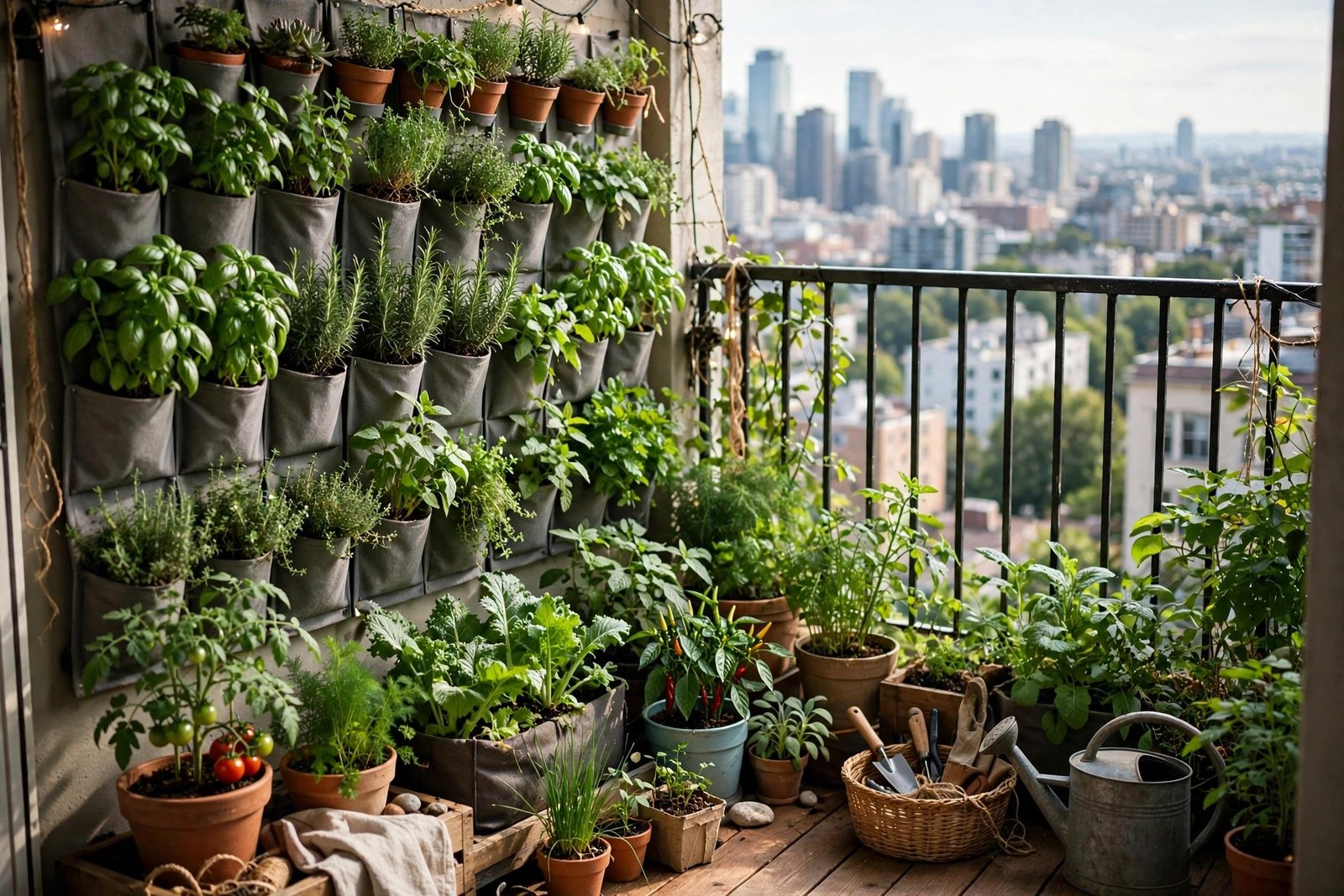
No yard? No problem. A small apartment balcony — even a tiny 4×6-foot slab — can produce salads, herbs, flowers, and an outsized amount of joy. Balcony gardening is gardening distilled to its essentials: every square inch matters, every plant earns its place, and the constraints force a creativity that sprawling gardens never demand.
This guide covers how to garden on a small apartment balcony: assessing your space, choosing containers, going vertical, the best crops for tiny spaces, and solving the wind, shade, and weight challenges unique to balconies.
Assess Your Balcony: Sun, Wind, and Rules
Before buying anything, observe. Sun: track how many hours of direct sun your balcony gets — this single number determines everything you can grow. Six-plus hours: full-sun crops (tomatoes, peppers, most flowers). Three to six: partial-shade champions (lettuce, herbs, greens). Under three: shade specialists (mint, parsley, ferns, begonias). South and west-facing balconies are gold; north-facing ones need shade strategy.
Wind: balconies — especially high ones — are wind tunnels that shred leaves, topple pots, and desiccate soil. Note your exposure; windbreaks (lattice, outdoor fabric, dense plantings on the windward side) are often necessary. Rules: check your lease and HOA before investing. Common restrictions: weight limits, no hanging over railings, watering runoff rules, and outright bans. Get permission in writing if there is any doubt — nothing kills a garden like a violation notice.
The weight question
Wet soil is shockingly heavy — a large container can exceed 100 pounds. Most balconies handle distributed weight fine, but concentrate heavy pots near load-bearing walls, use lightweight potting mix (not garden soil), consider fabric pots (lighter than ceramic), and never create a single massive point load. When in doubt, ask building management for the load rating.
Containers: Your Garden Beds
Everything grows in containers on a balcony, so choose well. Fabric grow bags are the balcony gardener’s secret weapon: cheap, lightweight, excellent drainage and root aeration, and they fold flat for storage. Self-watering planters with reservoirs buy you days of forgiveness — invaluable if you travel or forget. Railing planters exploit otherwise dead space but check weight and attachment rules.
Size matters: bigger pots mean more stable moisture and happier roots — a 5-gallon tomato outperforms three 1-gallon ones. Drainage holes are mandatory; saucers or drip trays protect downstairs neighbors (a legal and neighborly necessity). Use quality potting mix, never garden soil — containers need the drainage and lightness only soilless mixes provide. And mulch the surface: it cuts watering frequency dramatically, which matters when you are hand-watering everything. The watering discipline you build here serves you indoors too — it is the same attentiveness that helps you keep houseplants alive if you travel a lot.
Go Vertical: Multiply Your Square Footage
On a small balcony, the walls and railings are garden beds waiting to happen. Wall-mounted planters and pocket gardens turn a blank wall into herb and flower production. Trellises let cucumbers, beans, peas, and indeterminate tomatoes climb instead of sprawl — a 2-square-foot footprint producing like 10. Hanging baskets from ceiling hooks hold strawberries, trailing herbs, and flowers.
Tiered plant stands and ladder shelves multiply surface area in the same footprint — put sun-lovers on top, shade-tolerant plants below. Rail-mounted boxes on the inside of the railing keep the floor clear. The principle: think in cubic feet, not square feet. A well-verticalized 4×6 balcony can hold 30–50 plants — a genuine garden, not a token one. And a lush balcony transforms the whole apartment’s feel — greenery is one of the cheapest ways to make a small apartment feel bigger and more alive.
Best Crops for Tiny Balconies
Choose plants with high yield per square foot. Herbs are the undisputed champions: basil, parsley, cilantro, mint (always in its own pot — it is invasive), thyme, and chives produce constantly from tiny footprints. Salad greens: cut-and-come-again lettuce, arugula, and spinach give multiple harvests from shallow containers.
Compact vegetables: cherry tomatoes (determinate or dwarf varieties like Tiny Tim), peppers, bush beans, radishes (ready in 30 days), and scallions. Strawberries in hanging baskets or towers are absurdly productive per square foot. Flowers: marigolds (pest deterrent), nasturtiums (edible, trailing), petunias, and zinnias for pollinators and joy. Avoid space hogs: full-size squash, corn, and sprawling melons are balcony-hostile. The Old Farmer’s Almanac offers container variety recommendations bred specifically for small spaces.
The one-pot salad garden
The perfect starter project: one 14-inch pot, sown with cut-and-come-again lettuce mix around the edge and a cherry tomato (dwarf variety) in the center with a small stake. In 6–8 weeks you are harvesting salads steps from your kitchen — the experience that converts balcony skeptics into gardeners for life.
Watering, Feeding, and Daily Care
Containers dry fast — in summer, daily watering is normal, twice daily in heat waves. Water until it drains from the bottom, ideally in the morning. Self-watering planters and drip lines on timers are the best investments a balcony gardener makes; they turn a daily chore into a weekly check. The EPA’s WaterSense program notes that container drip systems are among the most efficient irrigation methods available.
Feed regularly: nutrients wash out of containers with every watering, so liquid fertilizer every 1–2 weeks (or slow-release granules monthly) is essential — unfed container plants stall no matter how perfect everything else is. Scout for pests weekly: aphids love balcony greens (blast with water), and spider mites thrive in hot dry balcony air. Harvest constantly — picking herbs and greens encourages more production, which is the whole point.
Conclusion
Balcony gardening is proof that constraints create gardeners: assess your sun and wind, invest in good containers and potting mix, grow vertically to multiply your space, plant high-yield crops like herbs and greens, and water and feed consistently. A 4×6 slab can feed you salads all summer and joy all year. Start with one pot this weekend — the balcony garden of your Pinterest dreams begins with a single seedling.
Frequently Asked Questions
What grows best on a shady balcony?
Lettuce, spinach, arugula, kale, mint, parsley, cilantro, and chives all produce well with 3–4 hours of sun. For flowers, try impatiens, begonias, fuchsias, and coleus. Avoid fruiting crops (tomatoes, peppers) without at least 6 hours of direct sun.
How do I keep pots from blowing over on a windy balcony?
Use heavy, wide-based pots for exposed spots; cluster pots together so they shelter each other; install windbreaks (lattice, fabric) on the windward side; and choose compact, sturdy varieties over tall top-heavy ones. Fabric grow bags resist tipping better than tall ceramic pots.
Can I garden on a balcony if my lease restricts it?
It depends on the restriction — many leases ban hanging planters or railing attachments but allow floor-standing pots. Always get clarification in writing. If gardening is fully banned, indoor growing with grow lights is the workaround.
How often do balcony plants need watering?
Typically daily in summer, sometimes twice daily in heat waves; every 2–3 days in cooler weather. Small pots dry fastest. Self-watering planters or drip irrigation on a timer dramatically reduce the chore — the single best upgrade for busy balcony gardeners.
Is balcony gardening actually worth it for food?
For herbs and salad greens, absolutely — a small balcony can supply a household’s fresh herbs and a steady stream of salads all season, saving real grocery money. For calorie crops it is supplemental, but the freshness, flavor, and satisfaction far exceed the investment.