
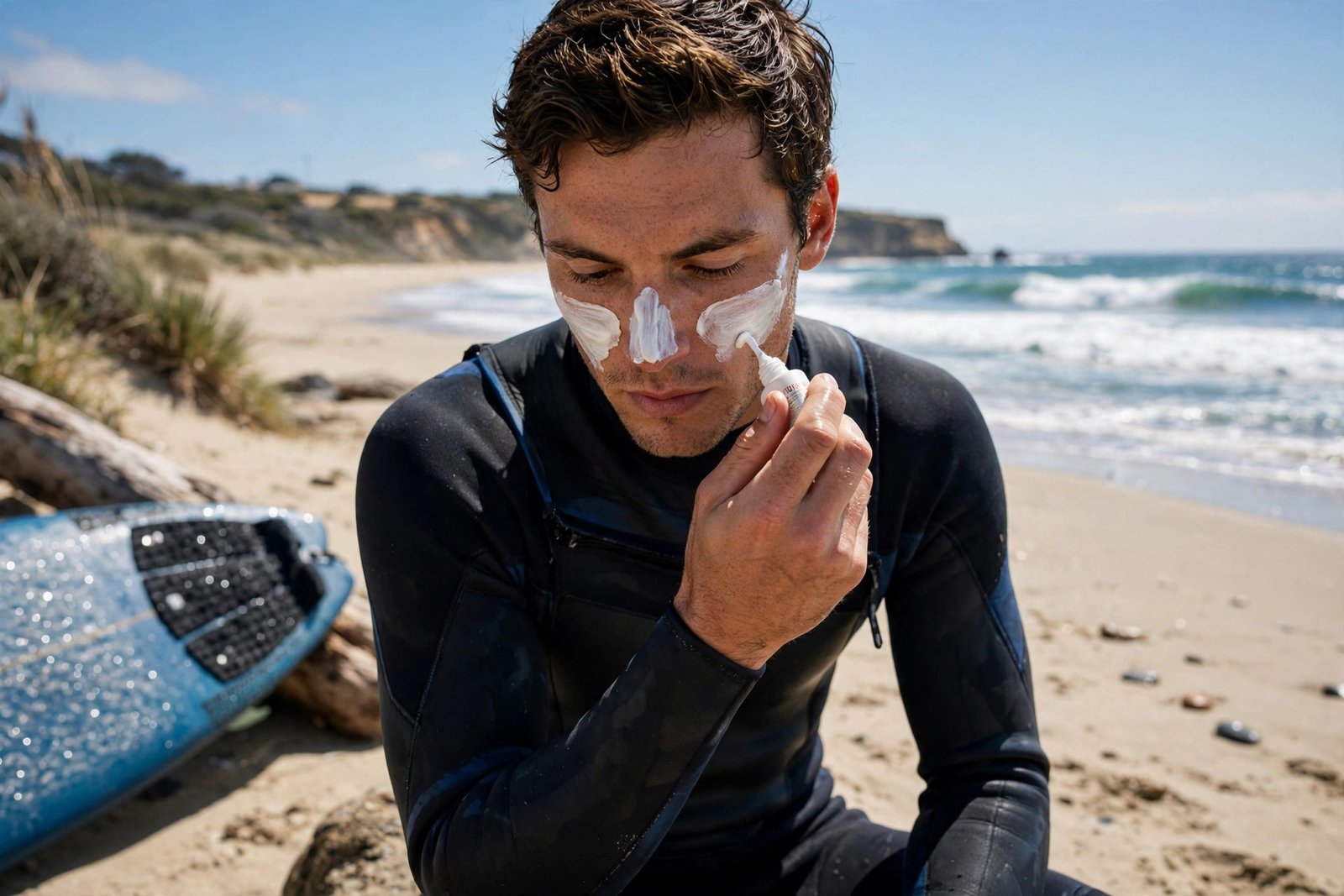
Regular sunscreen fails in the ocean. It washes off, stings your eyes when you duck-dive, and the “sport” label on the bottle doesn’t always mean what you think. Surfers and swimmers need sunscreen engineered for prolonged water immersion, intense reflection off the water’s surface, and hours of exposure — plus, increasingly, formulas that don’t poison the reefs you’re enjoying.
This guide explains what the best sunscreen for surfing and swimming actually is: water-resistance ratings decoded, mineral vs. chemical for ocean use, reef-safe picks, application strategy, and the reapplication rules that matter.
Water Resistance: What the Label Really Means
The FDA allows exactly two claims: “water resistant (40 minutes)” and “water resistant (80 minutes)” — tested by having subjects soak and measuring retained SPF. There is no “waterproof” sunscreen; the term is banned. For surfing and swimming, 80-minute water resistance is the baseline — 40-minute formulas are for sweaty land sports, not the ocean.
What the rating doesn’t tell you: towel-drying removes sunscreen regardless of rating (reapply after toweling), heavy wipeouts and wetsuit friction strip it faster than the lab test, and “retained SPF” means a percentage of the labeled SPF — an 80-minute SPF 50 might be performing at SPF 30 after the soak. Translation: start with SPF 50+, 80-minute water resistance, and reapply on schedule, not on faith. The American Academy of Dermatology’s sunscreen guidance at AAD sunscreen FAQs confirms the fundamentals.
Mineral vs. Chemical for Ocean Use
Mineral (zinc oxide, titanium dioxide) sits on top of skin and reflects UV — it’s the surfer’s traditional choice because thick zinc stays put, doesn’t sting eyes as much, and is broadly considered reef-safer. Modern “clear zinc” formulations (micronized, 20–25% zinc oxide) avoid the full lifeguard-white-nose look while keeping protection. Chemical filters (avobenzone, octocrylene, etc.) absorb UV and tend to feel more elegant, but they degrade faster in water, sting eyes more, and include oxybenzone and octinoxate — banned in Hawaii, Palau, and parts of Mexico for coral toxicity.
For surfing and swimming, mineral wins on balance: better water tenacity, less eye sting, reef-safer profile. The trade-off is cosmetic elegance — mineral can cast on deeper skin tones, though tinted mineral formulas now address this well. If you use chemical sunscreen, choose oxybenzone-free and octinoxate-free formulas regardless — the reef evidence is strong enough that the FDA and EWG both flag these ingredients. The EWG’s annual sunscreen guide at EWG sunscreen guide rates specific products on both protection and ingredient concerns.
Format Strategy: Sticks, Lotions, and Layering
Face: zinc sticks are the surfer’s secret weapon — the waxy format grips skin through duck-dives and doesn’t run into eyes. Apply a thick layer to nose, cheeks, ears, and lips (SPF lip balm — lips burn fast on the water). Body: sport lotions or sprays for broad coverage, applied 15 minutes before entering the water (chemical filters need the head start; mineral works immediately but the base layer still benefits from setting).
The layering system that works: base layer of SPF 50 sport lotion on all exposed skin pre-surf, zinc stick over the face’s high points (nose, cheekbones, ears), SPF lip balm, and reapplication of the stick every 80 minutes without leaving the water if possible (keep it in your wetsuit key pocket or boardshorts). Wetsuit or rash guard coverage is the real MVP — UPF 50+ fabric on torso and arms eliminates most of the sunscreen battle; sunscreen then covers only face, neck, hands, and lower legs. For treating the burns that slip through, see how to treat a sunburn at home.
Reef-Safe Picks and What to Avoid
“Reef-safe” has no legal definition — it’s marketing. What to actually look for: mineral-only active ingredients (non-nano zinc oxide is the gold standard cited in reef research), no oxybenzone, no octinoxate, no octocrylene (emerging concerns), and no parabens. Brands formulating specifically for this: Kokua Sun Care (Hawaii-made, surfer-founded), Raw Elements (non-nano zinc, sport formulas), All Good (mineral sport sticks and lotions), and Sun Bum’s mineral line. These cost more than drugstore chemical sport sunscreens — the premium funds better ingredients.
What to avoid: aerosol sprays as your primary ocean sunscreen (uneven coverage, inhalation risk, environmentally wasteful — fine as a backup, not the plan), tanning oils with token SPF (SPF 4 is not sun protection), expired sunscreen (check dates — efficacy degrades, especially for chemical formulas), and the “base tan” myth (any tan is skin damage; it provides SPF ~3 while increasing cancer risk). Choosing the right formula for your skin type matters too — see choosing sunscreen for sensitive skin.
Reapplication Rules for Ocean Days
The schedule: every 80 minutes of water time, immediately after toweling off, and after heavy wipeout sessions. Set a phone timer — “I’ll reapply when I feel like it” means never. Keep a stick in your pocket for face touch-ups without leaving the water; do full lotion reapplication on the beach between sessions.
Kids and Beginners: Extra Protection Rules
Children need more protection, not less: their skin burns faster, they won’t reapply themselves, and they’re in the water longer. The system: UPF 50+ long-sleeve rash guard plus boardshorts (covering 70%+ of the body), zinc stick on all exposed skin reapplied every 60 minutes, a surf hat with chin strap, and shade breaks every hour. Set the timer yourself — don’t delegate sun safety to a 9-year-old.
Beginner surfers: you’re in the whitewater longer, falling more, and friction-stripping sunscreen faster than experienced surfers — reapply more often, not less. And everyone: the “I’ll just stay out a little longer” instinct is strongest when the waves are best, which is exactly when UV peaks midday. The waves will be there after reapplication.
Often-missed spots: ears (top skin-cancer site for surfers), back of the neck, hands, feet (reef-bootie tan lines are real, and feet burn), scalp part lines (wear a surf hat or apply stick along the part), and lips (reapply balm constantly — it wears off fastest). Post-surf: rinse with fresh water, moisturize (salt and sun dehydrate skin), and check for burns — reflected UV off water intensifies exposure beyond what the air temperature suggests. Packing for ocean days? See what to pack for a beach vacation.
The Bottom Line
What is the best sunscreen for surfing and swimming? An SPF 50+, 80-minute water-resistant mineral formula — zinc stick for the face, sport lotion for the body, layered over UPF 50+ rash-guard coverage — reapplied every 80 minutes, oxybenzone-free for the reefs. The best sunscreen is the one that’s on your skin when the set rolls in.
Frequently Asked Questions
What is the best sunscreen for surfing and swimming?
An SPF 50+, 80-minute water-resistant mineral (zinc oxide) sunscreen — stick format for the face, sport lotion for the body — layered over UPF 50+ rash-guard coverage and reapplied every 80 minutes.
Is mineral or chemical sunscreen better for surfing?
Mineral (zinc oxide) — it stays on better in water, stings eyes less, and avoids oxybenzone/octinoxate, which are banned in Hawaii and linked to coral damage. Tinted mineral formulas address white cast on deeper skin tones.
What does water resistant 80 minutes mean?
The FDA-tested claim that the sunscreen retains its SPF after 80 minutes of water immersion. “Waterproof” sunscreen doesn’t exist. Towel-drying removes sunscreen regardless — always reapply after toweling.
What sunscreen is reef safe?
Look for mineral-only (non-nano zinc oxide), no oxybenzone, octinoxate, or octocrylene. “Reef-safe” is unregulated marketing — check the active ingredients, not the front label.
How often should I reapply sunscreen while surfing?
Every 80 minutes of water time, after toweling off, and after heavy wipeouts. Keep a zinc stick in your pocket for face touch-ups between full applications.