
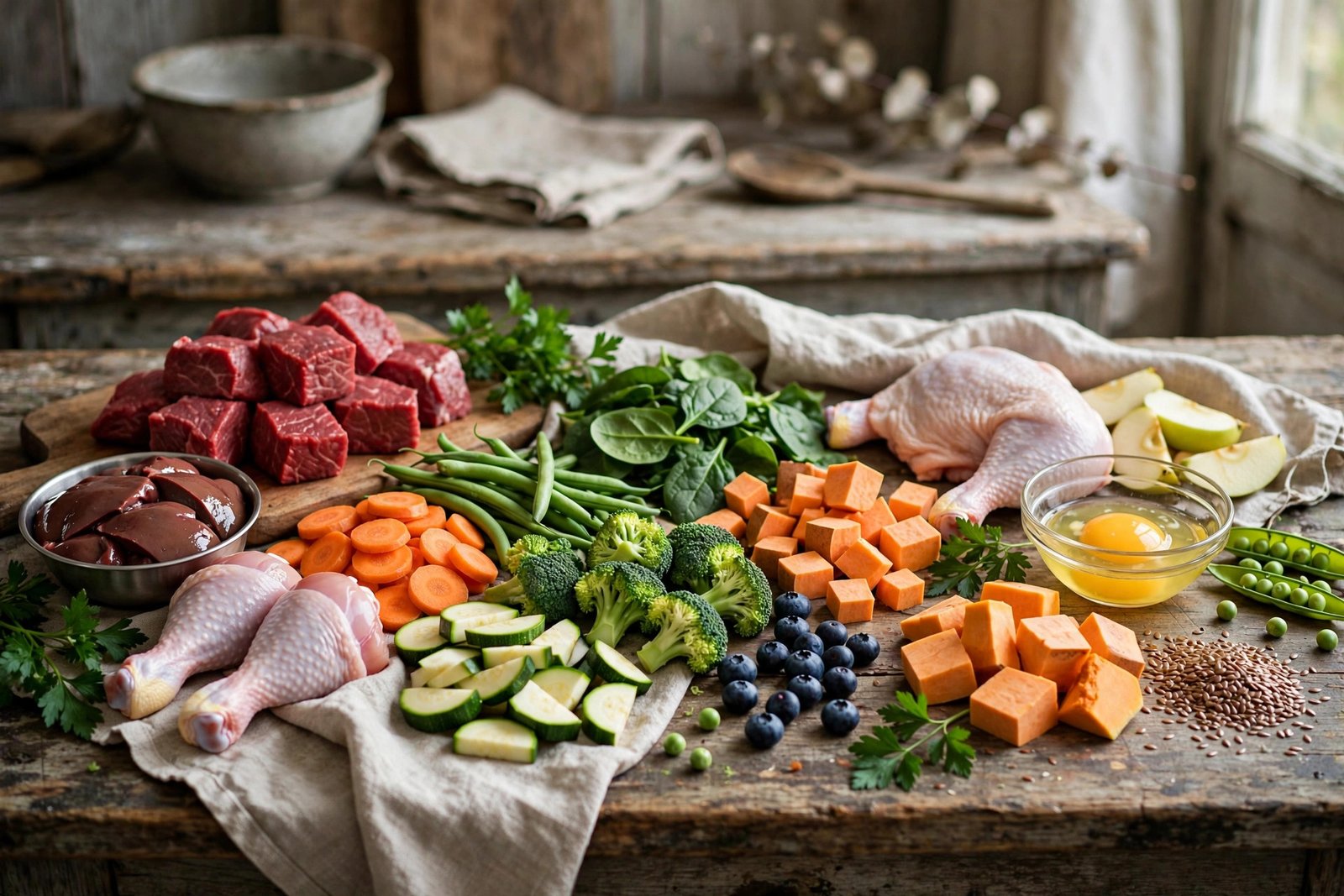
Raw feeding has gone from fringe to mainstream — walk into any independent pet store and you’ll find freezers full of raw patties, freeze-dried nuggets, and “biologically appropriate” blends. Proponents credit shinier coats, cleaner teeth, and better digestion; veterinary organizations urge caution about bacterial risks and nutritional completeness. Whatever your position, one thing is non-negotiable: the supplier matters enormously, because raw food’s safety depends entirely on sourcing, handling, and manufacturing standards.
This guide explains how to find a raw food supplier for pets: what separates good suppliers from risky ones, the questions to ask, where to shop, what it costs, and how to transition safely.
First: Understand What You’re Buying
“Raw” covers a spectrum. Commercial complete-and-balanced raw (frozen or freeze-dried, formulated to AAFCO nutrient profiles) is the most straightforward — it’s designed as a sole diet. Prey-model/BARF components (raw meaty bones, organ mixes) require you to balance the diet yourself — doable but demanding, and the most common source of nutritional deficiencies. DIY raw from grocery meat is the riskiest tier: no nutritional formulation, no pathogen controls beyond your own kitchen hygiene.
The honest framing: the FDA, AVMA, and many veterinary nutritionists caution that raw diets carry bacterial risks (Salmonella, E. coli, Listeria) for pets and the humans handling the food — the FDA’s own testing has found pathogens in commercial raw products at higher rates than in cooked foods. Proponents counter that healthy dogs handle these bacteria and that commercial HPP (high-pressure processing) mitigates risk. Talk to your vet — ideally a board-certified veterinary nutritionist — before switching, especially for puppies, seniors, or immunocompromised households. The FDA’s pet food guidance at FDA raw pet food facts is essential reading.
What Separates Good Suppliers From Risky Ones
The checklist: (1) Complete-and-balanced formulation — look for an AAFCO nutritional adequacy statement on the label (“formulated to meet AAFCO profiles” at minimum; feeding-trial tested is better). Products without it are supplements, not diets. (2) HPP (high-pressure processing) — the cold-pasteurization step that kills pathogens without cooking; ask whether the supplier uses it. (3) Sourcing transparency — human-grade or USDA-inspected meats, named suppliers, no vague “meat and bone meal.” (4) Manufacturing standards — USDA or FDA-inspected facilities, lot traceability, and a recall history you can look up. (5) Nutritional expertise — a veterinary nutritionist on staff or consulting, not just a marketing team.
Red flags: no AAFCO statement, no lot numbers, “supplemental feeding only” in fine print on a product sold as food, unwillingness to share sourcing or testing info, and claims that sound medical (“cures allergies,” “prevents cancer”). Good suppliers answer hard questions proudly; evasive ones are telling you everything. Sourcing quality food affordably is a universal skill — see how to save money on groceries for the human parallel.
Where to Find Raw Suppliers
Independent pet stores: the best starting point — staff are usually knowledgeable, freezers are stocked with multiple brands, and you can buy small quantities to trial. Ask which brands they feed their own animals; it’s revealing. Raw food co-ops: buying clubs that order in bulk directly from producers — 20–40% cheaper than retail, with access to grinds and components stores don’t carry. Find them via local raw-feeding Facebook groups (every metro has them).
Direct from brands: national companies (Stella & Chewy’s, Primal, Instinct, Answers, Vital Essentials) sell online with subscriptions; smaller regional producers often deliver locally. Farmers and butchers: for DIY feeders, relationships with local meat suppliers provide the best prices on organs, frames, and trim — ask about “pet food” cuts. What to avoid: random online sellers with no verifiable facility, Craigslist meat (no traceability), and grocery-store ground meat as a long-term sole diet (nutritionally incomplete and handled for cooking, not raw consumption). Finding trustworthy local food sources is a skill — see finding authentic local food sources.
Questions to Ask Any Supplier
Bring this list: Is this product complete and balanced per AAFCO — can I see the statement? Do you use HPP, and if not, what pathogen controls do you use? Where is the meat sourced — can you name suppliers? What’s your lot traceability and recall history? Who formulates your recipes — is a veterinary nutritionist involved? What’s the calcium-to-phosphorus ratio (critical for puppies — imbalances cause skeletal damage)? How should I handle and thaw safely?
Also ask about: protein variety (rotating proteins reduces allergy risk and nutritional gaps), bone content (too much bone causes constipation and impaction — 10–15% bone is the typical target), and organ ratios (liver and secreting organs are non-negotiable for completeness). A supplier who welcomes these questions is a keeper; one who deflects isn’t. The quality-vs-marketing debate mirrors human food — see whether organic produce is worth it for the same critical-thinking framework.
Costs and Transitioning
Budget reality: commercial raw runs $5–$12 per day for a medium dog (more for large breeds), versus $1–$3 for quality kibble. Co-ops and DIY cut that roughly in half but demand your labor and knowledge. Freeze-dried raw costs the most per calorie — convenient for travel, punishing as a sole diet for big dogs.
Transition over 7–10 days: 25% raw/75% old food for 2–3 days, then 50/50, then 75/25, watching stools throughout (some looseness is normal; persistent diarrhea isn’t). Handle raw with the same hygiene as raw chicken for humans: wash hands, disinfect surfaces, wash bowls after every meal, and don’t leave raw sitting out. In multi-pet or immunocompromised households, take extra precautions — the AVMA’s raw-food policy details the household risks. Monitor your pet’s weight, coat, energy, and stool quality for the first two months; not every animal thrives on raw, and that’s useful data, not failure.
The Bottom Line
How to find a raw food supplier for pets: prioritize AAFCO complete-and-balanced products, HPP processing, transparent sourcing, and veterinary-nutritionist formulation; shop independent stores and co-ops; interrogate suppliers with the question list above; and transition with vet guidance. The supplier is the safety system — choose like it matters, because it does. And revisit your choice annually: suppliers change ownership, reformulate recipes, and alter sourcing, so the great supplier you found this year deserves a fresh round of questions next year.
For breed-specific guidance see the American Kennel Club; for veterinary research summaries, Cornell University’s College of Veterinary Medicine.
Frequently Asked Questions
How do I find a raw food supplier for pets?
Start with independent pet stores (knowledgeable staff, trial sizes), join local raw-feeding co-ops for bulk pricing, buy direct from reputable national brands, or source from local farmers for DIY. Verify AAFCO statements, HPP use, and sourcing transparency.
Is raw food safe for pets?
It carries higher bacterial risk than cooked food (per FDA testing), mitigated by HPP processing and good handling. The AVMA urges caution, especially around puppies, seniors, and immunocompromised people. Consult your vet before switching.
What should I ask a raw food supplier?
AAFCO adequacy statement, HPP use, meat sourcing, lot traceability and recall history, veterinary nutritionist involvement, calcium-phosphorus ratios, and safe handling instructions. Evasive answers are disqualifying.
How much does raw feeding cost?
$5–$12/day for a medium dog via commercial products; roughly half that via co-ops or careful DIY. Freeze-dried is priciest per calorie. Budget 3–5x quality kibble costs.
How do I switch my pet to raw food?
Transition over 7–10 days (25/75 → 50/50 → 75/25), practice raw-chicken-level kitchen hygiene, and monitor weight, coat, energy, and stools for two months. Get vet guidance first, especially for puppies and seniors.