
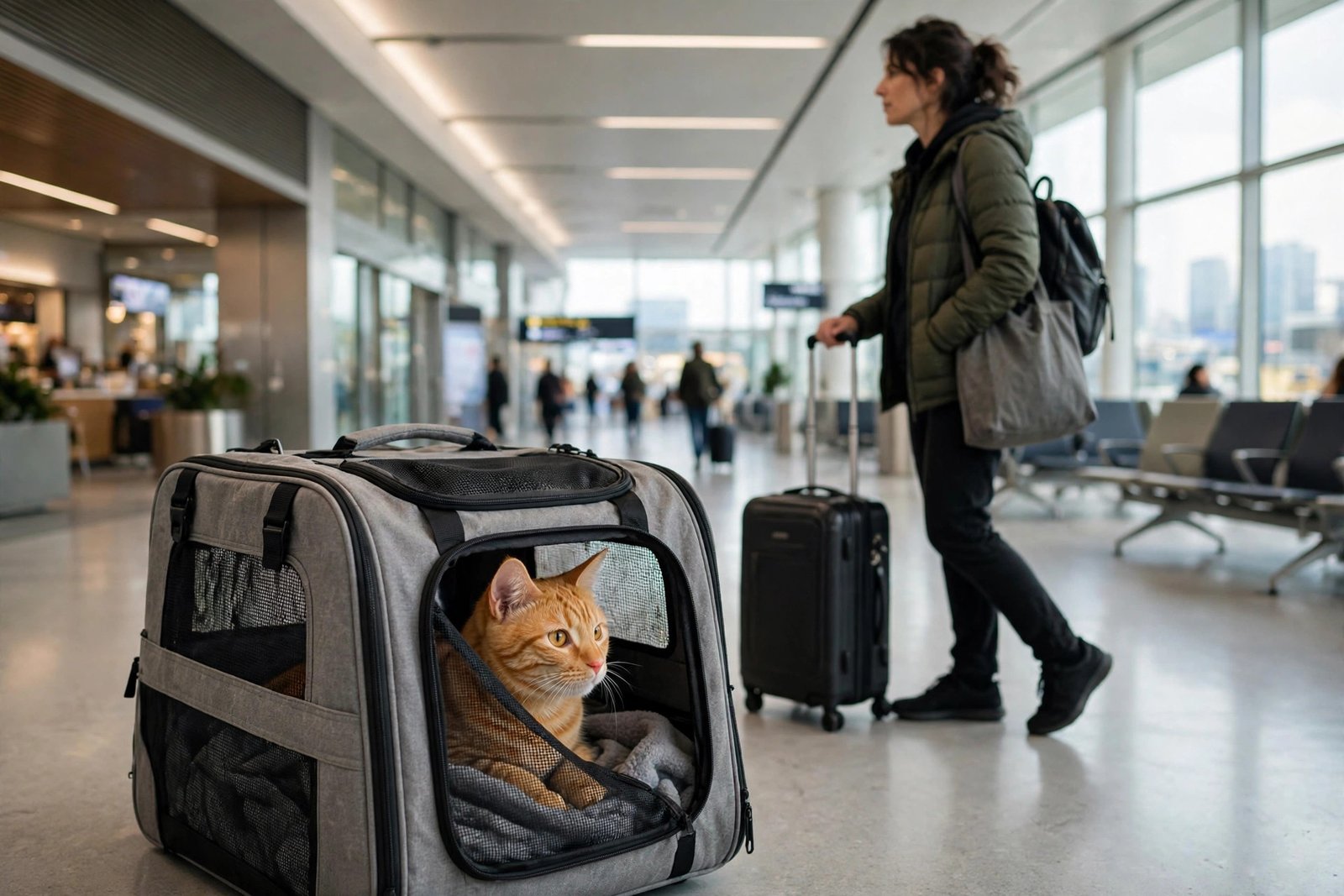
Millions of cats fly every year, and most of them handle it far better than their owners expect. The secret isn’t luck — it’s preparation. Cats are creatures of routine and territory, so a well-planned flight (right carrier, right acclimation, right timing) produces a cat who sleeps through takeoff, while a winged-it flight produces the screaming soundtrack everyone dreads.
This guide explains how to travel with a cat on a plane in 2026: in-cabin rules, carrier requirements, airline fees, the TSA screening dance, sedation facts, and keeping your cat calm at 35,000 feet.
In-Cabin vs. Cargo: The Decision That Matters Most
Fly your cat in the cabin with you. Full stop. Cargo holds are loud, temperature-variable, and stressful; several airlines have restricted or eliminated pet cargo programs after incidents, and flat-faced breeds face outright bans on many carriers. In-cabin, your cat stays with you in an airline-approved carrier under the seat — climate-controlled, monitored, and comforted by your presence.
Constraints: airlines limit the number of in-cabin pets per flight (typically 4–6), so book your cat’s spot when you book your ticket — not at the airport. Fees run $95–$150 each way depending on the airline (Southwest ~$95, Alaska ~$100, American ~$150 — verify current fees when booking). Weight limits include carrier (usually 20 lbs total). Only cats (and small dogs) qualify for in-cabin; and emotional-support designations no longer grant cabin access — only trained service animals fly free now. Traveling with little ones of any species takes planning — see how to travel comfortably with a baby on a plane for the parallel playbook.
The Carrier: Your Cat’s First-Class Seat
Airline-approved soft-sided carriers are the move: flexible enough to squeeze under seats, with mesh ventilation panels, secure zippers (add small carabiners or twist ties — cats have opened zippers mid-flight), and a cozy interior. Size roughly 17″L x 11″W x 11″H, but check your specific airline’s under-seat dimensions — they vary by aircraft.
Acclimation is non-negotiable: leave the carrier out open for 2–4 weeks before the flight, feed meals inside it, add familiar-smelling bedding, and practice short car rides in it. A cat meeting the carrier for the first time at the airport is a cat who will scream for six hours. Spray Feliway (feline facial pheromone) inside 15 minutes before loading — the evidence for calming is decent, and it can’t hurt. Line the carrier with a pee pad under the bedding; even litter-trained cats sometimes have accidents under stress.
Health Certificates, Vaccines, and Hawaii
Domestic US flights: most airlines don’t require health certificates for in-cabin cats, but some states do — and it’s smart to have one anyway. Get a vet visit within 10 days of travel: confirm rabies vaccination is current, get a health certificate, and discuss your specific cat’s fitness to fly (elderly, brachycephalic, or anxious cats need individual assessment).
Hawaii is the exception that ruins vacations: the state requires rabies titer testing (FAVN), microchipping, and waiting periods — the “5-day-or-less” program avoids the infamous 120-day quarantine, but only with months of advance preparation. Start Hawaii pet prep 4+ months out. International travel varies wildly: the EU requires microchips, rabies vaccination, and an EU health certificate; the UK has its own regime; some countries ban certain breeds or require quarantine. Research your destination country’s rules 3–6 months ahead — airline rules are the easy part.
The TSA Screening: The Trickiest 90 Seconds
Here’s the part that surprises first-timers: at security, you carry your cat through the metal detector in your arms while the empty carrier goes through the X-ray belt. Cats never go through X-ray. This means: harness and leash on your cat before the airport (a terrified cat in a busy terminal is a lost cat — collars slip, harnesses don’t), request a private screening room if your cat is fractious (TSA accommodates this), and hold firmly — the noise and chaos spike adrenaline.
Pro tips: wear a jacket with pockets for treats, keep the leash short, move efficiently, and get the cat back in the zipped carrier immediately on the other side. Practice the harness at home for weeks beforehand — a cat wearing a harness for the first time at TSA is a rodeo. The TSA’s official guidance at TSA traveling with pets confirms the procedure — read it before you go.
Sedation: What Vets Actually Recommend
The old advice was “sedate the cat.” Current veterinary guidance (including the AVMA) is the opposite: sedation at altitude is risky — it impairs thermoregulation and balance, and a groggy cat can’t reposition if breathing is compromised. Most vets now recommend against tranquilizers for air travel.
What works instead: gabapentin, prescribed by your vet — a mild anti-anxiety medication (not a sedative) given 2–3 hours before travel. It’s become the standard for feline travel anxiety: the cat stays awake and functional but significantly calmer. Trial it at home first to gauge the dose’s effect and timing. Combine with Feliway, familiar bedding, and a calm owner — your anxiety transmits directly. If your cat has a history of severe travel panic, discuss options with your vet well before flight day; some cats genuinely shouldn’t fly, and that’s okay to conclude.
Flight Day: The Hour-by-Hour Playbook
Before: light meal 4–6 hours before departure (not a full meal — nausea), water available until you leave, a good play session to burn energy, litter box access right before the carrier. At the airport: keep the carrier covered with a light blanket (reduces visual stimulation), find a quiet gate corner away from dogs, and don’t open the carrier “just to check” — every opening is an escape risk.
In flight: keep the carrier under the seat (it’s the rule, and it’s also the calmest spot), offer water via a small dish or syringe during long flights, and don’t feed full meals. For layovers: portable litter solutions exist (disposable litter trays, or a pee pad in a pop-up tent) — use family restrooms for privacy. Book direct flights whenever possible; every connection doubles the stress and the things that can go wrong. After landing: set up a quiet room with litter, food, water, and hiding spots before releasing the cat — let them decompress on their terms. For the human side of long flights, see what to pack in your personal item.
The Bottom Line
How to travel with a cat on a plane: book the in-cabin spot early, acclimate to the carrier for weeks, get the health certificate, harness up for TSA, use gabapentin (not sedatives) per your vet, and fly direct. Do the homework and your cat will likely sleep through the whole thing — leaving you free to enjoy the flight.
The ASPCA and the American Veterinary Medical Association both publish detailed, vet-reviewed pet care guides.
Frequently Asked Questions
How do I travel with a cat on a plane?
Book an in-cabin spot when you buy your ticket ($95–$150 each way), use an airline-approved soft carrier acclimated over 2–4 weeks, get a vet health certificate within 10 days, harness your cat for TSA screening, and ask your vet about gabapentin for anxiety.
Can I take my cat through TSA security?
You carry your cat through the metal detector in your arms (harness and leash on) while the empty carrier goes through X-ray. Request a private screening room if your cat is fractious. Never put a cat through the X-ray machine.
Should I sedate my cat for a flight?
No — vets and the AVMA advise against tranquilizers for air travel due to breathing and temperature-regulation risks. Gabapentin (anti-anxiety, prescribed by your vet, trialed at home first) is the current standard.
How much does it cost to fly with a cat?
In-cabin pet fees run $95–$150 each way depending on the airline, plus carrier ($40–$80), vet visit and health certificate ($75–$200), and supplies. Budget $300–$500 all-in for a typical domestic trip.
Can cats fly to Hawaii?
Yes, but Hawaii’s rabies program requires microchipping, FAVN titer testing, and waiting periods — start 4+ months ahead to qualify for the 5-day-or-less program and avoid the 120-day quarantine.