
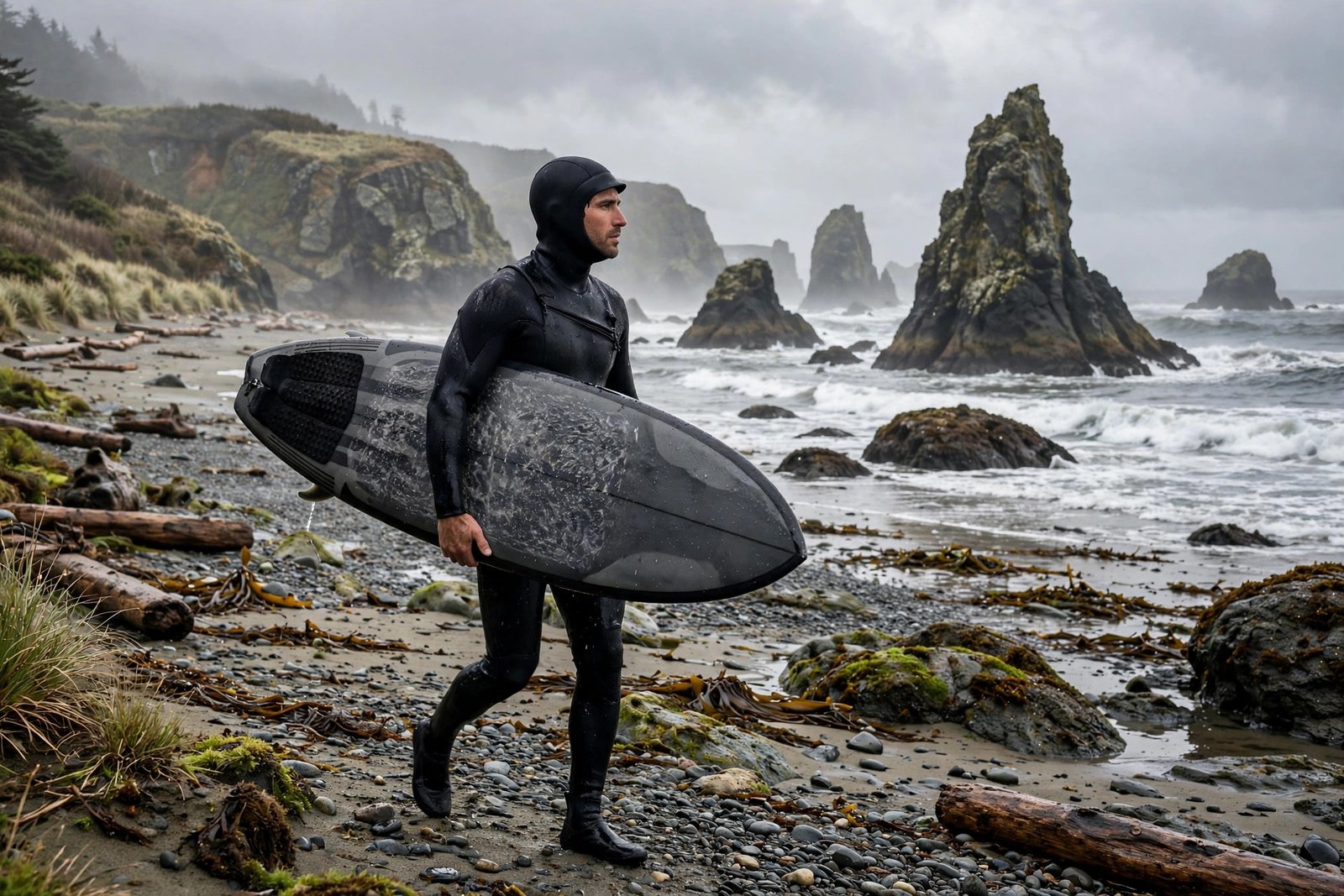
Oregon coast water is cold. Not 'refreshing' cold — genuinely, physiologically cold, hovering in the low 50s in summer and dipping into the high 40s in winter. The wrong wetsuit thickness turns a surf session into a survival exercise; the right one makes year-round Oregon surfing one of the great experiences in American surf culture.
Here's exactly what thickness you need, when to size up or down, and the accessories that matter as much as the suit itself.
Oregon Water Temps by Season
Summer (June–September): 52–58°F. Fall (October–November): 52–55°F. Winter (December–March): 47–52°F. Spring (April–May): 48–53°F. Notice the range is brutally narrow — Oregon doesn't have a warm season, just a less-cold one. Air temperature is almost irrelevant to the decision; it's the water that determines everything.
These temperatures sit squarely in the zone where wetsuit choice is safety equipment, not comfort preference. In 50°F water, an unprotected swimmer faces cold incapacitation within 30–60 minutes; a proper wetsuit extends safe surf time to 2–3+ hours. The thickness question isn't about toughness — it's about how long you can surf well before the cold degrades your strength, coordination, and judgment.
The Answer: 4/3mm Most of the Year, 5/4mm for Winter
For the majority of Oregon surfers, a 4/3mm fullsuit (4mm torso, 3mm limbs) is the year-round workhorse — warm enough for summer and fall, adequate for spring, and manageable in winter for shorter sessions or cold-tolerant surfers. If you can only own one suit, this is it. Modern Yamamoto neoprene and thermal linings have made today's 4/3 warmer than the 5/4s of a decade ago.
Add a 5/4mm hooded fullsuit for dedicated winter surfing (December–March), when water drops near 50°F and wind chill on the beach bites. The integrated hood is non-negotiable in winter — massive heat loss happens through the head and neck, and a separate hood never seals as well. Big-wave and dawn-patrol winter surfers sometimes run 6/5/4mm suits, but for most people that's overkill that restricts paddling. Fit trumps thickness: a perfectly-fitted 4/3 outperforms a baggy 5/4 because flushing (cold water cycling through gaps) destroys warmth faster than thin neoprene does.
For official guidance, see NOAA ocean temperature data.
Accessories: Half the Warmth Equation
Booties (5–7mm, round-toe for warmth) are mandatory year-round in Oregon — heat pours out of feet pressed against a cold board, and numb feet can't feel the board. Gloves (3–5mm) become essential below ~55°F water; cold hands can't grip the rails for pop-ups. The hood (attached or separate 3mm) matters enormously in winter.
The layering trick experienced Oregon surfers swear by: a 1–2mm thermal rashguard under the suit adds surprising warmth without restricting movement, and it makes the suit slide on easier. After the session, the real battle is the parking-lot change in 45°F wind — bring a changing poncho, a thermos of hot water to pour into boots and gloves, and warm clothes staged in order. The session's warmth is only half the experience; the change-out is the other half.
Buying Smart: Fit, Seams, and Care
Try suits on in person at coastal shops (Cleanline in Seaside/Cannon Beach, local surf shops in Newport and Pacific City) — online sizing charts lie, and a suit you can't try is a gamble. Check the seals: minimal gaping at neck, wrists, and ankles. Sealed and taped seams (GBS — glued and blind-stitched) are worth the premium over flatlock in cold water; they leak dramatically less.
Care extends suit life enormously: rinse in fresh water after every session, hang dry inside-out away from sun (UV destroys neoprene), never machine-wash or tumble-dry, and repair small nicks with neoprene cement before they spread. A well-cared-for quality suit lasts 3–5 seasons; a neglected one dies in two. Budget $250–$450 for a good 4/3 and $350–$550 for a 5/4 hooded — this is safety equipment, and the price difference between adequate and excellent is one winter of comfortable sessions.
Learn more from REI wetsuit buying guide.
Beyond the Suit: Wetsuit Alternatives and Layering
For the warmest Oregon summer days, some surfers run a 3/2mm fullsuit with a thermal layer underneath — viable in August/September for short sessions if you run warm, though most still prefer the 4/3's margin. Springsuits (short arms/legs) are a mainland-California garment, not an Oregon one — leave them home. The serious alternative conversation is about layering systems: a 2mm thermal top under your 4/3 effectively adds a season of warmth, and heated vests (battery-powered, worn under the suit) have converted winter skeptics — $200–$300 for genuinely transformative warmth.
Don't neglect the extremities arms race: 7mm mitt-style gloves (warmer than 5-finger), 7mm boots with sealed seams, and a 2mm hood/vest combo for shoulder seasons. And the underrated hero: a good changing robe. The warmth battle is won in the parking lot as much as the lineup — arriving warm, changing warm, and driving home warm extends your effective season more than any suit upgrade. Oregon rewards systems thinking; the suit is just the centerpiece.
Fit testing in the shop deserves a methodical approach: try suits on with the thermal layers you'll actually wear, simulate paddling motions (the shop staff have seen it all), check for pressure points at the neck and underarms, and sit in the suit for 10 minutes — discomfort that seems minor in the shop becomes agony in hour two. Different brands fit different body types; the 'best' suit is the one that fits your body, not the one with the best reviews.
Finally, think in systems for the full year: your 4/3 plus thermal layers covers most days, the 5/4 hooded handles deep winter, and the accessories (boots, gloves, hood, changing robe, thermos) complete the kit. Buy the core suit first, add accessories before upgrading suits — a $60 pair of 7mm boots improves more winter sessions than a $500 suit upgrade. Oregon's coast is cold, consistent, and uncrowded: the best surf deal in America for those equipped to enjoy it.
If this was helpful, keep reading: our guide to packing for a beach vacation and choosing sunscreen for sensitive skin.
The best wetsuit thickness for the Oregon coast is a 4/3mm fullsuit for most of the year and a 5/4mm hooded suit for winter — with 5–7mm booties year-round and gloves when water drops below the mid-50s. Prioritize fit over raw thickness, seal your seams, and respect the change-out ritual. Oregon's waves reward the well-equipped; the cold is just the admission price.
Frequently Asked Questions
What water temperature is the Oregon coast?
Typically 47–58°F year-round: low 50s in summer/fall, high 40s to low 50s in winter/spring. A full wetsuit is required in every season.
Can I surf Oregon in a 3/2mm wetsuit?
Only in the warmest late-summer windows, and only for short sessions if you run warm. Most surfers find a 3/2 inadequate — a 4/3 is the standard year-round suit.
Do I need a hooded wetsuit for Oregon?
For winter surfing (December–March), yes — an integrated hood makes a major warmth difference. For summer/fall, a separate hood or no hood works for most surfers.
How do I keep my wetsuit from smelling?
Rinse in fresh water after every session, occasionally soak in wetsuit shampoo, and dry inside-out in shade. Never leave a damp suit balled up — that's what breeds the funk.