
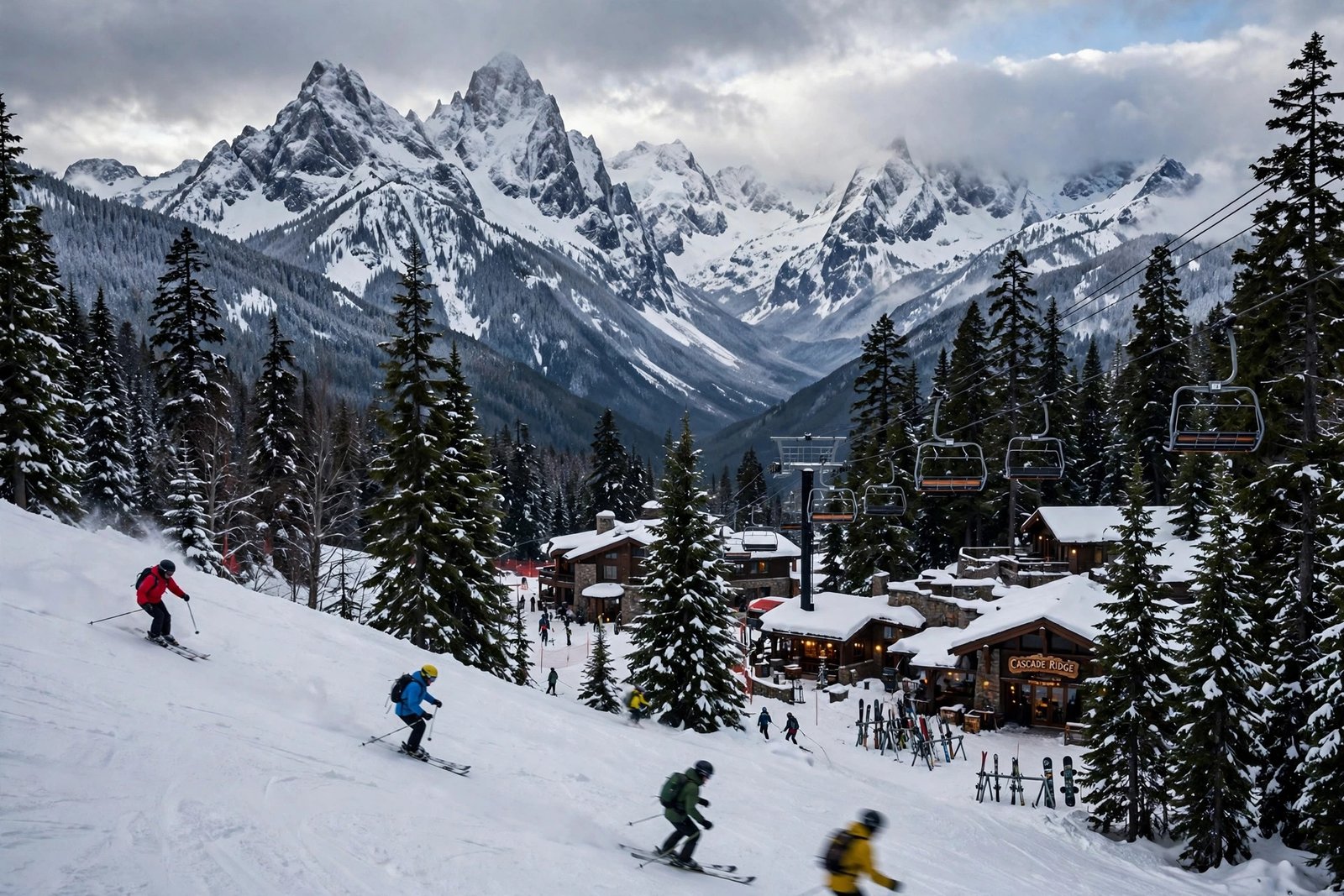
Seattle skiers face a happy problem: four distinct ski areas within two hours, each with a real personality — plus destination resorts a half-day further. The unhappy problem is choosing wrong for your skill level and ending up bored, terrified, or stuck in I-90 traffic.
Here's the honest comparison of every ski resort near Seattle: drive times, terrain, snow quality, crowds, and which pass makes sense in 2026.
The Big Four: Head-to-Head
Stevens Pass (1.5 hrs) is Seattle's beloved local hill: 1,125 acres, excellent tree skiing, a genuine community vibe, and the best night skiing in the region. Its weakness is weather — sitting right on the Cascade crest, it gets the deepest snow and the most rain-affected days. Crystal Mountain (2 hrs) is the heavyweight: 2,600 acres, Mt. Rainier views that belong on postcards, serious steeps off the gondola, and the area's most reliable snow quality thanks to its east-of-crest position.
Snoqualmie Pass (45–60 min) is the accessible trio of Alpental, Summit West/Central/East — the closest skiing to the city, unbeatable for night skiing after work, but smaller vertical and the most crowded lift lines on weekends. White Pass (2.5 hrs) is the connoisseur's pick: uncrowded, affordable, great learner terrain, and a throwback vibe — worth the extra drive for families and anyone allergic to lift lines.
Snow, Traffic, and Timing Reality
Cascade snow is famously heavy ('Cascade concrete') compared to Rockies powder — gloriously deep but physically demanding. Elevation matters: Crystal's upper mountain holds quality snow longest; Stevens can swing from powder to rain in one storm cycle. Check WSDOT pass reports before every trip — traction tires or chains are legally required at times, and I-90 and Stevens Pass Highway close during major storms.
Traffic is the true Seattle ski tax. Saturday departures after 7:30 AM mean 2+ hour crawls to Snoqualmie; the return trip Sunday afternoon is equally grim. Strategies that work: night skiing midweek (empty slopes, cheap tickets), Sunday skiing with a Monday-flexible schedule, carpooling in the HOV lane, and the ski bus services from the city. A season of smart timing beats a season of heroic early alarms.
You can verify the details at US Forest Service winter recreation.
Passes and Prices: Doing the Math
The Epic vs. Ikon decision shapes Seattle skiing: Stevens Pass is on Epic, Crystal on Ikon — choose based on which mountain you'll ski most, since day tickets at either now exceed $150+ at peak. Snoqualmie offers its own affordable season passes (often the best value for night-skiing regulars), and White Pass remains refreshingly cheap for both passes and day tickets.
Break-even math: at $150+/day ticket prices, a ~$700–$1,000 mega-pass pays off in 5–7 days. Buy in spring for the lowest prices and bonus 'spring skiing' access. Families should price White Pass and Snoqualmie first — the mega-passes' value collapses if you're skiing 10 days a year with kids in tow. And always check for midweek and twilight ticket deals before paying window rates.
For Beginners and Families
Snoqualmie's Summit West is the region's best learning hill: gentle terrain, excellent ski school, 45 minutes from the city, and night skiing for after-school lessons. White Pass runs second for families — affordable lessons, uncrowded slopes, and a genuinely welcoming atmosphere. Stevens' beginner area is solid but the overall mountain skews intermediate-plus; Crystal is magnificent but intimidating and expensive for first-timers.
Rent before you buy for the first season (package rentals run $40–$60/day), take at least one professional lesson (group lessons $100–$150 are the best money in skiing), and dress in real waterproof layers — Cascade dampness punishes cotton and cheap gear. Kids' programs at all four areas are strong; book holiday-period lessons weeks ahead.
The full background is available at WSDOT mountain pass conditions.
Skiing Seattle on a Budget
Skiing near Seattle doesn't have to cost $200/day. The playbook: buy the mega-pass in spring (lowest prices, plus spring access), pack food (mountain lodges charge $20+ for basics — a $10 homemade lunch saves $1,500+/season for regulars), and carpool (splits gas and parking, plus HOV access). Night skiing tickets run a fraction of day rates and the slopes empty out — Snoqualmie and Stevens nights are the budget skier's secret.
Gear economics: buy boots fitted professionally (the one item worth paying for — bad boots ruin skiing), buy everything else used or on end-of-season sales (skis, poles, jackets at 50–70% off in April). Rent for the first season to learn what you like. And consider White Pass for day trips — cheaper tickets, cheaper food, no crowds, and genuinely good terrain. A season of smart White Pass days plus night skiing at Snoqualmie can cost less than five peak Saturdays at Crystal. The mountain doesn't care what you paid; ski the deals.
The Ikon/Epic decision deserves a final word for Seattle skiers specifically: since Crystal (Ikon) and Stevens (Epic) anchor opposite passes, your choice effectively chooses your home mountain. Consider where your friends ski — the social factor outweighs small terrain differences — and whether you'll travel (Ikon's destination roster vs. Epic's). Many Seattle skiers eventually hold one pass plus a few day tickets elsewhere; the pass covers 80% of days, and variety covers the rest.
And don't sleep on the shoulder seasons: spring skiing in the Cascades (March–April) offers the year's best combination of deep bases, sunny days, soft snow, and empty slopes — often at reduced ticket prices. Some of the most joyful ski days in Seattle happen in a t-shirt in April at Crystal or Stevens. Buy the pass in spring, ski the spring, and remember that the season's best value often comes after most people have quit.
Want to go deeper? Check out making long car rides more enjoyable and staying motivated to exercise in cold weather next.
The best ski resort near Seattle depends on your profile: Crystal for serious skiers chasing terrain and views, Stevens for the local-hill soul and night skiing, Snoqualmie for proximity and beginners, White Pass for value and empty slopes. Buy your pass in spring, check WSDOT before driving, and ski midweek whenever possible. The Cascades are waiting — pick your mountain and go.
Frequently Asked Questions
What is the closest ski resort to Seattle?
Snoqualmie Pass (Summit at Snoqualmie/Alpental), about 45–60 minutes east on I-90. It's the best option for night skiing and quick trips.
Is Stevens Pass or Crystal Mountain better?
Crystal has more terrain, better snow quality, and bigger steeps; Stevens has a stronger local vibe, better tree skiing, and night skiing. Crystal is on Ikon, Stevens on Epic — your pass choice often decides.
How much are lift tickets near Seattle in 2026?
Peak day tickets at Stevens and Crystal exceed $150; Snoqualmie and White Pass are cheaper. Mega-passes ($700–$1,000) break even around 5–7 days — buy in spring for best prices.
Do I need chains to drive to Seattle ski resorts?
Often yes — traction tires or chains are legally required on I-90 and Stevens Pass Highway during storms. Check WSDOT pass conditions before every trip and carry chains regardless.