
How to Open a Wine Bottle Without a Corkscrew: Step-by-Step Guide (2026)
Quick Answer: The easiest way to open a wine bottle without a corkscrew is to push the cork in with the handle of a wooden spoon — it takes seconds and is completely safe. Other reliable methods include driving a screw into the cork and pulling it with a hammer’s claw, or using the “shoe trick” (bottle in a shoe, tapped against a wall) to ease the cork out.
It happens to everyone. The wine is ready, the glasses are out, and then — no corkscrew. Before you panic or try something reckless, know this: there are several safe, tested ways to open a wine bottle without a corkscrew. Some take seconds. All of them work.
This guide covers 8 methods, ranked from easiest to most involved. We will also tell you which methods to avoid and what to do if the cork breaks. Let’s get that bottle open.
Before You Start: Remove the Foil
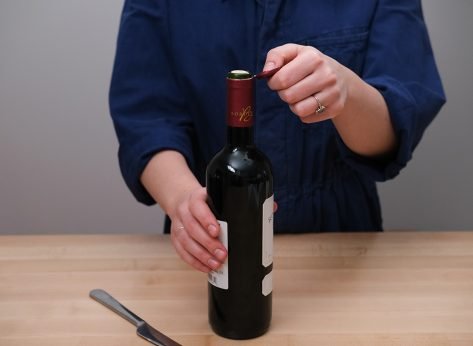
Every method below starts the same way: remove the foil capsule from the top of the bottle. Most foil has a pull tab, or you can cut around the lip with a knife. You need a clear view of the cork before you begin.
Method 1: Push the Cork In (Easiest)
This is the fastest and safest method. You are not removing the cork — you are pushing it into the bottle.
What You Need
- A blunt object narrower than the cork: a wooden spoon handle, a marker, or the back of a butter knife
Steps
- Hold the bottle steady on a counter or table.
- Place the blunt end of your tool on top of the cork.
- Push down firmly and steadily. The cork will slide into the bottle.
- Once it drops in, pour your wine — just pour carefully so the floating cork doesn’t block the flow.
Pros: Takes 10 seconds. No special tools. Zero risk of broken glass.
Cons: The cork floats in the wine (harmless, but some find it inelegant). A few tiny cork bits may end up in the first pour — decant or strain if you like.
Method 2: Screw and Hammer
This mimics a real corkscrew using hardware you probably have in a drawer.
What You Need
- A long wood screw (at least 2 inches)
- A screwdriver
- A hammer (use the claw end)
Steps
- Drive the screw into the center of the cork with the screwdriver, leaving about half an inch sticking out.
- Hook the hammer’s claw under the screw head.
- Pull up gently, rocking the hammer for leverage. The cork will slide out with the screw.
Pros: Clean removal — the cork comes out whole, just like with a corkscrew.
Cons: Needs a screw, screwdriver, and hammer. Pull gently to avoid snapping the cork.
Method 3: The Shoe Trick
This classic method uses pressure to ease the cork out. It looks strange. It works.
What You Need
- A shoe with a sturdy sole (a sneaker works well)
- A solid wall or tree
Steps
- Place the bottom of the wine bottle inside the shoe, so the shoe cushions the glass.
- Hold the bottle-and-shoe firmly and tap the shoe’s sole against a solid wall.
- Tap with medium force, checking the cork every few taps. It will gradually work its way out.
- Once the cork is out far enough to grip, pull it out by hand.
Pros: No tools needed beyond a shoe. Oddly satisfying.
Cons: Takes a few minutes. Too much force can break the bottle — tap, don’t slam. Remove the foil first so you can watch the cork.
Method 4: The Key Twist
If you have a sturdy key, you have a makeshift corkscrew.
Steps
- Push a strong key (a house key works; a flimsy car key may bend) into the cork at a 45-degree angle, as deep as you can.
- Grip the key and twist while pulling upward. Work the cork in a circular motion.
- The cork will gradually rise. Keep twisting until you can grab it with your fingers.
Pros: Keys are always nearby.
Cons: Slow and requires patience. Weak keys can bend. Works best on softer, newer corks.
Method 5: The Knife Lever
A serrated kitchen knife can grip and twist a cork out.
Steps
- Insert a serrated knife into the cork at a slight angle, pushing it in about an inch.
- Twist the knife slowly while pulling up. The serrations grip the cork.
- Work patiently — the cork will rise a little with each twist.
Warning: Use a dull or serrated knife, never a sharp chef’s knife, and keep your other hand well clear. This method demands care.
Method 6: Pump It Out (Bike Pump)
Air pressure can push the cork out from inside.
What You Need
- A bike pump with a needle attachment (the kind used for sports balls)
Steps
- Push the needle through the cork and into the air space between the cork and the wine.
- Pump slowly. The air pressure will push the cork upward and out.
- Stop pumping once the cork is out far enough to pull by hand — too much pressure can pop it forcefully.
Pros: Clean and quick if you have the gear.
Cons: You need a bike pump with a needle. Stand the bottle away from your face while pumping.
Method 7: The String Trick
A clever knot can hook under the cork from inside the bottle.
Steps
- Tie a large, tight knot in the end of a sturdy string or shoelace.
- Use a pen or skewer to push the knotted end past the cork and into the bottle.
- Tilt the bottle so the string slides down the inside of the neck, then pull up sharply. The knot catches under the cork and drags it out.
Pros: Uses only string.
Cons: Fiddly — it can take several tries. Works best with a big, tight knot.
Method 8: Heat the Neck (Use With Caution)
Heating the air in the bottle neck expands it and pushes the cork out. A lighter or candle held under the neck works.
We list this last for a reason: it is the riskiest method. Uneven heating can crack the glass, and it warms the wine. If you try it, heat gently and evenly, rotate the bottle, and stop the moment the cork starts moving. Honestly, try methods 1–3 first.
Methods to AVOID
- Smashing the bottle neck. Extremely dangerous — glass shards in wine, cuts on hands. Never do this.
- Sabering a still wine bottle. Sabering works on Champagne (thick glass, high pressure) but will shatter a regular wine bottle.
- Drilling with a power drill. Too easy to crack the bottle or contaminate the wine with debris.
- Using your teeth. Obvious, but worth saying: don’t.
The NHS guide to cuts and grazes is worth a read if you ever do nick yourself in the kitchen — but with the safe methods above, you shouldn’t need it.
What If the Cork Breaks?
Don’t panic. If the cork crumbles:
- Push the remaining cork pieces into the bottle (Method 1).
- Pour the wine through a coffee filter, fine mesh strainer, or clean cloth into a decanter or jug.
- The wine is perfectly fine — cork bits are harmless, just unpleasant to drink.
How to Avoid This Next Time
- Keep a waiter’s corkscrew in your kitchen drawer — they cost a few pounds and last forever.
- Stash a cheap corkscrew in your picnic bag, camping kit, or holiday rental checklist.
- Consider a twist-top wine for casual drinking — no corkscrew needed, ever. Quality has improved enormously; our wine buying guide covers what to look for.
- An electric wine opener is a great gift for the wine lover who always loses their corkscrew.
FAQs
Can you open a wine bottle with a shoe without breaking it?
Yes, if you tap gently against a solid surface and let the shoe cushion the glass. The key is medium, controlled taps — never hard slams. Check the cork’s progress every few taps.
Is it safe to push the cork into the wine?
Yes, completely safe. The cork is natural material and won’t harm the wine. Just pour carefully so it doesn’t block the neck, and strain the first glass if any crumbs fall in.
Which method works fastest?
Pushing the cork in (Method 1) takes about 10 seconds. The screw-and-hammer method takes a couple of minutes but removes the cork cleanly.
Can I use these methods on Champagne or sparkling wine?
No need — sparkling wine corks are designed to be removed by hand. Untwist the wire cage, hold the cork firmly, and twist the bottle (not the cork) until it eases out. Never use tools on a pressurized bottle.
What if I don’t have any tools at all?
The shoe trick (Method 3) needs nothing but a shoe and a wall. The push-in method (Method 1) needs only something blunt like a marker or spoon handle.
Will the wine taste different after pushing the cork in?
No. The cork doesn’t change the flavor. If tiny cork pieces get in, just strain the wine through a coffee filter.
How do I open a synthetic cork without a corkscrew?
The same methods work. Synthetic corks are actually easier — they’re more uniform and less likely to crumble than natural cork.
The Bottom Line
No corkscrew? No problem. Push the cork in for the fastest fix, use the screw-and-hammer trick for the cleanest removal, or try the shoe method when you have nothing else. All three are safe, tested, and take just a few minutes.
And maybe buy a spare waiter’s corkscrew this week — future you will be grateful. If you want to learn more about wine basics, check out our guide on how many ounces are in a bottle of wine.