
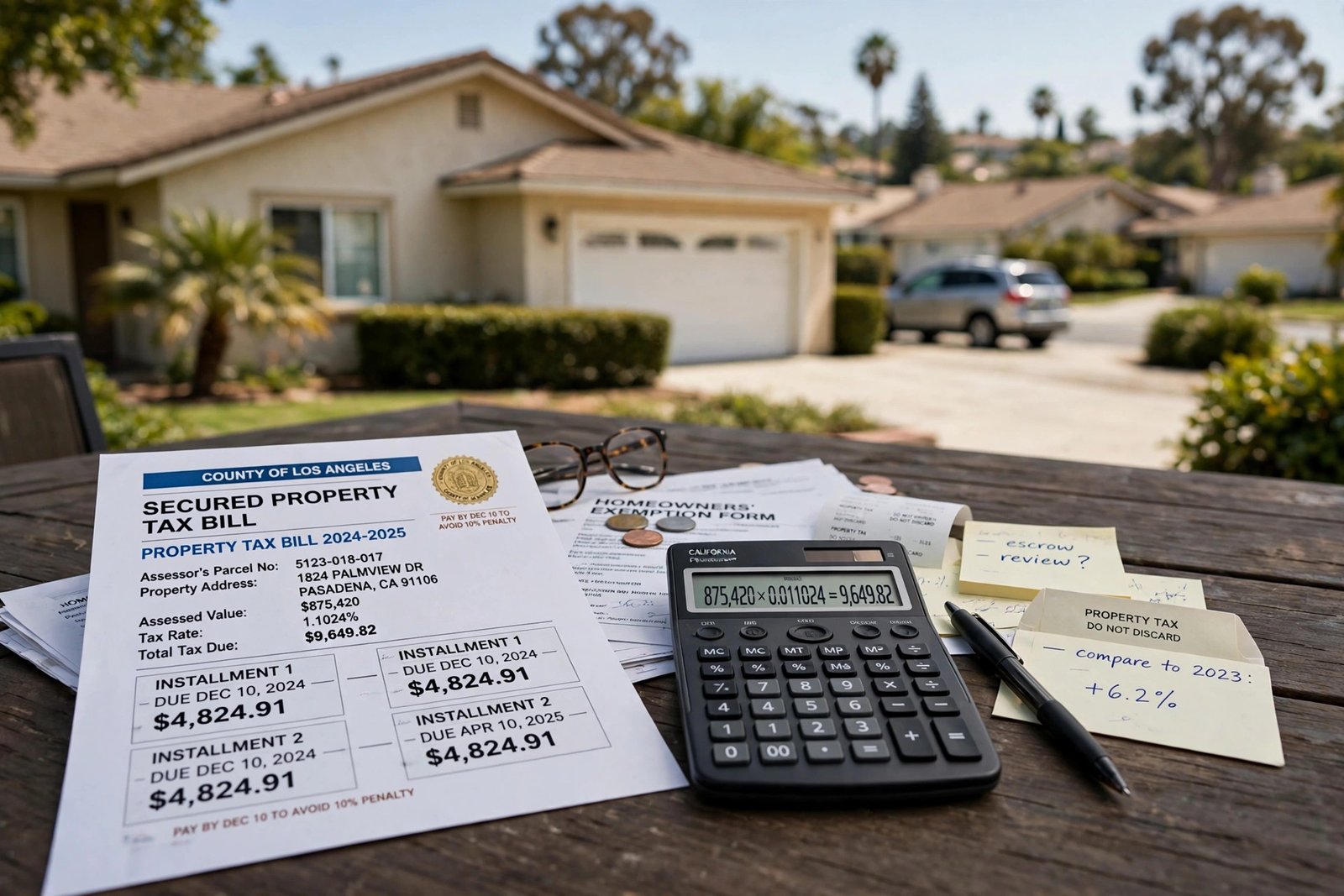
Proposition 13 is the most consequential — and most misunderstood — property tax law in American history. Passed by California voters in 1978, it fundamentally rewired how property taxes work in the state, and nearly fifty years later it still shapes every home purchase, every move, and every inheritance decision California homeowners make. Whether you’re buying your first condo or holding a family home for decades, Prop 13 affects you.
Here’s what Prop 13 actually does, how it affects homeowners in 2026, who benefits, who pays the price, and the strategies smart Californians use to navigate it.
What Proposition 13 Actually Did
Before 1978, California property taxes were reassessed annually at market value with no cap — and during the 1970s housing boom, retirees on fixed incomes watched tax bills double and triple, forcing some from their homes. Prop 13’s response had three pillars that still stand:
1. A 1% cap on the base tax rate. Property tax is limited to 1% of assessed value, plus voter-approved local bonds and assessments (which is why effective rates run 1.1–1.8% in many areas). 2. Assessment caps. Your assessed value can increase by no more than 2% per year, regardless of how fast market values rise. 3. Reassessment only on change of ownership or new construction. Your assessment stays anchored to your purchase price (plus the 2% annual adjustments) until you sell or substantially remodel.
The California Board of Equalization’s Prop 13 resources provide the official details, and the Legislative Analyst’s Office publishes the definitive nonpartisan analyses of its fiscal effects.
How It Affects Homeowners in 2026: The Two Californias
Prop 13 creates two classes of homeowner. Long-time owners enjoy the famous benefit: someone who bought a Bay Area home for $150,000 in 1995 pays taxes on an assessed value of maybe $280,000 today, while the market value sits at $1.5 million — an effective tax rate around 0.2% of market value. This is the “golden handcuffs” effect: selling means losing a tax basis you can never replace, which discourages moves and contributes to California’s housing shortage.
New buyers get the other side: your assessment starts at your purchase price — the full 2026 market value — so you pay the full freight from day one. On a $900,000 purchase, expect roughly $9,000–$14,000 in annual property taxes depending on local bonds. The 2% annual cap then protects you going forward, which is genuinely valuable in a state where market values can jump 10% in a year. Prop 13 is a better deal the longer you hold — it rewards staying put.
Prop 19: The 2026 Rules for Moving and Inheriting
Proposition 19 (2020) rewrote two critical Prop 13 rules, and its effects are fully in force in 2026. Moving: homeowners 55+, disabled, or wildfire/disaster victims can now transfer their low tax basis to a replacement home anywhere in California, up to three times (previously this was limited to certain counties and one transfer). If your replacement home costs more, the difference gets added to your old assessed value — you keep most of the benefit.
Inheriting: this is the big change. Under old Prop 13, children could inherit parents’ low tax assessments on homes they didn’t live in. Prop 19 ended that: inherited property is reassessed to market value unless the child moves into it as a primary residence within a year (with a partial exclusion if the value exceeds $1 million over assessed value). Family vacation homes and rental properties passed to heirs now get fully reassessed. If your estate plan was built on the old rules, update it — this catches families by surprise constantly.
Winners, Losers, and the Reform Debate
Winners: long-term homeowners (especially fixed-income seniors), anyone who holds property for decades, and commercial property owners — Prop 13’s protections extend to commercial real estate, where properties held in corporate structures can avoid reassessment for generations, a feature critics call the law’s biggest inequity.
Losers: new buyers (who subsidize the system with full-freight assessments), renters (who pay property taxes indirectly through rent without building equity), young families locked out by the lock-in effect, and local governments and schools, which receive far less property tax revenue than the state’s property values would suggest.
Reform efforts recur constantly — most notably the “split roll” proposals to reassess commercial properties at market value while protecting residential Prop 13. They’ve failed at the ballot so far, but the fiscal pressure grows yearly. For now, homeowners should plan around current law while understanding it’s politically contested ground.
Strategies for Navigating Prop 13
Buy with the long view. Since the benefit compounds with holding time, buying a home you can grow into beats buying a starter you’ll flip in three years — the tax basis is a wasting asset if you move often. Use Prop 19 transfers if eligible. If you’re 55+ and downsizing or relocating within California, the basis transfer can save thousands annually — but the paperwork is specific, so file correctly with your county assessor. Plan inheritances deliberately. If you intend children to keep the family home, understand the primary-residence requirement; otherwise, expect reassessment and plan the tax impact. Appeal your assessment if it’s wrong. If market values dip below your assessed value (it happens in downturns), you can file for a temporary reduction — assessors won’t volunteer it.
And remember that property tax is only one piece of the tax picture — if you work from home, also review whether you can deduct a home office on your taxes as a freelancer, since ownership changes multiple deductions at once. Property tax is only one piece of ownership cost. Keeping the home itself in good shape protects the asset the tax is levied on — improving curb appeal on a budget and staying current on maintenance preserve the value Prop 13 is shielding.
Conclusion
Proposition 13 caps California property taxes at 1% of assessed value, limits annual assessment growth to 2%, and reassesses only on sale or new construction — creating enormous benefits for long-term holders and full-freight bills for new buyers. Prop 19 modernized the move-and-inherit rules, ending the most generous inheritance loopholes. Whether Prop 13 is brilliant taxpayer protection or a driver of inequality depends on which side of the assessment gap you stand — but every California homeowner needs to understand it, because it shapes the single biggest tax bill most will ever pay.
Frequently Asked Questions
What is Proposition 13 in simple terms?
A 1978 California law capping property tax at 1% of assessed value, limiting annual assessment increases to 2%, and triggering reassessment only when property changes ownership or undergoes new construction.
Does Prop 13 mean my property taxes never go up?
They can rise up to 2% per year on assessed value, plus voter-approved local bonds and assessments can add to the rate. But they can’t track market-value spikes — that’s the core protection.
Can I transfer my Prop 13 tax basis when I move?
If you’re 55+, disabled, or a disaster victim, Prop 19 lets you transfer your basis to a replacement home anywhere in California, up to three times, with adjustments if the new home costs more.
Do my kids inherit my low property tax assessment?
Only if they move into the home as their primary residence within a year (with limits). Otherwise, Prop 19 requires reassessment to market value — the old blanket inheritance exclusion is gone.
Will Proposition 13 be repealed?
Full repeal is politically unlikely, but reform efforts (especially “split roll” for commercial properties) recur regularly. Residential protections remain broadly popular with voters.