
Is a Projector Worth It for a Home Theater Setup?
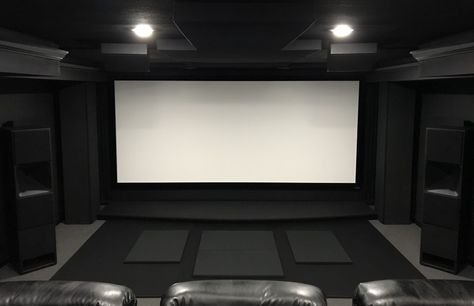
Is a Projector Worth It for a Home Theater Setup?
Nothing says “home theater” like a 120-inch screen — and nothing delivers it cheaper per inch than a projector. But is a projector worth it for a home theater setup, or is a big TV the smarter buy in 2026? I went through this decision myself last year, researched obsessively, talked to home theater nerds, and ultimately bought a projector. Here’s the complete honest breakdown: when projectors win, when TVs win, what they really cost, and the room requirements nobody mentions until it’s too late.
Projector vs. TV: The Core Trade-offs
Where projectors win
- Size per dollar: unmatched. A $800 projector throws a 120-inch image; a 120-inch TV costs $3,000+. Above 85 inches, projectors are the only sane option.
- The theater feel: size creates immersion that specs can’t. A 120-inch image feels cinematic in a way even the best 65-inch TV doesn’t.
- Disappears when off: a retractable screen or blank wall beats a giant black rectangle dominating your living room.
- Portability: take it to the backyard — try that with an 85-inch TV. Our backyard movie night guide is built on this.
Where TVs win
- Brightness and contrast: no contest. TVs are watchable in daylight; projectors need darkness. Black levels on a good TV embarrass projectors.
- Simplicity: mount it, turn it on. No throw distances, no screen alignment, no bulb replacements, no light control.
- Everyday viewing: news, sports highlights, background TV — the projector’s ceremony gets old for casual watching.
- HDR: TVs do real HDR; most projectors’ HDR is more marketing than reality.
- Total cost at smaller sizes: under 75 inches, TVs are cheaper and better.
Is a Projector Worth It for a Home Theater Setup? The Real Costs
The projector is just the start. Budget honestly:
- Projector: $500–1,500 for a good 1080p/4K home theater unit. Below $400, manage expectations hard.
- Screen: $100–300 for a fixed or pull-down screen. (A smooth white wall works to start — upgrade later.)
- Sound: $200–500 for a soundbar or speaker setup. Projector speakers are universally awful — budget for real audio.
- Mount/cables: $50–100.
- Bulb replacements: $100–250 every 3,000–5,000 hours (laser projectors last 20,000+ hours but cost more upfront).
- Light control: blackout curtains, $50–150, if your room has windows.
Realistic total: $900–2,500 for a proper setup. Compare to a 75–85″ TV at $800–1,800 all-in. The projector wins on size; the TV wins on simplicity and daytime use.
The Room Requirements (Read Before Buying)
This is where projector dreams die: throw distance (you need 10–14 feet between projector and screen for 100–120 inches — measure your room first), light control (ambient light washes out the image; basements and dedicated rooms are ideal), ceiling height and mounting (or a stable shelf/table at the right height), and seating distance (sit 1.5–2x the screen width back — too close and you’ll see pixels). If your room can’t go dark and you can’t sit 10+ feet back, buy the TV.
My Verdict
Get the projector if: you have a light-controllable room, want 100+ inches, love movie nights as events, and will also use it outdoors. Get the TV if: your room has windows, you watch casually throughout the day, or you want simplicity. Get both if: you’re me — a TV for daily use and a projector + pull-down screen for movie nights. It’s the enthusiast’s answer and, honestly, the best of both worlds if the budget allows.
For reviews, ProjectorCentral is the definitive resource, and RTINGS tests both projectors and TVs rigorously.
Projector Types Explained
Not all projectors are the same technology. DLP (Digital Light Processing): sharp image, great motion handling, compact — the most common home theater choice. Watch for the “rainbow effect” (brief color flashes) that bothers a small percentage of viewers; test before committing if you’re sensitive. LCD (3LCD): excellent color accuracy, no rainbow effect, slightly less contrast than DLP. Great for the price-conscious.
LCoS (Sony SXRD, JVC D-ILA): the premium choice — best black levels and most film-like image, but $2,500+. Laser vs. lamp: laser projectors cost more upfront but last 20,000+ hours with consistent brightness and instant on/off; lamp projectors are cheaper initially but need $100–250 bulb replacements every few thousand hours. For heavy users, laser’s total cost of ownership often wins. Short-throw and ultra-short-throw: sit inches from the wall — perfect for rooms lacking throw distance, though pricier per inch than standard throw.
Resolution reality: true 4K projectors start around $1,500; “4K-enhanced” pixel-shifting models ($800–1,200) look remarkably close at normal viewing distances. For most rooms, a good 1080p projector ($500–800) still satisfies — at 120 inches viewed from 12 feet, the difference is smaller than spec sheets suggest. Spend the savings on the screen and sound, where the money shows more.
Setting Up for the Best Image
Screen matters enormously: a proper screen (white, 1.0–1.3 gain) outperforms a wall visibly — better brightness uniformity, no texture interference. Gray screens boost perceived contrast in rooms with some ambient light. Calibration: switch out of “vivid” mode immediately — it’s a showroom setting. “Cinema” or “movie” presets are closer to accurate; free calibration patterns online get you the rest of the way.
Audio is half the experience: budget at least as much thought for sound as image. A $300 soundbar transforms a projector setup; a $500 5.1 system transforms it again. Control the light: blackout curtains are the highest-ROI upgrade in projection — a $60 curtain can improve perceived image quality more than a $600 projector upgrade. And mind the fan noise: eco modes run quieter and extend bulb life — the slight brightness reduction is invisible in a dark room. For outdoor use, our backyard movie night guide adapts all of this for the stars.
The Takeaway
Projectors are worth it for dedicated, dark rooms where 100+ inches of cinematic immersion is the goal. For bright living rooms and everyday viewing, a big TV wins. Measure your room, be honest about your light, and choose accordingly — there’s no wrong answer, only the wrong room.