
Is Air Frying Actually Healthier Than Deep Frying?
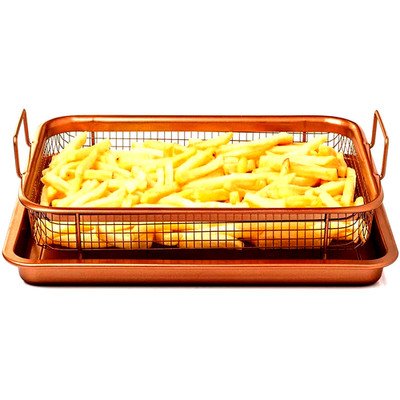
Is Air Frying Actually Healthier Than Deep Frying?
Ask around and you’ll hear it stated as fact: is air frying actually healthier than deep frying? The air fryer has become the kitchen’s miracle appliance, promising crispy fries and wings with a fraction of the oil. I bought mine skeptical — it looked like a gimmick — and now I use it four nights a week. But “healthier” is doing a lot of heavy lifting in that claim. Let’s look at what air frying actually does, where the health claims hold up, and where they’re mostly marketing.
How an Air Fryer Actually Works
Despite the name, there’s no frying involved. An air fryer is a small, powerful convection oven: a heating element and a fan blast superheated air around the food at high speed. That intense circulating heat crisps the outside of food fast, mimicking the crunch of deep frying. A light spritz of oil helps browning, but you’re using teaspoons, not quarts. That’s the entire trick — and it’s a good one.
Is Air Frying Actually Healthier Than Deep Frying? What the Research Says
The short answer: yes, meaningfully so, for most foods. Here’s the breakdown:
Fat and calories drop dramatically
Deep-fried foods absorb a lot of oil — french fries can be 15–20% fat by weight after a bath in the fryer. Air-fried versions use 70–80% less oil, which cuts a significant chunk of calories. A serving of air-fried fries might save you 100+ calories versus deep-fried. Over months of regular eating, that adds up to real weight-management impact.
Fewer harmful compounds
This is the part people overlook. Deep frying at high temperatures — especially reusing oil, as restaurants and home cooks do — produces acrylamide (a potentially harmful compound that forms in starchy foods) and oxidized fats. Air frying generally produces less acrylamide than deep frying because of the lower oil exposure and more controlled temperatures. It’s not zero, but it’s less.
But it’s not a health food machine
Here’s my honest caveat: an air fryer doesn’t transform junk food into health food. Air-fried frozen mozzarella sticks are still mozzarella sticks. The appliance makes indulgent foods less bad; it doesn’t make them good. And some “air fryer recipes” compensate for less oil with heavy breading, cheese, or sugary sauces that erase the calorie savings. The health win comes from the cooking method, not magic.
Where Air Frying Shines (and Where It Doesn’t)
In my kitchen, the air fryer earns its counter space for: frozen foods (fries, nuggets, spring rolls come out genuinely crispy), roasted vegetables (Brussels sprouts get incredible), chicken wings, and reheating leftovers — it’s far better than a microwave at keeping things crispy. Where it disappoints: anything with wet batter (it drips through the basket and makes a mess), large roasts (too small), and foods where you actually want oil’s flavor, like a proper confit.
Air Fryer vs. Oven: Is There a Difference?
A fair question, since an air fryer is technically a convection oven. The difference is speed and intensity: the air fryer’s small chamber and powerful fan crisp food faster and more evenly than most home ovens. You’ll get better wings and fries from the air fryer. But if you already own a good convection oven, the gap is smaller than the marketing suggests. The air fryer wins on convenience and preheat time — it’s ready in 3 minutes versus 15.
Tips for Actually Healthy Air Frying
- Don’t overcrowd the basket. Air needs to circulate. Cook in batches — crowded food steams instead of crisping.
- Use oil spray sparingly, not zero. A light mist helps browning and texture. Choose a high-smoke-point oil; see our guide on the best oil for high-heat cooking.
- Shake halfway. Most foods crisp more evenly with a mid-cook shake.
- Watch processed “air fryer” snacks. Check labels — some are just as salty and processed as their deep-fried cousins.
The air fryer article on Wikipedia covers the technology well, and the Harvard Nutrition Source is my go-to for unbiased takes on cooking methods and health.
Air Fryer Recipes That Actually Earn the Hype
Beyond the health angle, let’s talk about what the air fryer genuinely excels at cooking — because some foods are transformative and others are disappointing. Chicken wings are the air fryer’s greatest hit: 380°F for 25 minutes, flipping once, produces shatteringly crisp skin with no breading at all. Toss in sauce after. They rival deep-fried wings, and I’ve served them to skeptics who couldn’t tell the difference.
Roasted vegetables are the sleeper pick. Brussels sprouts halved and tossed in oil at 400°F for 15 minutes get caramelized edges that oven-roasting can’t quite match in the same time. Broccoli, cauliflower, and sweet potato cubes all crisp beautifully. Frozen foods — fries, mozzarella sticks, spring rolls, dumplings — cook faster and crispier than any oven method. And reheating: leftover pizza, fried chicken, and egg rolls come back to life in 3–4 minutes at 350°F.
What to skip: anything with wet batter (tempura, beer-battered fish) drips through the basket and makes a mess — those need real deep frying. Delicate fish can dry out; use lower temps and shorter times. And cheese-heavy items like mozzarella sticks need freezing first or they explode. Learn these boundaries and the air fryer becomes the most-used appliance in your kitchen, not a gadget gathering dust.
Don’t Skip the Preheat
One habit separates good air fryer results from great ones: preheating. Three to five minutes at your target temperature before the food goes in makes a measurable difference in crispness — it’s the same principle as a hot oven, just faster. Most models have a preheat setting; if yours doesn’t, just run it empty for a few minutes. Also, resist the urge to peek constantly. Every time you open the basket, hot air escapes and the temperature drops, extending cook time and softening results. Trust the timer, shake once halfway, and let the machine do its job. Your patience will be rewarded with crunch.
The Takeaway
Yes — air frying is genuinely healthier than deep frying, cutting fat by up to 80% and reducing harmful compounds. But it’s a better cooking method, not a permission slip. Use it to make your favorite crispy foods less damaging, keep the rest of the meal balanced, and it’ll earn its place on your counter like it did on mine.
[…] by the fan. Still, if you already own one, it’s a solid option, and it’s my pick for reheating all kinds of leftovers beyond […]