
How Much Coffee Should I Use Per Cup for a Strong Brew?
How Much Coffee Should I Use Per Cup for a Strong Brew?
Here’s a question I hear constantly: how much coffee should I use per cup for a strong brew? For years I eyeballed it — a scoop here, a guess there — and my morning coffee was a coin flip between dishwater and rocket fuel. Then I bought a ten-dollar kitchen scale, and everything changed. The secret to consistently strong, great-tasting coffee isn’t a fancy machine or expensive beans. It’s a ratio. Once you know it, you’ll never brew a weak cup again.
The Golden Ratio: Start Here
The Specialty Coffee Association recommends a ratio between 1:15 and 1:18 — that’s one part coffee to 15–18 parts water by weight. For a strong brew, start at 1:15. In practical terms, that’s about 2 tablespoons of ground coffee (roughly 20 grams) per 10 ounces of water (about 300 grams, or 1¼ cups).
Let me make that dead simple for a standard 12-cup drip machine, which actually brews about 60 ounces (the “cups” on a coffee maker are 5 ounces, not 8):
- Regular strength: 1 tablespoon per 6 ounces of water
- Strong brew: 1.5–2 tablespoons per 6 ounces of water
- Seriously strong: 2+ tablespoons per 6 ounces, but watch for bitterness
Yes, the “one tablespoon per cup” rule you grew up with produces weak coffee by design. Coffee companies want you to use more beans. Ignore it.
How Much Coffee Should I Use Per Cup for a Strong Brew? Method by Method
Different brew methods extract differently, so the ideal ratio shifts a bit:
Drip coffee maker
Use a 1:15 to 1:16 ratio — about 4 tablespoons (60g) of medium-ground coffee for a full 10-cup pot. If your machine brews fast and the coffee tastes thin, go a touch finer on the grind rather than just adding more coffee.
French press
French press immersion brewing is forgiving. Use 1:12 to 1:14 for a bold cup — about 55–65 grams of coarse-ground coffee per liter of water. Steep four minutes, break the crust, skim, and plunge. The metal filter lets oils through, which makes the coffee taste richer even at the same strength.
Pour over (V60, Chemex)
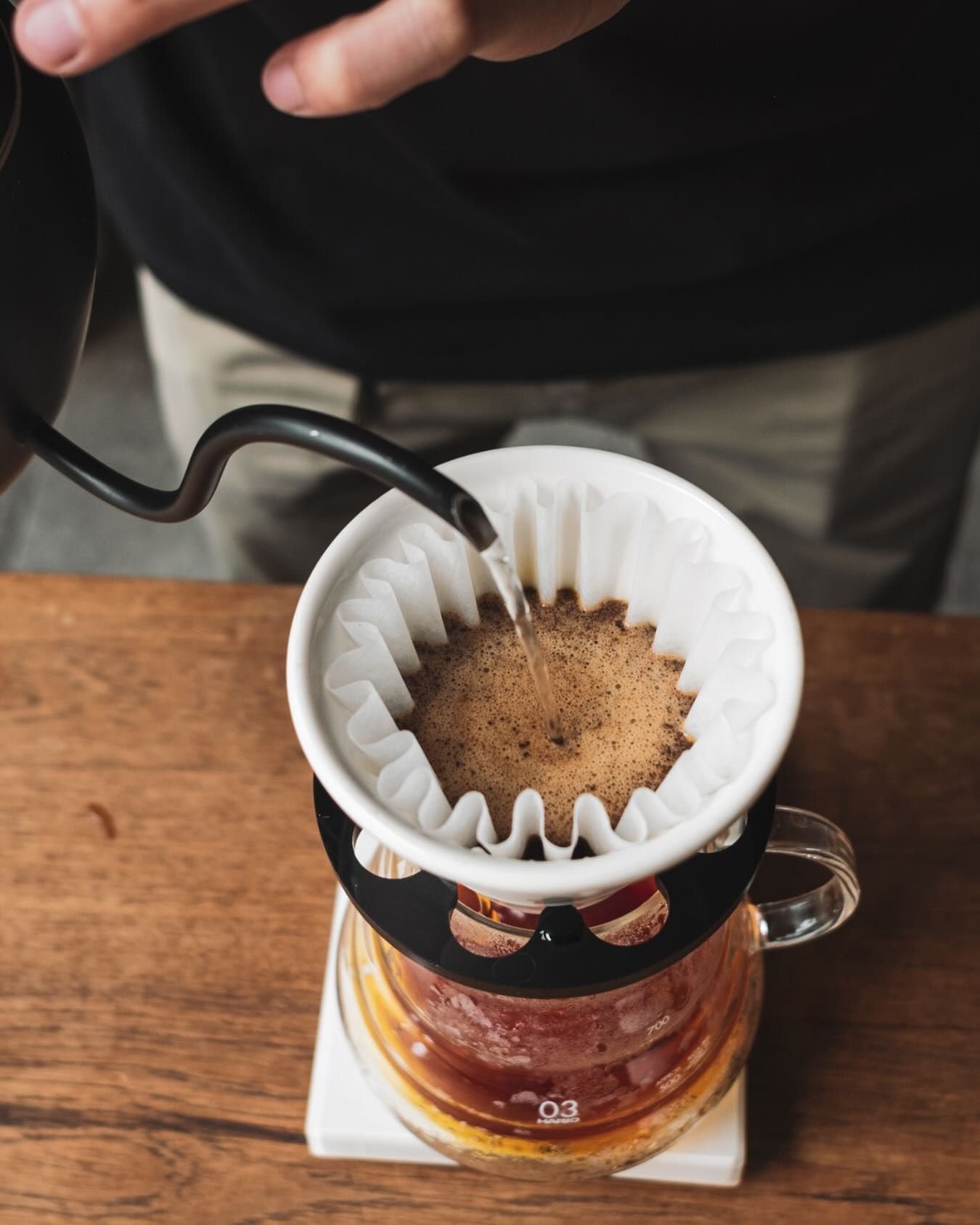
Start at 1:15 with a medium-fine grind. Pour overs highlight clarity, so “strong” here means intense flavor rather than heavy body. If it tastes sour, your grind is too coarse; if bitter, too fine. Dial the grind before you change the ratio.
Cold brew concentrate
Cold brew is a different animal: 1:4 to 1:8 coffee-to-water, steeped 12–24 hours, then diluted. It tastes smooth and strong without the acidity. If your cold brew habit has you making iced coffee that doesn’t taste watered down, concentrate is the way.
Why Your Strong Coffee Tastes Bitter (and How to Fix It)
Here’s the thing most people miss: “strong” and “bitter” aren’t the same. If you doubled your coffee and it tastes harsh, the problem is probably over-extraction, not the ratio. Fix it with these, in order:
- Grind coarser. Finer grinds extract more; too fine equals bitter.
- Check water temperature. Aim for 195–205°F. Boiling water scorches grounds.
- Use fresh beans. Stale coffee tastes flat no matter the ratio — buy whole beans and grind before brewing.
- Shorten the brew time for immersion methods.
I’ve found that most “I need stronger coffee” complaints are actually “my coffee is stale and under-extracted” complaints. Fix the fundamentals first, then push the ratio.
Weigh, Don’t Scoop
I know a scale feels like overkill. But a tablespoon of light-roast Ethiopian and a tablespoon of dark-roast Sumatra can differ in weight by 30% or more because of bean density. Scoops are inconsistent; grams are not. A basic digital scale costs less than two bags of beans and it’s the single biggest upgrade you can make to your coffee. After a week of weighing, you’ll be able to eyeball it accurately — but you’ll know what “right” actually looks like.
For the science of extraction and brewing standards, the coffee article on Wikipedia is surprisingly thorough, and the National Coffee Association publishes brewing guidelines worth bookmarking.
Troubleshooting: When Strong Coffee Still Tastes Wrong
Sometimes you nail the ratio and the coffee still disappoints. Here’s my diagnostic checklist, in the order I check things. First, the beans’ age. Coffee peaks 1–3 weeks after roasting and declines noticeably after a month. That bag that’s been open since spring? It’s the problem, not your ratio. Buy smaller bags more often, and check for a roast date (not a “best by” date) on the label.
Second, your water. If your tap water tastes off, your coffee will too — coffee is 98% water. Hard water mutes flavors; heavily chlorinated water adds off notes. A simple carbon filter pitcher fixes most water issues and costs almost nothing per cup. Third, grind consistency. A blade grinder produces dust mixed with boulders — the dust over-extracts (bitter) while the boulders under-extract (sour), giving you both problems at once. A basic burr grinder is the second-best upgrade after the scale.
Fourth, cleanliness. Old coffee oils go rancid and coat your brewer, grinder, and carafe with stale, bitter residue. Run a descaling cycle monthly, wash the carafe with baking soda, and brush out the grinder. I ignored this for a year and couldn’t figure out why my coffee tasted muddy — a deep clean fixed it overnight.
Finally, remember that strong coffee pairs beautifully with a solid breakfast. Once your brew is dialed in, check out our easy high-protein breakfasts for busy mornings — a great cup of coffee deserves better company than a sad granola bar.
One Last Thing: Keep a Coffee Log
Here’s a habit that sounds obsessive but pays off fast: for two weeks, jot down your ratio, grind setting, and a one-word verdict (great, bitter, weak, sour) each morning. You’ll spot your perfect formula within days instead of months of random tweaking. Coffee variables interact — changing the ratio and the grind on the same day teaches you nothing, but changing one thing at a time with notes teaches you everything. Once you’ve found your sweet spot, write it on a card and tape it inside the cabinet. Future half-awake you will be grateful, and your guests will wonder why your coffee is suddenly better than the café’s.
The Takeaway
Start with 2 tablespoons (20g) of coffee per 10 ounces of water — a 1:15 ratio — and adjust from there. Use fresh beans, the right grind, and water just off the boil. Strong coffee isn’t about dumping in more grounds; it’s about the right ratio executed well. Get that dialed in and your mornings get noticeably better.