
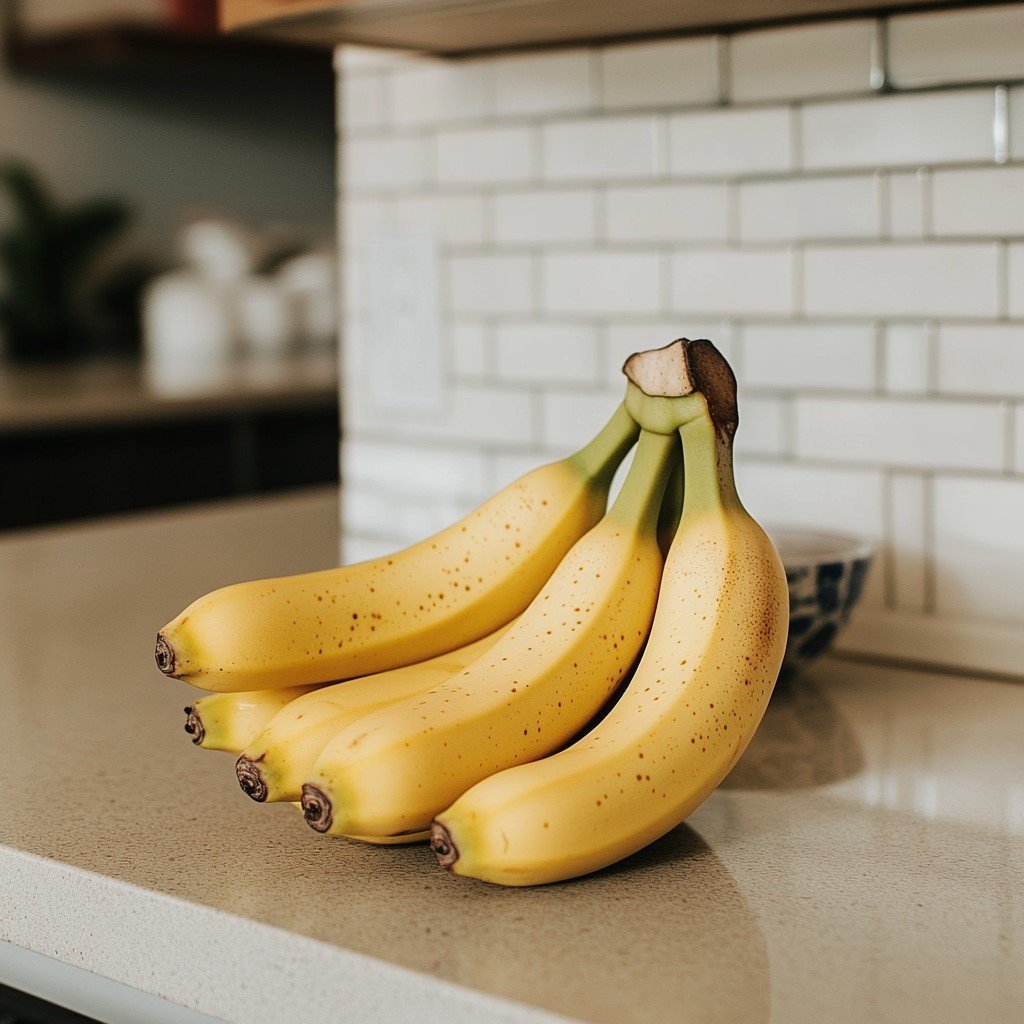
What Is the Best Way to Keep Bananas Fresh Longer?
Bananas go from perfect to sad with astonishing speed — green on Monday, spotty by Thursday, fruit-fly bait by Saturday. If you’re asking what is the best way to keep bananas fresh longer, the answer involves understanding what’s actually happening: bananas produce ethylene gas, which triggers ripening, and they do it aggressively — ripening themselves and everything nearby. Control the ethylene and the temperature, and you control the timeline.
What Is The Best Way To Keep Bananas Fresh Longer?
1. Wrap the stems (easiest win)
Ethylene escapes primarily from the stem. Wrapping the crown tightly with plastic wrap or aluminum foil slows ethylene release and can add 2–4 days of freshness. Separate the bananas first — individual wrapping works better than wrapping the bunch, since separated bananas ripen slower anyway. This is the highest-ROI banana trick in existence: 30 seconds, days of payoff.
2. Hang them up
A banana hanger or hook ($8–$15) prevents bruising from counter contact. Bruises ripen faster (damaged tissue produces more ethylene), so eliminating pressure points genuinely extends life. It also looks nice — form and function.
3. Keep them away from other fruit
Bananas are ethylene bullies — they accelerate ripening in avocados, peaches, tomatoes, and everything nearby. Store bananas alone, away from the fruit bowl. (Flip side: put an unripe avocado next to bananas to ripen it fast. Useful trick.)
4. Buy at the right stage
Buy bananas slightly green if you won’t eat them for a few days. They’ll ripen at home on your schedule. Buying fully yellow means you’re on a 2-day clock. Stagger purchases: some green, some yellow, for a rolling supply.
5. Refrigerate when ripe (yes, really)
The peel will turn black in the fridge — alarming but harmless. The fruit inside stays perfect for 4–5 extra days once refrigerated at peak ripeness. Cold dramatically slows the ripening enzymes. Ignore the peel color; trust the fruit. This is the most underused banana technique.
What About the Freezer?
For bananas past fresh-eating stage, freeze them — they’re smoothie and banana-bread gold:
- Peel ripe (spotty is perfect) bananas — never freeze unpeeled; the peel fuses to the fruit.
- Slice into 1″ chunks (easier for blenders than whole frozen bananas).
- Freeze on a parchment-lined tray first (prevents clumping), then transfer to freezer bags.
- Label with the date. Good for 3–6 months.
Frozen banana chunks blend into ice-cream-textured “nice cream” with zero added sugar — the overripe bananas you were about to trash become dessert. The banana’s ripening science is genuinely fascinating: it’s one of the few fruits that ripens well off the plant, which is why these storage tricks work so predictably.
What Doesn’t Work
- Storing unripe bananas in the fridge — cold damages unripe banana cells (chilling injury), giving you gray, never-properly-ripening fruit. Fridge only after ripe.
- Sealed bags at room temperature — traps ethylene and moisture, accelerating rot. Ventilation matters.
- Keeping them in the fruit bowl — the ethylene echo chamber. Every fruit ripens everything else faster.
The Full Timeline Strategy
- Day 1–2: buy slightly green, separate, wrap stems, hang away from other fruit
- Day 3–5: peak eating window — enjoy at perfect ripeness
- Day 5–6: refrigerate remaining ripe bananas (ignore black peels)
- Day 6+: freeze anything left for smoothies and baking
Follow this and a single bunch stretches across 10+ days with zero waste — versus the usual 4-day window and half the bunch in the trash.
Banana Ripeness Stages: A User’s Guide
Every stage has a purpose — stop throwing away “overripe” bananas: Stage 1–2 (green): starchy, less sweet, lower glycemic impact. Good for cooking (think tostones-style preparations) but not great raw. Stage 3–4 (yellow, firm): the classic eating banana — balanced sweetness, firm texture. Peak lunchbox banana. Stage 5–6 (yellow with brown spots): sweeter, softer, more aromatic. The best stage for eating out of hand if you like them sweet — and the ideal stage for smoothies. Stage 7 (mostly brown): don’t you dare throw these away — this is peak banana-bread banana. The starches have fully converted to sugars, giving maximum sweetness and moisture. Professional bakers wait for this stage deliberately. Stage 8 (black): freeze for smoothies or compost. Knowing the stages turns “old bananas” from waste into ingredients.
The Ethylene Science (Why All This Works)
Bananas are climacteric fruits — they continue ripening after harvest via ethylene gas, a natural plant hormone. Here’s what’s happening: the banana produces ethylene, which triggers enzymes converting starches to sugars, breaking down chlorophyll (green to yellow), and softening cell walls. It’s a positive feedback loop — ethylene triggers ripening, ripening produces more ethylene. That’s why one ripe banana ripens the whole bunch, and why the stem-wrap trick works (the stem is the main ethylene exit point). It’s also why bananas ripen avocados, tomatoes, and peaches placed nearby — the gas doesn’t care whose fruit it is. Commercial shippers exploit this in reverse: bananas are shipped green and gassed with ethylene at distribution centers to ripen on schedule. Your kitchen tricks are just home-scale versions of industrial fruit science.
Banana Storage Gadgets: Worth It?
The market offers banana-specific storage products — are any worth buying? Banana hangers/trees ($8–$15): yes, genuinely useful — prevents bruising, looks nice, lasts forever. Banana storage bags/keepers: mostly gimmicks — a plastic bag with ventilation holes does the same thing for free, and sealed versions trap ethylene (counterproductive). Ethylene-absorbing sachets (the little packets in some produce packaging): they work, but they’re designed for commercial use; at home, separation and stem-wrapping achieve the same effect. Verdict: buy the hanger, skip the rest. The best banana storage technology remains a $0.02 piece of plastic wrap on the stem and the discipline to keep bananas away from the fruit bowl.
Bananas also earn their keep beyond snacking — see our list of healthy dinners you can cook in under 30 minutes for fast weeknight ideas built around fresh produce.
The Takeaway
What is the best way to keep bananas fresh longer? Wrap the stems in plastic wrap, hang them separately away from other fruit, buy slightly green, refrigerate once ripe (ignore the black peel), and freeze the rest for smoothies. Five simple habits, roughly triple the usable life.
It’s a small thing, but small food-waste wins compound — fewer trashed bananas, fewer emergency grocery runs, more smoothies. Kitchen freshness questions? Our fresh herb storage guide tackles the other fast-wilting culprit.
[…] matters as much as sourcing — our guide to keeping bananas fresh longer applies the same ethylene logic to the rest of your fruit […]